
By: Daniel Bampoe
The Minority Caucus in Parliament has launched a blistering critique of the 2026 Budget and Economic Policy, describing it as a document built on “fiscal deception, artificial stability and unfulfilled promises.”
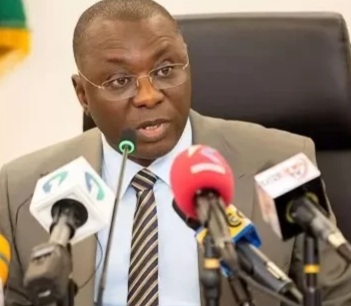
Addressing journalists in Accra on Friday, 14 November 2025, Minority leaders accused the National Democratic Congress (NDC) government of masking deep structural weaknesses with fancy rhetoric while failing to deliver meaningful transformation to the Ghanaian economy.
The 2026 Budget—presented under the theme “Resetting for Growth, Jobs and Economic Transformation”—is the second financial policy statement of the NDC administration since assuming office in January 2025. It comes after a turbulent first year marked by slowing private sector activity, widespread arrears to contractors, and a series of unsuccessful treasury auctions that analysts say reflect deepening investor scepticism.
But according to the Minority, the latest budget does little to reverse these trends. Instead, they argue, it mirrors what they describe as a persistent pattern of non-implementation, policy confusion and political blame-shifting.
A Year of Missed Targets, Unreleased Funds And Market Instability
Since taking office, the NDC government has repeatedly accused the former New Patriotic Party (NPP) administration of mismanaging the economy.
However, the Minority insists the macroeconomic stability celebrated today was secured between 2023 and 2024 under the NPP-led IMF Extended Credit Facility (ECF) programme.
By the end of 2024, international reserves reached nearly US$9 billion under IMF-guided interventions capped at US$80 million per month.
The Minority maintains that the current government merely inherited this stability, and has added little by way of original strategic policy.
They further argue that key economic gains—such as the decline in inflation and the appreciation of the cedi—are the results of inherited buffers and heavy central bank interventions rather than government policy.
“Stabilisation Is Not Transformation”
The Minority’s central critique is that the government has confused short-term stabilisation with long-term transformation.
While headline indicators may appear promising—such as inflation easing and non-oil GDP showing early recovery—the budget’s underlying numbers expose what they call “a dangerous retreat from productive investment.”
According to them, Parliament approved capital expenditure (CAPEX) amounting to 1.5% of GDP for 2025, yet the government released only 0.5%—an unprecedented one-percentage-point shortfall equivalent to US$1.1 billion in unrealised development spending.
Using IMF-aligned multipliers, the Minority estimates the economic cost of this under-execution as follows:
Effective Demand cut: 0.514% of GDP
GDP loss: US$469 million
Revenue loss: US$75 million
Long-term growth loss: 0.1 percentage point annually
This, they argue, demonstrates that government has “traded tomorrow’s growth for today’s optics.”
Underspending, Cash Rationing and the ‘Illusion of Fiscal Discipline’
The Minority maintains that the government’s touted fiscal prudence is in fact the result of cash rationing and liquidity constraints.
Goods And Services (Q1–Q3 2025)
Programmed: GHS 5.1 billion
Actual release: GHS 3.8 billion (56% of allocation)
Capital Expenditure (Q1–Q3 2025)
Programmed: GHS 26.6 billion
Actual release: GHS 11 billion (34% of allocation)
They argue that many ministries still struggle to purchase basic operational inputs—including fuel—while road contractors, suppliers, and service providers continue to suffer from mounting arrears.
Flagship Programmes: Big Push, 24-Hour Economy Face Implementation Gaps
The Minority accuses the government of rolling out ambiguous, underfunded flagship programmes, citing:
1. 24-Hour Economy
Marketed as a job-creation model with a “1-3-3” shift system, the programme was expected to cost US$4 billion with government contributing US$300–400 million. Yet only GHS 90 million has been allocated in the 2026 Budget—a figure the Minority describes as tokenistic.
2. Big Push Initiative
The government allocated GHS 13 billion in 2025 and claims GHS 63 billion worth of road contracts have been awarded. The Minority challenges this, insisting no such contracts exist, warning that awarding contracts without approved allocations would violate the Public Financial Management Act.
Revenue Failure And Sweeping of Statutory Funds
The Minority also points to revenue underperformance as proof that government’s fiscal framework is collapsing:
Q1–Q3 2025 Revenue Shortfalls
Total revenue & grants: GHS 7.7 billion below target
Domestic revenue: GHS 6.8 billion short
Tax revenue: GHS 9 billion short
They say this revenue crisis explains why government purportedly swept funds from statutory accounts, including the District Assemblies Common Fund.
Market Confidence At An All-Time Low: 25 Auction Failures
The Minority described 2025 as “the worst year for Ghana’s domestic securities market in modern history,” reporting:
45 T-bill auctions held
25 failed (55% failure rate)
GHS 17.5 billion cumulative financing shortfall
They argue that these failures reflect investor rejection of government securities and a collapse in confidence. They also cited the dip in the GSE Composite Index during budget week as further evidence of market unease.
Cedi Stability Built on US$8 Billion BoG Intervention, Not Sound Fundamentals
The Minority accused the Bank of Ghana of engaging in “secretive and unsustainable” foreign exchange interventions, injecting an estimated US$8 billion into the market since January 2025.
They claim the central bank denied this until IMF disclosures forced transparency.
They argue that the cedi’s appreciation—from GHS14 to GHS11 per dollar—should have fallen further if interventions were effective, highlighting structural weaknesses such as:
weak exports
low productivity
reliance on gold purchases (including from illegal miners)
They also accuse the Governor of abandoning IMF discipline for political optics.
Cost of Inflation Control: GHS 60 Billion Withdrawn From Economy
The Minority says controlling inflation by aggressively withdrawing liquidity has backfired, causing demand to collapse:
Farmers unable to sell produce
Shops and markets recording low sales
SMEs crippled by weak consumption
They warn traders to expect slow Christmas sales because “government withdrew GHS 60 billion from the economy.”
Public Sector Pay: “A Second Year of Insult”
After workers accepted a below-inflation 10% salary increase in 2025 under promises of better conditions, the Minority criticised the government’s new 9% increase for 2026 as “an insult,” arguing:
inflation has eased
prices remain high due to “downward price stickiness”
workers cannot recover lost purchasing power
Debt Restructuring: NDC Taking Credit for NPP’s Work
The Minority insists that Ghana’s improved debt sustainability—which the Budget attributes to NDC leadership—is entirely the result of restructuring completed in 2024 under the NPP:
US$13.1 billion Eurobond restructuring
US$5.1 billion bilateral debt restructuring
GHS 20 billion domestic debt restructuring
They also note that fiscal reforms such as the public debt ceiling and the Independent Fiscal Council were submitted to Parliament before the end of 2024 by the NPP.
Ghana Is Poorer By US$469m Due to Underspending
The Minority concluded that Ghana has paid a high price for the government’s reluctance to fund critical investments: “By underspending approved CAPEX by a full percentage point of GDP, the government has made Ghana US$469 million poorer in 2025 alone.”
They warn that continued underspending, unrealistic revenue projections, market instability, and cosmetic interventions will drag Ghana into deeper economic distress.
They also demanded justification for the government’s planned purchase of 2 executive jets, 4 helicopters, and 2 offshore patrol vessels valued at US$1.2 billion, saying such expenditure contradicts calls for worker sacrifice


