BY Daniel Bampoe
The Ghana Journalists Association (GJA) has issued its strongest warning yet to Ghana’s security services, declaring what it describes as an uncompromising fight against the rising wave of brutality, intimidation, and abuse being meted out to journalists in their line of duty.
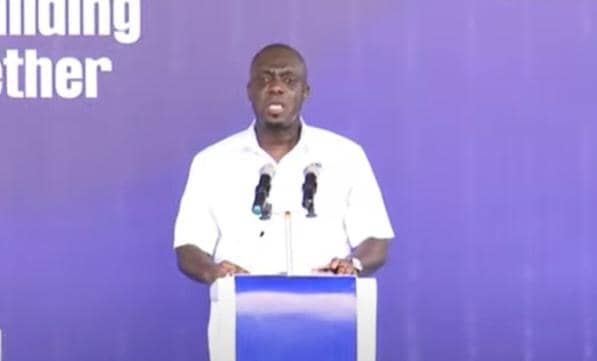
Speaking at a press conference on January 28, 2026, at the Ghana International Press Centre in Accra, GJA President Albert Kwabena Dwumfour said the Association will no longer tolerate what he termed “inhumane behaviour” from institutions mandated to protect citizens but which are increasingly becoming threats to press freedom and democratic accountability.
The press briefing was convened as a follow-up to the Association’s earlier engagement with the media on the spate of attacks against journalists, particularly the widely condemned assault on Class FM reporter Samuel Addo in Kasoa.
Dwumfour noted that beyond that incident, the GJA has since received fresh reports of violence, threats, and intimidation across multiple regions, pointing to what he called a dangerous national pattern of impunity against media practitioners.
Kasoa Assault: GJA Welcomes Presidential Intervention But Slams Fire Service Silence
Providing an update on the Kasoa attack, the GJA acknowledged President John Dramani Mahama’s statement announcing the interdiction of Ghana National Fire Service (GNFS) officers involved in the assault on Samuel Addo.
The Association commended the President for his swift intervention and reassurance of the government’s commitment to protecting journalists as they perform their constitutional mandate.
However, the GJA expressed deep concern over what it described as the “deafening silence” of the Fire Service leadership.
According to Dwumfour, the GNFS administration has failed to publicly brief the nation on the status of its internal investigations or the specific sanctions imposed, raising suspicions of institutional reluctance to confront wrongdoing.
The Association demanded that the GNFS immediately publish its findings, outline actions taken against the perpetrators, and announce measures to prevent future attacks. Any further silence, the GJA warned, would be interpreted as complicity.
The GJA also reiterated its call for the removal of the GNFS Public Relations Officer, insisting that his handling of the matter had demonstrated unfitness for the role.
The Association further called on the Inspector-General of Police to ensure the criminal prosecution of all personnel involved, stressing that internal disciplinary measures alone cannot substitute for justice in open court.
Kukurantumi Attack
The GJA also condemned what it described as a barbaric assault on UTV and Peace FM Eastern Regional Correspondent Michael Akrofi, allegedly carried out by a police officer stationed at the Tafo–Kukurantumi Formed Police Unit base in the Eastern Region.
Akrofi was reportedly covering a farmers’ demonstration over the destruction of crops by Fulani herdsmen when he was attacked from behind.
According to incident reports cited by the GJA, the officer strangled the journalist on three separate occasions, causing severe pain and trauma, and even threatened him afterward.
The journalist later complained of pain in his neck, back, and waist, forcing him to seek medical treatment. Although the case has been reported to the Eastern Regional Police Command, the GJA said no official feedback had been provided to the victim as of the press conference, a situation the Association described as unacceptable.
The GJA demanded the immediate identification, arrest, and prosecution of the officer involved, warning that impunity within the Police Service must not be tolerated.
Walewale Assault
In another disturbing development, the GJA disclosed an unprovoked assault on Solomon Kwame Kanaluwe, a North East Regional Correspondent of Media General and Secretary of the GJA in the region, allegedly perpetrated by military personnel in Walewale on January 26, 2026.
According to the report submitted to the Association, Kanaluwe had parked his motorcycle near a roadside store to buy supplies when soldiers approached, questioned the ownership of the motorcycle, and physically assaulted him without provocation.
Two soldiers allegedly beat him on the back with sticks and canes about four times, claiming he had parked at an unauthorised location.
Even after identifying himself as a journalist, the assault reportedly continued, with the soldiers stating they did not care about his profession.
He was detained briefly, his phone seized, and some pictures and messages deleted before he was released.
The GJA described the incident as unlawful and deeply troubling, undermining public confidence in the Ghana Armed Forces. It called on the Military High Command to immediately investigate, identify those responsible, and apply sanctions.
Albert Dwumfour recalled that this was not the first such incident involving military-style attackers. On July 30, 2025, JoyNews journalist Carlos Calony was assaulted by armed individuals in military attire while covering a demolition exercise at the McDan Warehouse on Spintex Road in Accra.
The GJA lamented the lack of decisive action on that case, warning that repeated incidents are denting the military’s respected image.
Bawku Conflict Zone Declared An “Early Warning Area” for Press Safety
The GJA raised additional alarm over escalating death threats against journalists in the Upper East Region, particularly those covering the protracted Bawku conflict.
The Association cited threats against Upper East Regional GJA Chairman Albert Sore, who has reportedly been targeted through online abuse, voice notes, and explicit death threats aimed at silencing professional coverage.
Dwumfour described the threats as reckless, criminal, and dangerous not only to journalists but to national security, warning that the incitement could easily escalate into mob violence if not urgently addressed.
Although acknowledging initial collaboration with the Upper East Regional Police Command, the GJA insisted that current measures remain insufficient. It demanded sustained police protection, expedited investigations, and the arrest and prosecution of all individuals and networks issuing threats.
The Association formally designated Bawku as an “early warning zone for press safety,” stressing that it will not accept a reactive approach where action is only taken after harm occurs.
NPP Presidential Primary: GJA Warns Against Attacks During Internal Elections
With political tensions rising, the GJA also called on the leadership of the New Patriotic Party (NPP) to take responsibility for ensuring the safety of journalists during its upcoming presidential primary to elect a flagbearer.
The Association urged the party to publicly caution supporters against intimidation, obstruction, or violence toward journalists covering the process, warning that political competition must never degenerate into attacks on the media.
The GJA said it will actively monitor the election nationwide and will “name and shame” any individuals or groups that assault journalists.
GJA Sets “Red Lines” And Issues Ultimatum
In response to the growing threats, the GJA outlined non-negotiable red lines, including that no journalist should be assaulted, threatened, or obstructed, no equipment should be confiscated or content deleted, and no threat should ever be ignored.
The Association issued a list of demands, including a 14-day ultimatum for the Ghana National Fire Service to publicly release investigation findings and sanctions, warning that failure could result in drastic measures such as blacklisting.
It also demanded the arrest and prosecution of the Kukurantumi police officer, protection for journalists under threat, directives prohibiting assaults across all security services, and prosecution of military personnel involved in Walewale attack.
Wider Concern Over Rising Violence In Society
Beyond attacks on journalists, the GJA condemned the broader pattern of law enforcement brutality against civilians, warning that Ghanaian society is witnessing an alarming rise in violence and excessive use of force by institutions entrusted with protection.
Dwumfour called for urgent action to end the culture of impunity, insisting officers who abuse civilians must be identified, interdicted, and prosecuted without hesitation.
He reminded the public that President Mahama has promised to convene a meeting between security chiefs and the GJA to ease tensions between the media and security agencies, stressing that the time for such engagement is now.
“Attacks on Journalists Are Attacks on Ghana’s Democracy”
In conclusion, the GJA President declared that attacks on journalists are direct attacks on the constitutional order and democracy.
He warned that the Association will not accept ritual condemnations followed by inaction, and vowed to escalate cases locally and internationally until accountability is secured.
Press freedom, he stressed, is not a privilege granted by the state but a constitutional right guaranteed under the 1992 Constitution, making journalist safety a true test of the commitment to the rule of law and human rights.