By Daniel Bampoe
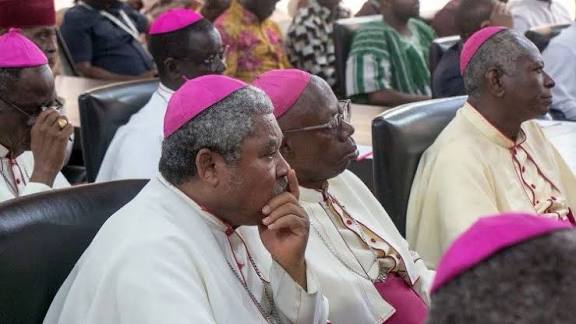
The cocoa sector, once the pride of the national economy and the backbone of rural livelihoods, is sinking into a deepening crisis that now threatens both social stability and the country’s global standing, prompting a strong intervention from the Ghana Catholic Bishops’ Conference.
In a press statement issued on Friday, February 20, 2026, the Conference sounded the alarm over what it described as a humanitarian, economic, and moral emergency unfolding across cocoa-growing communities, warning that farmers and rural families are paying the price for years of structural failures in the management of the sector.
The bishops’ concerns come against a long history of farmer grievances within the cocoa industry, where delayed payments, pricing disputes, and governance challenges at the Ghana Cocoa Board (COCOBOD) have repeatedly strained relations between producers and the state.
In recent months, the situation has worsened dramatically, with many farmers experiencing prolonged delays in receiving payments for cocoa already delivered. These delays, the Conference noted, have triggered a chain of hardship: farm labourers remain unpaid, children are forced out of school due to unpaid fees, household debts are rising, and vulnerable farmers are increasingly exposed to the lure of illegal mining (galamsey), which destroys farmlands and undermines long-term agricultural sustainability.
Compounding these difficulties is the recent reduction in the producer price of cocoa, a policy decision that has further shaken farmer confidence and intensified economic distress in cocoa communities.
According to the bishops, this cut has deepened a sense of abandonment among farmers who already feel marginalised by a system that benefits from their labour but fails to protect their welfare in times of crisis.
While acknowledging the reality of fluctuating international cocoa prices, the Conference rejected the idea that farmers should carry the full burden of global market volatility and domestic mismanagement. It recalled that during years when Ghana enjoyed windfall gains from favourable global prices, producer prices were not increased proportionately to reflect farmers’ contribution.
On that basis, the bishops argued that principles of equity and justice demand that accumulated surpluses from profitable years should now be used to cushion farmers during difficult periods. To do otherwise, they said, is not only economically unjust but morally indefensible, as it punishes farmers for circumstances beyond their control.
Beyond domestic challenges, the Conference also placed the cocoa struggles within a broader international context. It warned that Ghana’s historic position in the global cocoa economy is under serious threat, with Ecuador on track to overtake Ghana as the world’s second-largest cocoa producer.
At the same time, the combined production strength of Nigeria and Cameroon is emerging as a powerful competitive force in the global market. These shifts, combined with climate stress, declining productivity, and land degradation caused by illegal mining, place Ghana, in the bishops’ words, “at a strategic crossroads” that could redefine the country’s future in the cocoa industry.
In response to the crisis, the Ghana Catholic Bishops’ Conference outlined a set of urgent national priorities. These include the immediate payment of all outstanding arrears owed to farmers, transparent financial restructuring of COCOBOD, the sustenance of producer prices where increases are not feasible, and intensified investment in productivity and farmer support systems.
The bishops also called for a depoliticised national dialogue on the cocoa sector, one that places farmers’ welfare at the centre of policy-making rather than partisan interests. They stressed the need to prioritise youth participation, research, innovation, and local cocoa processing as critical strategies for securing the sector’s long-term future.
The Conference further revealed that its concerns have been formally communicated at the highest levels of government.
A detailed pastoral letter on the cocoa crisis has been privately conveyed to John Dramani Mahama and the leadership of Parliament, urging decisive action and policy reforms to avert what it described as a looming national catastrophe for cocoa-dependent communities.
Speaking through its President, Matthew Kwasi Gyamfi, the Bishop of Sunyani, the Conference framed the crisis as more than an economic policy failure. It described the rescue of Ghana’s cocoa industry as a moral imperative, stressing that the treatment of cocoa farmers reflects the nation’s values and sense of justice. “Justice for cocoa farmers is justice for Ghana,” the bishops declared, linking the survival of the cocoa sector to national stability, rural development, and the country’s long-term economic resilience.