By Issah Olegor
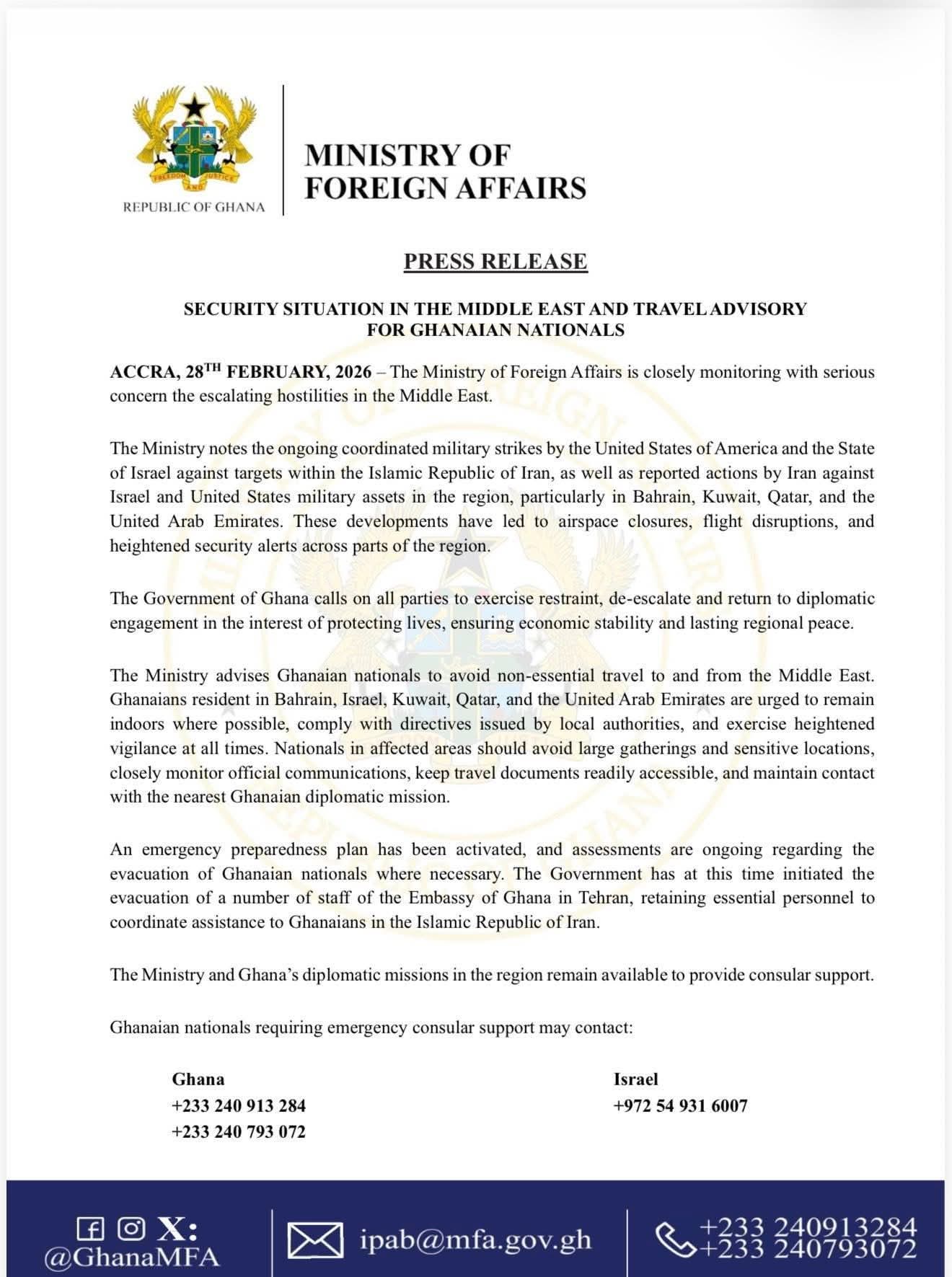
The Government of Ghana has activated emergency diplomatic and security measures following a sharp escalation in hostilities in the Middle East, as coordinated military actions between the United States and Israel against targets in the Islamic Republic of Iran deepen regional instability.
The Ministry of Foreign Affairs in a statement confirmed that it is closely monitoring the evolving security situation, which has already triggered airspace closures, flight cancellations, and heightened security alerts across multiple Gulf and Middle Eastern states.
In a statement issued in Accra on February 28, 2026, the Ministry expressed serious concern over the widening scope of the conflict, noting reported retaliatory actions involving US military assets in Bahrain, Kuwait, Qatar, and the United Arab Emirates.
These developments, according to the Ministry, have created a volatile security environment that poses direct risks to civilians, foreign nationals, and international travel.
The response is rooted in its long-standing foreign policy tradition of non-alignment, diplomacy, and peaceful conflict resolution.
Historically, Ghana has consistently advocated for dialogue and multilateral engagement in global conflicts, particularly in the Middle East, where tensions have often had ripple effects on global security and economic stability.
In line with this diplomatic posture, the government has called on all parties involved in the current confrontation to exercise restraint, de-escalate hostilities, and return to diplomatic engagement in the interest of protecting lives, safeguarding economic stability, and ensuring long-term regional peace.
As part of immediate protective measures, the Ministry has issued a strong travel advisory, urging Ghanaian nationals to avoid all non-essential travel to and from the Middle East.
Ghanaians currently resident in Israel, Bahrain, Kuwait, Qatar, and the United Arab Emirates have been advised to remain indoors where possible, strictly comply with directives from local authorities, avoid large gatherings and sensitive locations, and maintain heightened vigilance at all times.
Citizens have also been directed to keep their travel documents readily accessible, monitor official communications, and remain in constant contact with the nearest Ghanaian diplomatic missions.
The government has further activated an emergency preparedness and response plan, including ongoing assessments for possible evacuation operations where necessary. As part of these precautionary steps, Ghana has already begun the evacuation of several staff from its Embassy in Tehran, while retaining essential personnel to coordinate assistance and provide support to Ghanaian nationals within Iran.
This move reflects the past crisis-response approach in conflict zones, where partial evacuations and skeleton diplomatic staffing are used to balance safety with continued consular support.
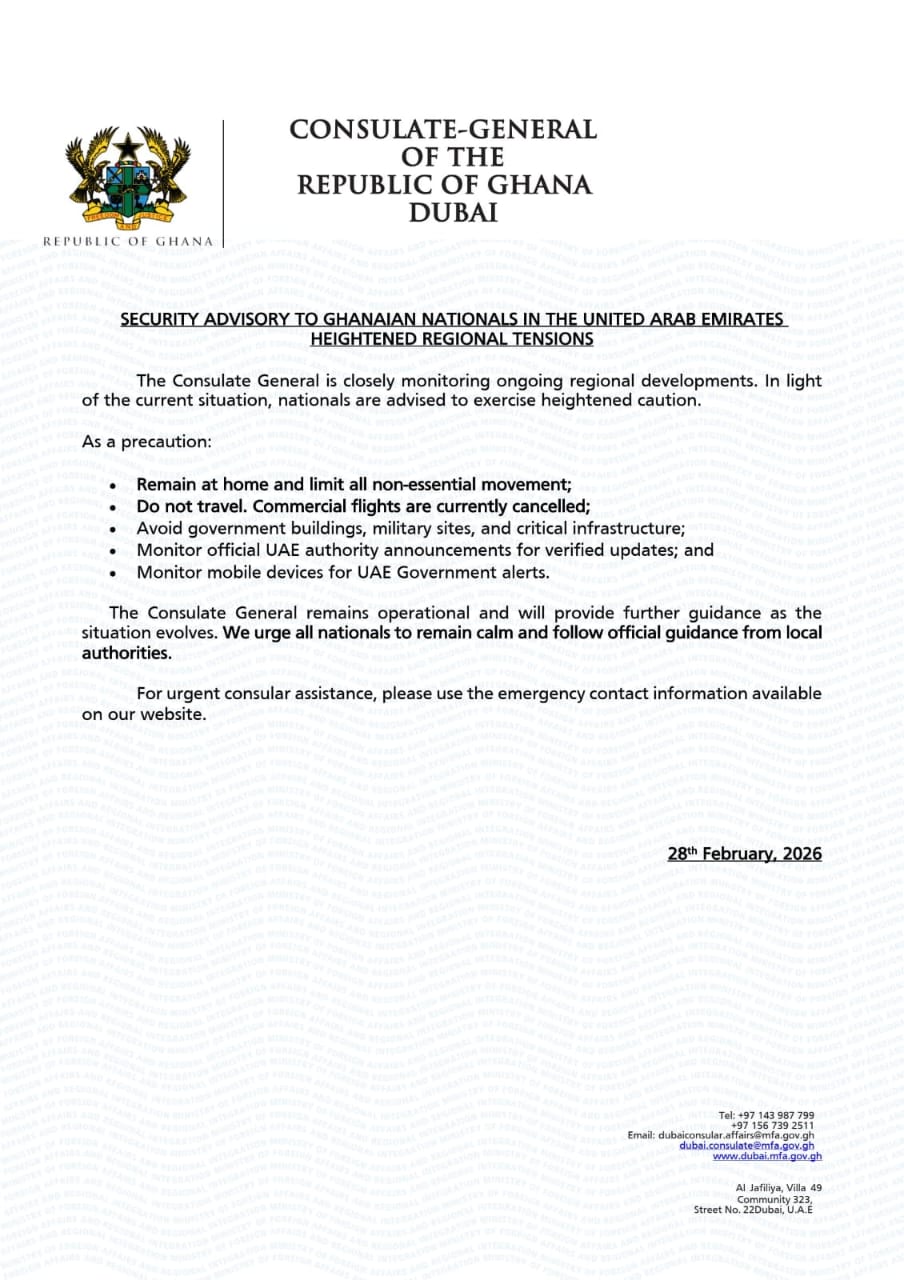
Similar security advisories have also been issued by Ghana’s diplomatic missions in the Gulf. In the United Arab Emirates, the Consulate-General in Dubai has instructed Ghanaians to remain at home, limit all non-essential movement, avoid government buildings, military installations, and critical infrastructure, and strictly monitor official UAE government announcements and emergency alerts.
Commercial flights, the mission noted, have been cancelled, reinforcing the need for residents to remain calm and stationary until further guidance is issued.
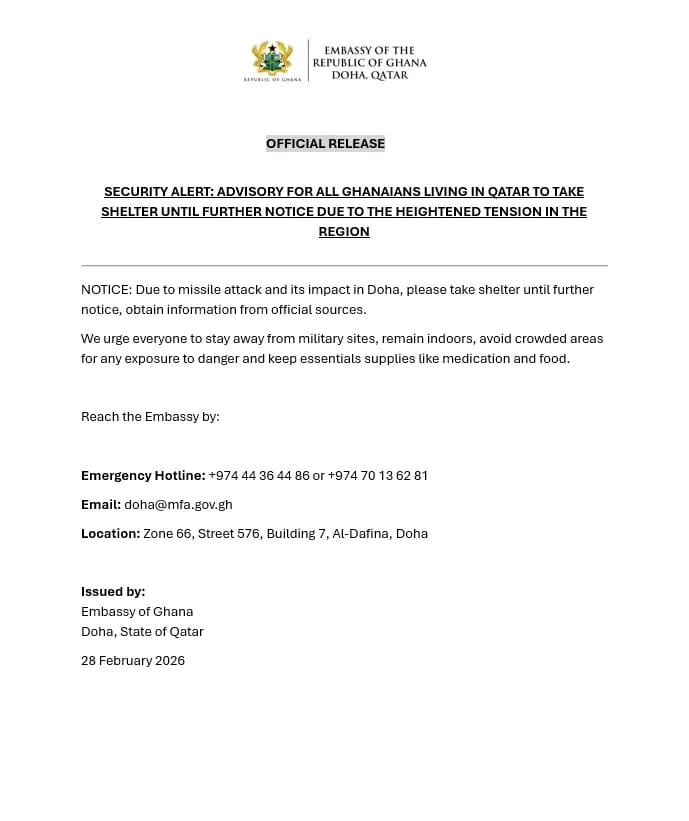
In Qatar, Ghana’s Embassy in Doha issued an urgent security alert following reports of missile-related incidents affecting the city.
Ghanaians were instructed to take shelter until further notice, remain indoors, avoid military sites and crowded public areas, and ensure they have essential supplies such as food and medication.
The Embassy emphasized that all information should be obtained only from official and verified sources to prevent panic and misinformation.
The diplomatic missions across the region remain operational and on standby to provide consular assistance, emergency coordination, and guidance to nationals.
The Ministry of Foreign Affairs has assured the public that it will continue to monitor developments closely and issue further updates as the situation evolves.