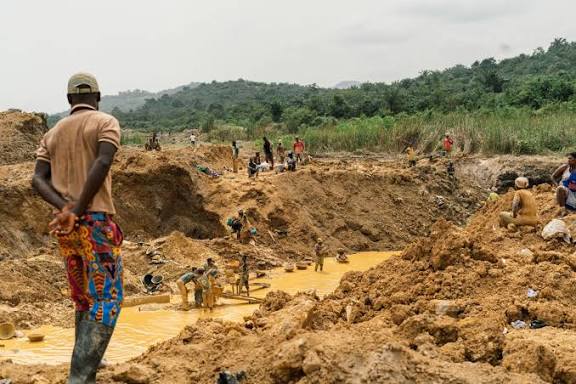
In Ghana under the prevailing political order the phenomenon of a Gold Curse is a reality. It is a worrying anomaly which comes in varied forms none of which wears a decent garb.
The precious mineral when managed well can lead to prosperity of a nation not so however when those assigned the charge of managing it in trust for the citizenry operate in opaqueness…from official implicitness in environmental degradation to policy dysfunction that provides impetus for white collar thievery.
Even as we battle with the illegal mining menace an existential challenge and otherwise dubbed galamsey notice has been served about a transaction at the apex bank which is exuding impropriety.
It makes us wonder why the temptation to wander into such improprieties is irresistible when a particular political party is at the throttles knowing well that a day of reckoning will dawn sooner or later.
When the former Vice President Dr. Mahamudu Bawumia thought out a template to protect our fragile economy from the fluctuations in crude oil pricing on the international stage a Gold-For-Oil programme cropped up in his dreams. Stocking up the precious mineral under a programme of building a reserve at the apex bank from the paltry tonnage since independence was another idea both of which were activated eventually.
The dividends emanating from these lofty programmes are without doubt cushioning the country in these turbulent times the unearned credit for which the NDC is relishing through propaganda.
Information which has made landfall on the media scene and traceable to the Tano North MP Dr. Gideon Boako is that another evidence of the gold curse has occurred.
Given the details he has laid out we have no doubt in our minds that it is a subject which demands an impartial, bipartisan and transparent probe and in the full glare of Ghanaians to rest it.
Under the circumstances not tackling the allegation head-on could lead to speculations which have the tendency to erode public trust in governance.
Was so much gold sold out from the national stock in the vault of the Bank of Ghana? Did the transaction follow laid-down procedure? It does not sound like it did otherwise we would not have been posing these questions today.
The Tano North MP’s concern and indeed that of Ghanaians came up in a reaction to the President’s State of the Nation Address a presentation which was intended to give the people of Ghana an account of governance so far.
If proven true therefore this transactional faux pas should take away so much points from the government’s scorecard.
Eighteen metric tonnes from the total reserve of 32 is not a few ounces of the precious mineral to let go.
Details of the purchaser and others would enable us to make important conclusions about this subject especially as government claims to be protecting the national purse.
Was the quantity sold exported or is still hidden somewhere in the country? It does sound fishy that so much gold would be sold by the state yet it will still be sitting somewhere awaiting a further decision as to what to do with it.
The possibility of a criminal intent in the transaction as suggested by the MP cannot be dismissed outright without further investigation.
If there is a test for our seriousness as a nation to protect the financial interests of the country this subject provides an appropriate opportunity unless we do not want to pursue it because some feathers would be ruffled.
That the transaction took place at a time when the country’s foreign exchange reserve looks healthy and bereft of visible challenge adds to the curiosity surrounding the deal.
There was a motive for the transaction whose justification is what we demand now. A long silence cannot not be tolerated.
Any attempt at dismissing this fear of possible unacceptable motive behind the transaction would not fly.
What accounted for the decision to repurchase the gold from the buyer? Selling the gold at $3,500 per ounce, only to contemplate repurchasing gold at $5,500 per ounce within a few months cannot escape the deliberate manipulation tag and as the MP noted ‘a betrayal of public trust.’