By Daniel Bampoe
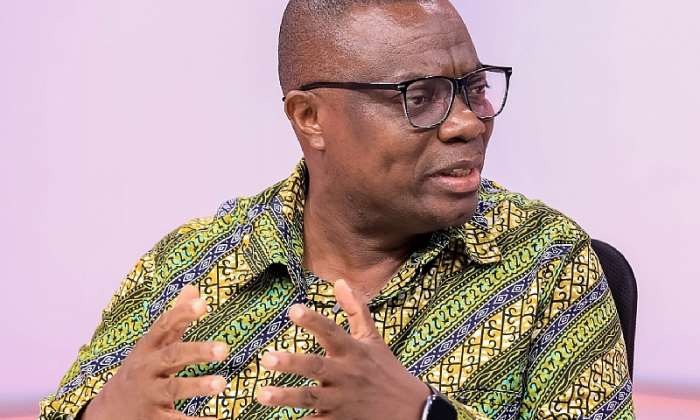
A fierce political and legal storm is unfolding around pollster Mussa Dankwah, Executive Director of Global InfoAnalytics, as disputes over his latest NDC presidential race polls spiral into accusations of manipulation, social media warfare, and threats of defamation lawsuits.
What initially appeared to be a routine release of tracking data on potential National Democratic Congress (NDC) flagbearers has now exposed deeper tensions within the party and raised serious questions about the credibility, influence, and neutrality of political polling in Ghana.
From Polling Data To Political Flashpoint
The controversy began when Global InfoAnalytics released updated polling figures on the NDC’s emerging 2028 presidential race.
The data placed Finance Minister Dr. Cassiel Ato Forson at the top of the field, followed by NDC National Chairman Johnson Asiedu Nketiah, Education Minister Haruna Iddrisu, and Vice President Prof. Jane Naana Opoku-Agyemang.
While the rankings themselves were enough to stir internal debate, it was the absence—and later the low placement—of Chief of Staff Julius Debrah that triggered outrage within sections of the party.
Julius Debrah, who has in recent months built a strong grassroots presence through nationwide engagement campaigns and public activities, is widely regarded by some party insiders as a serious contender.
His omission from earlier polling lists—and later appearance at a relatively low position—raised suspicions about the integrity of the process.
‘Engineered Polls’ Allegations Emerge
Criticism quickly mounted, led by political figures and activists who accused Mussa Dankwah of selectively shaping the narrative around the NDC succession race.
Former Kumbungu MP Ras Mubarak openly questioned the credibility of the polls, arguing that any serious analysis that excludes Julius Debrah should be treated with skepticism.
His comments echoed broader concerns that the polling exercise may have been designed to elevate certain candidates while sidelining others.
On social media, the debate intensified. A Facebook user, Nana Ama Agyarkoma, made explosive claims suggesting that inclusion in the polls could be influenced by financial considerations, alleging that failure to meet certain monetary demands could result in exclusion.
Although unproven, the allegation struck at the heart of the poll’s credibility and quickly gained traction online.
Dankwah Fires Back Amid Mounting Pressure
Facing mounting criticism, Mussa Dankwah responded forcefully, rejecting claims of bias and defending his independence as a pollster.
In a strongly worded reaction, he dismissed his critics and insisted that he does not depend on any politician for his work. He suggested that attacks against him were expected and part of the nature of his profession, indicating that he had prepared for such backlash before entering the polling space.
His defiant response, however, did little to calm the situation, as critics doubled down on their accusations.
Legal Escalation: Defamation Notice Issued
The dispute took a dramatic turn when lawyers representing Mussa Dankwah issued a formal legal notice demanding an immediate retraction and public apology over the bribery-related allegations.
The legal team described the claims as “false, malicious, and gravely damaging,” arguing that they directly attack Dankwah’s professional integrity and the institutional credibility of Global InfoAnalytics.
The notice warned that failure to comply within 48 hours would result in legal proceedings, including claims for general damages, aggravated damages, injunctions, and court-ordered retractions.
The lawyers further emphasized that under Ghanaian law, even indirect or implied defamatory statements—esp Revised Poll Raises More Eyebrows ecially those that lead to wider publication—can attract liability.
Revised Poll Raises More Eyebrows
Amid the backlash, Mussa Dankwah released an expanded list of potential NDC contenders, this time including Julius Debrah. However, his placement at number 15 only intensified criticism.
The revised list featured over 20 names, including prominent figures such as: Johnson Asiedu Nketiah, Dr. Kwabena Duffour, Kojo Bonsu, Mahama Ayariga, Samuel Okudzeto Ablakwa and Prof. Jane Naana Opoku-Agyemang
But critics pointed to unusual entries like “Someone else” and “Undecided” as evidence of inconsistency and lack of methodological clarity.
Some observers described the revision as a reactive move aimed at damage control rather than a genuine correction of earlier omissions.
Underlying Issue: NDC Succession Battle Intensifies
Beyond the immediate controversy, the dispute reflects a deeper struggle within the NDC over its post-Mahama future.
With President John Dramani Mahama expected to exit office in 2029 in line with constitutional term limits, the race to succeed him is already quietly underway. However, unlike previous transitions, the party currently lacks a universally accepted frontrunner.
This has made polling data unusually influential—and controversial—as different factions seek to project strength and shape perceptions ahead of internal primaries.
A Defining Moment for Political Polling
What started as a routine data release has now evolved into a defining test of credibility—for both a pollster and the broader practice of political research in Ghana.
With legal battles looming, reputations on the line, and the NDC’s internal contest heating up, the stakes have moved far beyond numbers.