BY Daniel Bampoe
The ambitious “Big Push” infrastructure programme—promised by the National Democratic Congress (NDC) government as a transformative $10 billion investment within four years—is increasingly facing scrutiny over how it will be financed, with fresh analysis suggesting that the country’s internal revenue streams may fall far short of meeting the target.
When President John Dramani Mahama unveiled the policy as part of his 2024 campaign commitments, he assured Ghanaians that the initiative would rely solely on domestically generated funds, avoiding additional borrowing.
The pledge was framed as a disciplined fiscal approach aimed at accelerating infrastructure delivery without deepening the country’s debt burden.
That position was reiterated on July 12, 2025, when the President engaged members of the Public Interest and Accountability Committee (PIAC).
At the meeting, he identified petroleum revenues and mineral royalties as the primary funding sources for the initiative.
However, a closer look at the revenue performance—particularly from oil and minerals—has raised serious concerns.
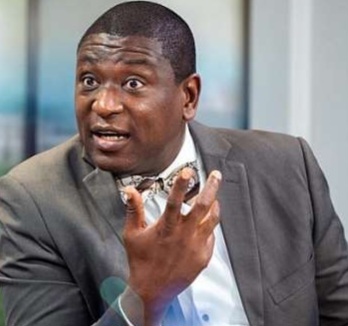
Policy think tank INSTEPR, led by its Director Kwadwo Poku, has examined data from the Bank of Ghana’s Ghana Petroleum Funds reports and revenue records from the Minerals Income Investment Fund (MIIF), concluding that the numbers may not support the scale of the government’s ambition.
Historically, the petroleum earnings have been modest relative to the scale of the proposed spending.
Since oil production began in 2011, total petroleum revenue over a 15-year period has amounted to approximately $11.58 billion—just slightly above the entire budget for the Big Push. Crucially, not all of this revenue is available for infrastructure.
Under the Petroleum Revenue Management Act, petroleum income is distributed among several entities, including the Ghana National Petroleum Corporation (GNPC), the Ghana Petroleum Funds, and the Annual Budget Funding Amount (ABFA), which goes into the Consolidated Fund. Only the ABFA portion is available for government spending on infrastructure.
In 2025, Ghana recorded total petroleum revenue of $770.27 million. Of this, only about $433.3 million was allocated to the ABFA, limiting the government’s usable share for projects under the Big Push.
Mineral royalties, the second pillar of the proposed funding strategy, also present constraints. The MIIF reported a record GH¢5.43 billion in royalties in 2025, equivalent to roughly $517.1 million.
Following recent legislative changes, 80% of these funds—about $413.7 million—are expected to be transferred to the Consolidated Fund for infrastructure development.
Combined, petroleum revenues and mineral royalties contributed approximately $846.9 million in 2025. At that rate, analysts argue, it would take more than 11 years to accumulate the $10 billion required for the Big Push—far exceeding the government’s four-year timeline.
The funding gap becomes even more pronounced when juxtaposed with ongoing project commitments.
The Roads Minister has disclosed that contracts worth over $7 billion have already been awarded under the initiative, many through single-source procurement due to urgency. These projects are scheduled for completion by the end of 2027.
This raises pressing fiscal questions. The government has earmarked GH¢46 billion (about $4.4 billion) in the 2025–2026 budget for the programme, but it remains unclear how this allocation will be financed without resorting to borrowing.
Additionally, with 81 major contracts expected to be completed by 2027, concerns are mounting over how the government will mobilize an estimated $3 billion to settle contractor payments within that timeframe.
Policy think tank INSTEPR Director Kwadwo Poku, argues that the current revenue trajectory makes it difficult to sustain the President’s claim of a no-borrowing strategy.
While the Big Push has been widely welcomed for its potential to address the infrastructure deficit, analysts insist that the financing model must be subjected to deeper scrutiny.