By Daniel Bampoe
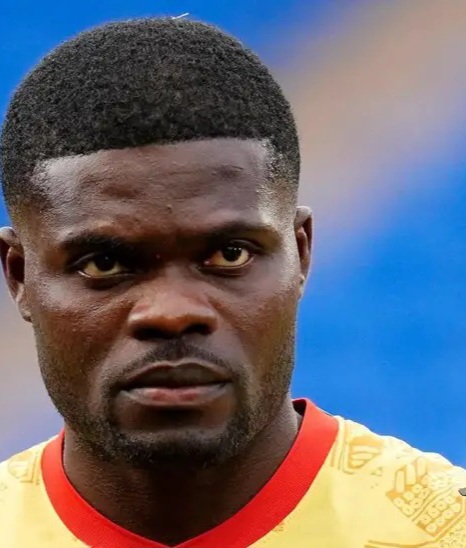
A diplomatic row has emerged between Ghana and Canada just days before the Black Stars begin their 2026 FIFA World Cup campaign, following Canada’s decision to deny midfielder Thomas Partey entry into the country for the opening Group L match against Panama.
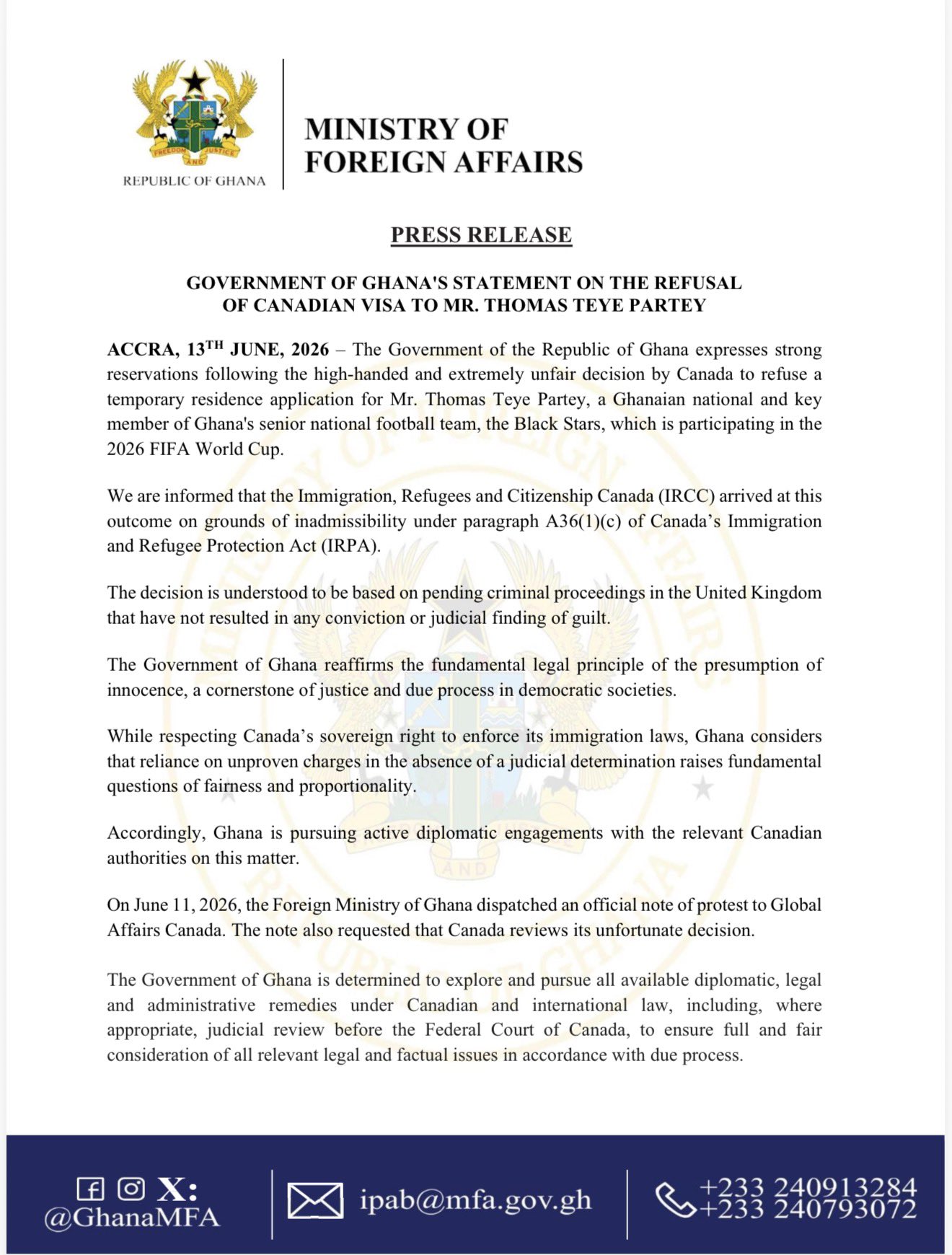
The Ghanaian government has strongly condemned the decision, describing it as “high-handed and extremely unfair,” and has formally protested through diplomatic channels.
The move means Partey, one of Ghana’s most experienced players, will miss the Black Stars’ opening fixture against Panama in Toronto despite being part of the official World Cup squad.
The controversy stems from ongoing criminal proceedings involving the 32-year-old former Arsenal midfielder, who currently plays for Spanish side Villarreal.
Partey is facing allegations of rape and sexual assault in the United Kingdom. He has consistently denied all charges and has not been convicted of any offence. The case remains before the courts, with no judicial determination yet made.
According to Ghana’s Ministry of Foreign Affairs, Canada based its visa refusal on the pending legal proceedings. However, the Ghanaian government argues that denying entry to a player who has not been found guilty by a court undermines the principles of fairness and due process.
In a strongly worded statement, Ghana expressed “strong reservations” about Canada’s action, stressing that while every sovereign nation has the right to enforce its immigration laws, decisions based solely on allegations that have not been tested in court raise serious concerns about proportionality and justice.
The government subsequently dispatched an official diplomatic note requesting Canadian authorities to review the decision.
The dispute comes at a particularly sensitive moment for Ghana.
The Black Stars are preparing for their fifth appearance at the FIFA World Cup and have been drawn in a challenging group featuring England, Croatia and Panama. Partey was widely expected to play a central role in coach Queiroz’s plans, bringing experience from previous World Cups and major international tournaments.
Although barred from entering Canada, Partey remains with the Ghana squad in Boston, United States, where the team is based for parts of the tournament.
FIFA regulations allow players to move between host countries subject to immigration requirements, meaning Partey remains eligible for the subsequent group matches against England in Boston and Croatia in Philadelphia, both of which will be played on American soil.
Canada Defends Decision
Canadian immigration authorities have defended their position. A spokesperson for Immigration, Refugees and Citizenship Canada stated that the country’s immigration laws remain fully applicable during major international events, including the World Cup.
The spokesperson emphasized that every applicant is assessed individually based on available facts and the provisions of Canadian law.
FIFA, meanwhile, has distanced itself from the matter, explaining that visa approvals and immigration decisions fall entirely under the jurisdiction of host governments and are outside the authority of world football’s governing body.
The Partey case is the latest immigration-related controversy to affect the expanded 2026 FIFA World Cup, which is being jointly hosted by Canada, the United States and Mexico.
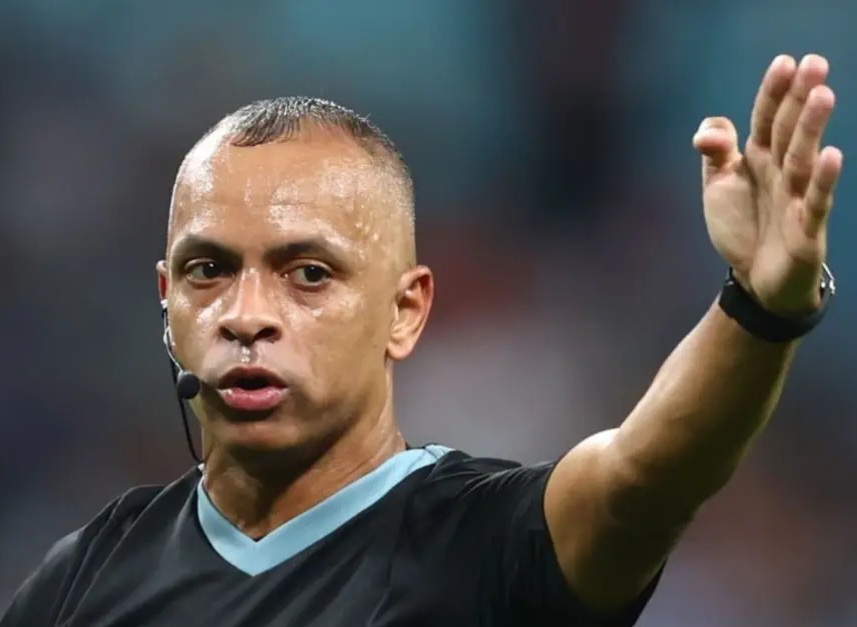
Earlier in the tournament, Somali referee Omar Artan was denied entry into the United States despite being scheduled to officiate matches. Artan later described the setback as “fate” and encouraged fellow Somalis not to lose hope.
For Ghana, the timing of the dispute could hardly be worse. The Black Stars have spent months preparing for the tournament, including high-profile international friendlies and extensive fundraising efforts backed by corporate sponsors and supporters.
Expectations remain high among Ghanaians both at home and abroad, with many hoping the team can advance beyond the group stage after qualification from a difficult African qualifying campaign.
The absence of Partey for the opening match represents a significant setback, particularly against a Panama side viewed as a direct rival in the battle for qualification to the knockout stages.
However, Ghanaian officials remain hopeful that diplomatic engagement could still lead to a review of Canada’s position, even as the team focuses on its immediate World Cup challenge.