A fresh political battle has emerged over the future of Ghana’s stalled Agenda 111 hospital programme, with Member of Parliament for Twifo Atti-Morkwa, Theophilus Dominic Vondee, rejecting calls for government to divert resources from its flagship 24-Hour Economy initiative to complete unfinished hospitals across the country.
The National Democratic Congress (NDC) lawmaker argued that while healthcare infrastructure remains important, government must honour the commitments it made to Ghanaians during the 2024 election campaign and pursue both economic transformation and healthcare expansion simultaneously.
His comments come amid growing pressure on the Mahama administration to accelerate the completion of the Agenda 111 hospitals, a programme launched by the previous New Patriotic Party (NPP) government to address healthcare infrastructure deficits exposed by the COVID-19 pandemic.
The latest debate was triggered by calls from former Minister for Roads and Highways, Francis Asenso-Boakye, who has repeatedly urged government to redirect funds earmarked for the 24-Hour Economy market projects toward the completion of the unfinished hospitals.
Asenso-Boakye renewed the proposal during parliamentary discussions this month, arguing that healthcare infrastructure should take precedence over new market developments.
However, when the matter came up in Parliament, Health Minister Kwabena Mintah Akandoh declined to provide a direct response regarding possible reallocations of government funding, explaining that Cabinet deliberations are bound by confidentiality.
The issue has since evolved into a broader national discussion about government spending priorities, particularly at a time when the country faces competing demands for investment in healthcare, employment creation, infrastructure and economic recovery.
Speaking on JoyNews, Vondee dismissed suggestions that the Mahama administration should suspend or scale down the 24-Hour market programme to fund Agenda 111.
According to him, critics of the current government’s approach were part of an administration that had eight years in office but failed to fully complete and operationalise the very hospitals they now want prioritised.
“In eight years, the NPP could not even operationalise their own initiative,” Vondee stated.
The MP questioned why former ministers who are now demanding urgent action on Agenda 111 did not ensure the completion of the hospitals while serving in government.
He specifically challenged Francis Asenso-Boakye’s position, arguing that as a senior member of the previous administration, he had the opportunity to push for the completion of the projects but failed to do so.
Vondee further contended that government should not be forced into choosing between economic development and healthcare infrastructure.
He insisted that both the 24-Hour Economy initiative and the completion of the Agenda 111 hospitals can proceed concurrently if properly managed.
According to him, abandoning one flagship programme to finance another would undermine commitments made to voters and potentially derail efforts to stimulate economic activity, create jobs and boost productivity.
The debate over Agenda 111 dates back to August 2021 when former President Nana Addo Dankwa Akufo-Addo launched what was described as the largest healthcare infrastructure programme in the history.
The initiative sought to construct 111 hospitals across the country, including district hospitals, regional hospitals, psychiatric facilities and specialized healthcare centres.
The programme was introduced partly in response to lessons learned during the COVID-19 pandemic, which exposed significant gaps in Ghana’s healthcare infrastructure and emergency response capacity.
However, despite the ambitious vision, the project faced financial and implementation challenges.
By the time the NPP administration left office in January 2025, none of the 111 facilities had become fully operational but some have been commissioned.
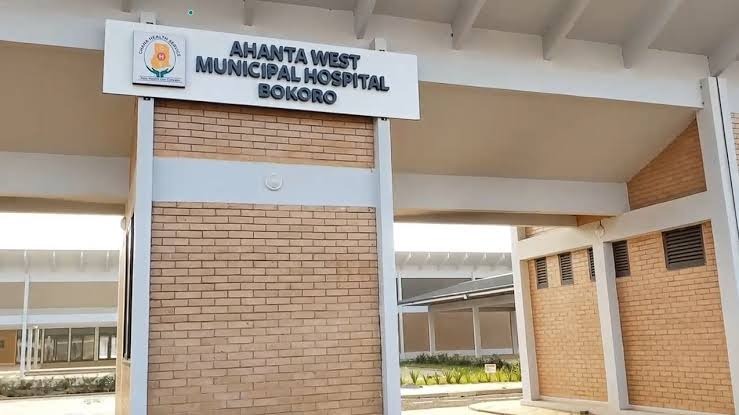
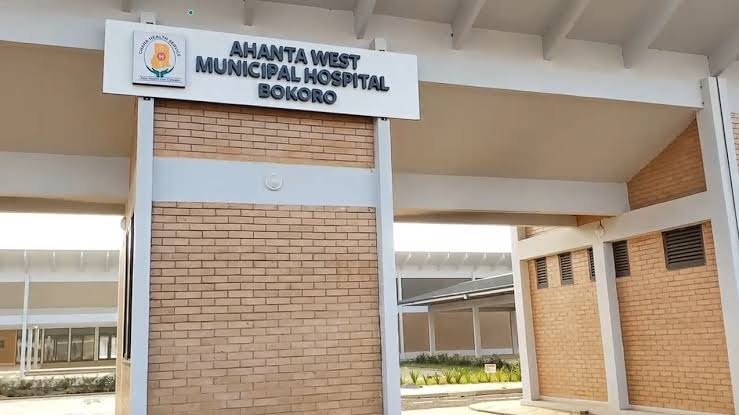
Although hospitals at Trede, Kokoben and Ahanta were commissioned, reports indicated that some of the facilities were yet to be fully equipped and staffed to provide comprehensive healthcare services.
Since assuming office, the Mahama administration has maintained that a significant number of the hospitals remain unfinished.
Government estimates suggest that approximately 90 of the 111 facilities still require substantial work before they can become fully operational.
Officials have also indicated that completing the entire programme could cost approximately US$1.7 billion, placing additional pressure on the country’s already constrained fiscal space.
Faced with these financial realities, government has adopted a phased approach to the project.
Under the 2026 budget, authorities announced plans to prioritise the completion of ten Agenda 111 hospitals while identifying another 35 facilities considered to be at advanced stages of completion.
The administration has also indicated that it is exploring partnerships with private investors, faith-based organisations and healthcare institutions to mobilise additional funding for the remaining projects.
To support the initial phase of the programme, government allocated GH¢100 million in the 2026 budget.
However, analysts note that the amount represents only a small fraction of the total resources required to complete all outstanding hospitals nationwide.
The controversy surrounding Agenda 111 has intensified in recent months following recurring concerns about congestion at major referral hospitals, particularly the Komfo Anokye Teaching Hospital (KATH), where recent industrial actions and overcrowding challenges have renewed calls for additional healthcare capacity.
Opposition politicians have cited these challenges as evidence that unfinished hospitals should be prioritised over new projects.