By Issah Olegor
Growing concerns over food insecurity and malnutrition across Africa have prompted agricultural experts to call for urgent and coordinated efforts to diversify the continent’s crop production systems by promoting indigenous and underutilised crops capable of strengthening food security, improving nutrition and building resilience against climate change.
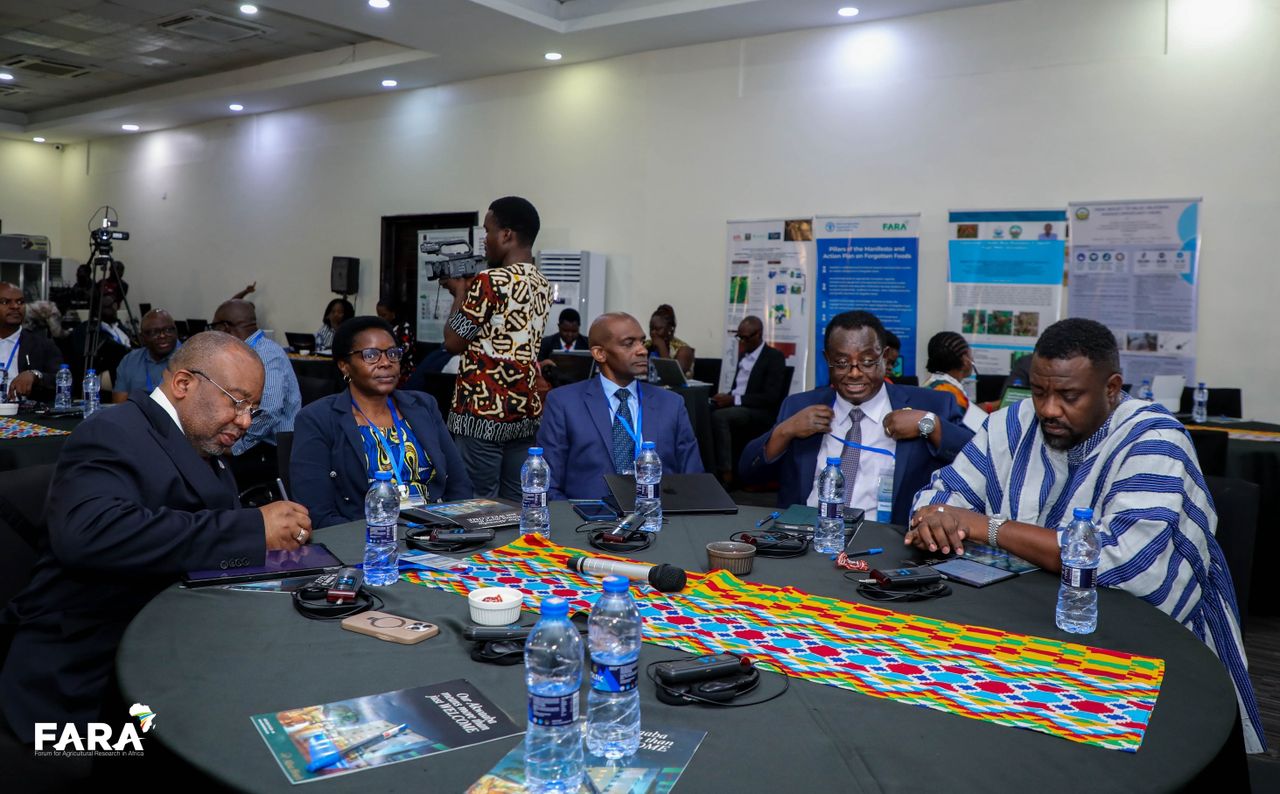
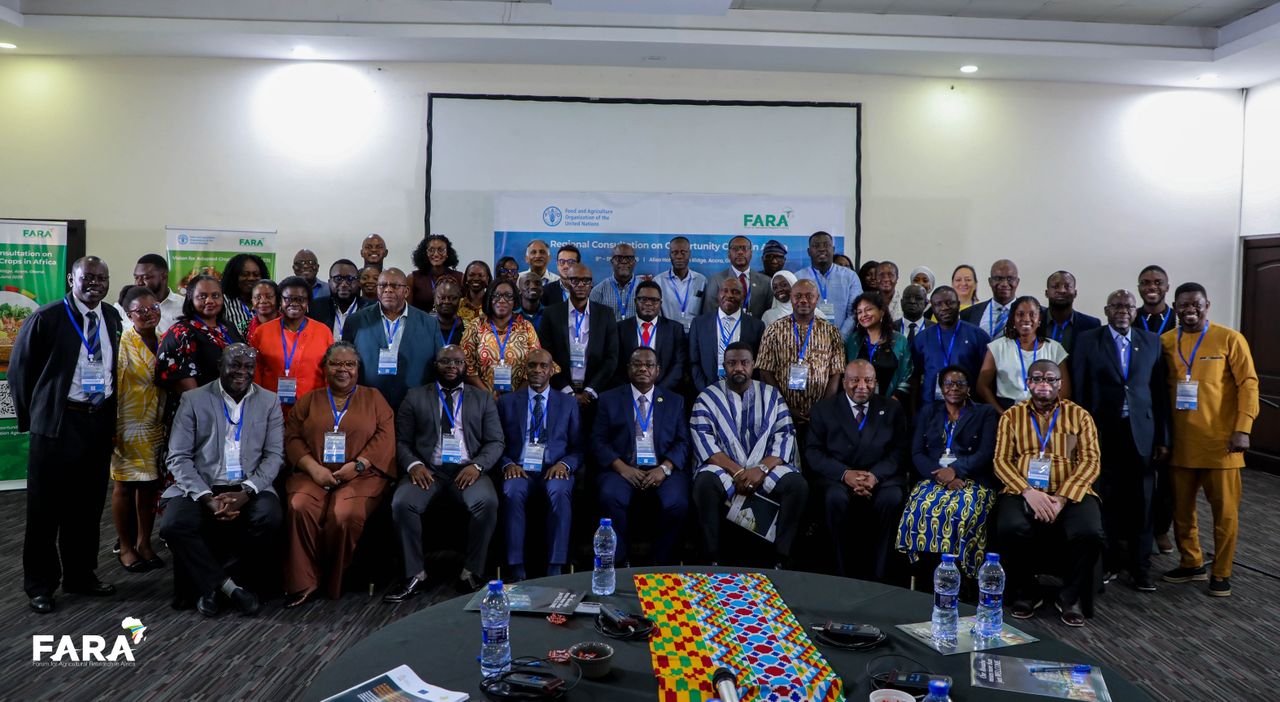
The call was made during the opening of a three-day regional consultation on “Opportunity Crops” in Africa in Accra.
The meeting, organised by the Food and Agriculture Organisation (FAO) in collaboration with the Forum for Agricultural Research in Africa (FARA), brought together policymakers, agricultural researchers, development partners, private sector players, civil society organisations, farmer groups and regional institutions to chart a common strategy for integrating neglected indigenous crops into Africa’s food systems.
The consultation comes at a critical time when Africa continues to grapple with rising food prices, climate-induced agricultural challenges, declining soil fertility and increasing pressure on food systems due to rapid population growth.
Experts estimate that food demand on the continent will increase by nearly 50 per cent by 2050, making the search for sustainable and climate-resilient food sources more urgent than ever.
Delivering the keynote address, the Deputy Director in charge of the Plant Production and Protection Division at the FAO, Dr. Chikelu Mba, stressed that Africa must rethink its agricultural production systems if it is to achieve universal food security and improved nutrition.
According to him, governments, development partners and agricultural stakeholders must work together to build cropping systems that are sustainable, resilient and inclusive, while ensuring they serve the nutritional and economic needs of all citizens.
Dr. Mba explained that many indigenous African crops—commonly referred to as “opportunity crops”—have been cultivated for generations but have received little attention from policymakers, researchers and investors.
These crops include millets, traditional sorghum varieties, fonio, bambara groundnut, indigenous vegetables and several other local crops deeply embedded in African food cultures.
Despite their proven nutritional value and ability to withstand harsh climatic conditions, he noted that these crops remain under-researched, underfunded and poorly represented within formal seed systems, agricultural research programmes and commercial markets.
He disclosed that only 13 underutilised crop species have so far been prioritised for commercialisation across sub-Saharan Africa.
He attributed the slow progress to several longstanding challenges, including the absence of comprehensive national strategies, inadequate documentation, weak investment in research institutions and human resource development, limited postgraduate training opportunities and persistent shortages of specialised skills needed to drive innovation in the sector.
“Our native foods matter because they contain high nutrient density, are climate-resilient and could be a source of economic empowerment,” Dr. Mba stated.
He emphasised that unlocking the full potential of indigenous crops would require stronger government policies, increased research and innovation, value addition to create employment, expanded market opportunities and stronger partnerships among governments, research institutions and the private sector.
Representing the Government of Ghana, the Deputy Minister for Food and Agriculture, John Setor Dumelo, reaffirmed Ghana’s commitment to promoting indigenous and underutilised crops as part of broader efforts to transform the country’s agri-food systems.
He observed that for centuries African communities had cultivated resilient and nutritious crops that were naturally adapted to local environmental conditions.
However, many of these crops had gradually been sidelined by modern commercial agriculture despite their enormous potential to contribute to sustainable agricultural development, improved nutrition and climate adaptation.
According to Dumelo, Ghana considers the promotion of opportunity crops a key component of its agricultural transformation agenda.
“The transformation of our agri-food systems requires that we harness the full potential of our agricultural biodiversity whilst creating opportunities for farmers, processors, traders and agribusinesses,” he said.
He disclosed that the Ministry of Food and Agriculture, in partnership with the FAO, is implementing the “Support to Women Fonio Value Chain Actors in Ghana” project.
The initiative is designed to elevate fonio from a neglected and underutilised crop into a commercially competitive value chain capable of competing with major staple crops such as rice and maize.
The project also seeks to improve incomes for women engaged in fonio production and processing while expanding market opportunities for the crop both locally and internationally.
The Accra consultation forms part of broader continental efforts to reposition indigenous African crops as strategic assets for food security, climate resilience and economic development.