
By Daniel Bampoe
Growing attempts by some politicians, activists and private citizens to test the constitutional limits of the presidential tenure have sparked an unprecedented backlash from some of the country’s most respected legal scholars, constitutional experts, civil society leaders and even senior figures within the governing National Democratic Congress (NDC), all insisting that President John Dramani Mahama must not be persuaded into pursuing what they describe as an unconstitutional third-term agenda.
The controversy has intensified following three separate suits currently before the Supreme Court, in which private citizens are seeking judicial interpretations of Article 66(2) of the 1992 Constitution.
The Supreme Court is set to examine the meaning and application of Article 66 as it prepares to hear the three separate cases relating to presidential term limits.
The plaintiffs are Azubila E Salam, who filed his case on December 23, 2025; Kenneth K.A, Kuranchie, June 30, 2026 and Ganiwu Alhassan, July 9. Strangely it is the latest court actions that have pricked the conscience of the nation and getting everybody talking.
The plaintiffs argue that a President who has served two non-consecutive terms should remain eligible to contest another presidential election because the constitutional prohibition applies only to two consecutive terms.
The cases have generated widespread debate across the legal, political and academic circles over whether the Constitution permits such a narrow interpretation.
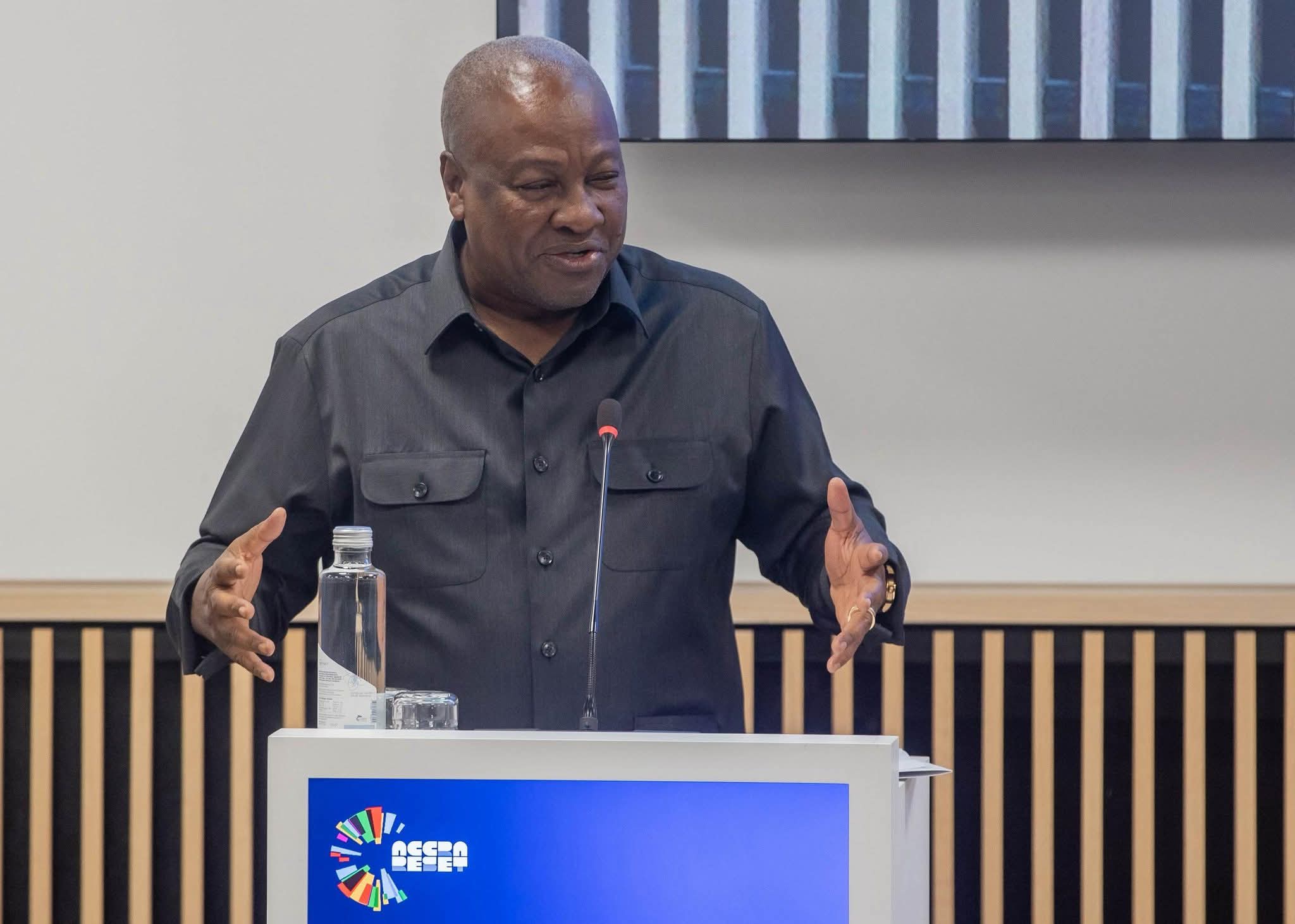
Although President Mahama has repeatedly maintained that he will respect the Constitution and leave office at the end of his current tenure, the legal actions have fuelled speculation about a possible third-term project, prompting several influential voices to publicly distance themselves from the idea and caution against what they believe could undermine the democratic gains.
3rd Term Narrative
Leading the opposition to the emerging narrative is Professor H. Kwasi Prempeh,
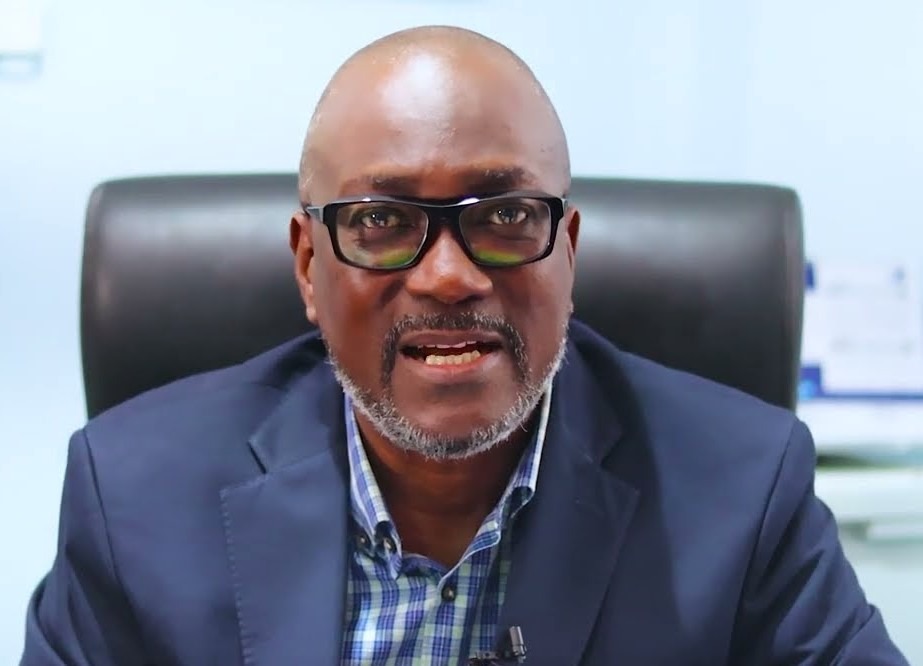
Executive Director of the Ghana Center for Democratic Development (CDD-Ghana) and one of the country’s foremost constitutional law experts. Prof. Prempeh has consistently argued that Article 66(2) leaves no room for ambiguity, insisting that “two terms mean two terms.”
According to him, any attempt to use judicial interpretation to create an avenue for a former President to return after serving two elected terms would amount to rewriting the Constitution through the courts rather than through the constitutional amendment process prescribed by law.
He has warned that allowing such an interpretation would effectively become a “constitutional amendment by stealth,” arguing that presidential term limits were deliberately entrenched in the 1992 Constitution to prevent the return of authoritarian rule and to guarantee peaceful democratic transitions.
Another respected scholar, Professor Kwaku Asare, popularly known as Kwaku Azar, has also rejected suggestions that Article 66(2) could be interpreted to permit another presidential bid after two terms.
The United States-based Ghanaian academic has consistently maintained that the Constitution establishes an absolute two-term limit for elected Presidents and that any contrary interpretation would erode one of the strongest democratic safeguards introduced under the Fourth Republic.
For Kwaku Azar, the constitutional architecture was deliberately designed to ensure regular leadership renewal, prevent excessive concentration of executive power and protect the country from the dangers associated with indefinite presidential rule.
Adding his voice to the growing chorus is New Patriotic Party (NPP) stalwart and lawyer Gabby Asare Otchere-Darko, who has openly criticised attempts to promote what he describes as a third-term narrative.
Gabby Asare has argued that the democratic stability depends on strict adherence to constitutional term limits and has warned against any legal or political manoeuvre that seeks to circumvent the clear intention of the framers of the Constitution.
According to him, preserving the integrity of Article 66(2) is essential to protecting Ghana’s democratic reputation and preventing future abuses of executive power.
Interestingly, the strongest resistance has not come only from political opponents.
Within the governing National Democratic Congress itself, several influential figures have publicly rejected any suggestion that President Mahama should remain in office beyond the constitutional limit.
Among the earliest and strongest voices was NDC General Secretary Fifi Fiavi Kwetey, who delivered a scathing warning during the party’s 31st December Movement celebrations in Ada.Without mentioning specific individuals, Fifi Kwetey condemned what he described as growing sycophancy within the party, accusing some members of placing personalities above principles.
He warned that blind loyalty and excessive praise-singing threaten the ideological foundation upon which the NDC was built.
“The NDC was not built on personalities but on principles,” he declared, insisting that no individual, regardless of popularity, should be considered bigger than either the party or the nation.
Drawing historical parallels, Kwetey reminded party supporters that even former President Jerry John Rawlings, founder of the NDC, never attempted to remain in office beyond the constitutional limits despite his enormous popularity.
His remarks were widely interpreted as a direct response to growing calls by some party members urging President Mahama to consider remaining in office beyond two terms.
One of the most vocal advocates for changing the constitutional arrangement has been Kwame Asare Obeng (A Plus), the Member of Parliament for Gomoa Central.
A Plus has publicly argued that if Ghanaians desire continuity in Mahama’s leadership, the Constitution should be amended to make it possible.
He has questioned why the President should publicly rule himself out when constitutional amendments remain legally possible and has even expressed readiness to mobilise support for testing the law.
The constitutional debate has become even more intense following the filing of three separate suits at the Supreme Court.
The first, brought by Azubila E Salam; the second by Kenneth Kwabena Agyei Kuranchie, asking the apex court to declare that Article 66(2) prohibits only two consecutive elected presidential terms and that where there is a break in presidential service, eligibility should effectively restart.
The third suit, filed by Ganiwu Alhassan of Kpandai in the Northern Region, similarly seeks a declaration that a President who has served two separate and distinct terms remains constitutionally qualified to contest another election because the constitutional prohibition targets consecutive tenure rather than interrupted periods of service.
Both plaintiffs rely heavily on previous Supreme Court authorities, including Tuffuor v Attorney-General, New Patriotic Party v Attorney-General, Bank of Ghana v Sefa & Asiedu, Nartey v Attorney-General, Larbi v Salloum and other constitutional precedents, arguing that constitutional provisions should be interpreted purposively rather than literally.
Despite these legal arguments, President John Dramani Mahama has consistently denied any intention of pursuing a third presidential term.
On several occasions, he has publicly affirmed his commitment to the 1992 Constitution, insisting that he will leave office at the end of his constitutionally permitted tenure and has no hidden agenda to amend the Constitution for personal political benefit.
The controversy gained further political momentum after the Constitutional Review Committee chaired by Professor Kwasi Prempeh recommended extending the presidential term from four years to five years while retaining the constitutional two-term limit.
Although the recommendation was intended to improve governance and policy continuity rather than extend individual presidencies, critics feared it could eventually become part of broader discussions surrounding presidential tenure.
The recommendation immediately drew strong reactions from opposition politicians, including the MP for Akuapem North, Sammi Awuku, who warned that his party would resist every attempt to weaken the constitutional safeguards.
Political observers say the convergence of Supreme Court litigation, constitutional reform proposals and public advocacy has transformed what began as an academic legal debate into one of the most politically sensitive constitutional questions facing the Fourth Republic.
While the Supreme Court is yet to determine the pending constitutional suits, legal scholars, civil society organisations and senior political figures continue to insist that Ghana’s democratic stability depends on preserving the integrity of presidential term limits.
For now, the Attorney-General is expected to defend the State’s position before the apex court, whose eventual decision is likely to become one of the most consequential constitutional rulings in the democratic history, settling once and for all whether Article 66(2) imposes an absolute two-term limit or merely prohibits two consecutive presidential terms.


