BY Issah Olegor
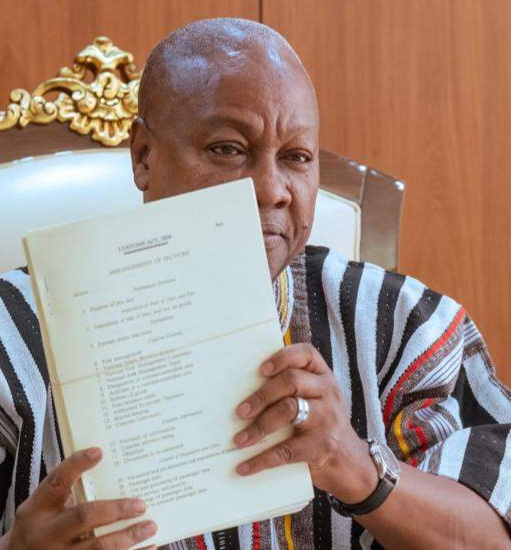
President John Mahama has signed 10 Bills into law, completing the legislative process for a package of reforms covering taxation, customs administration, cocoa regulation, energy-sector levies, the justice system, maritime offences and national defence.
The presidential assent, announced on August 26, 2026, follows Parliament’s passage of the various Bills over the past month and marks another significant stage in the Mahama administration’s ongoing legislative and policy reform programme.
The newly enacted legislation covers several areas considered important to the administration of the economy and public institutions.
Among the laws are the Customs Act, 2026; Community Service Act, 2026; Tribunal Act, 2026; Maritime and Related Offences Act, 2026; National Defence University Act, 2026; Income Tax (Amendment) Act, 2026; Energy Sector Levies (Amendment) Act, 2026; Ghana Cocoa Board Act, 2026; Value Added Tax (Amendment) Act, 2026; and Excise Act, 2026.
Tax reforms take centre stage
Three of the newly enacted laws directly concern Ghana’s tax framework — the Income Tax (Amendment), Value Added Tax (Amendment) and Excise legislation.
These laws introduce amendments to the existing legal framework governing taxation and excise duties, completing the legislative requirements for the changes following their approval by Parliament.
The Energy Sector Levies (Amendment) Act also provides amendments to the legislation governing levies within the energy sector.
The enactment of the laws comes as the government continues to pursue reforms intended to strengthen public administration and the management of state revenues.
The legislation also introduces important changes in two areas central to the economy: cocoa and customs.
The Ghana Cocoa Board Act, 2026 provides a new legislative framework for the operations of the cocoa regulator.
The development comes against the background of the strategic importance of cocoa to the agricultural economy and the state’s management of the cocoa sector.
The Customs Act, 2026, meanwhile, provides legislation governing customs administration and enforcement.
Together, the two laws establish updated legislative frameworks for institutions and activities that play significant roles in the trade and agricultural sectors.
President Mahama’s assent also covers legislation affecting the administration of justice.
The Community Service Act, 2026 and the Tribunal Act, 2026 form part of measures addressing aspects of the justice system.
The Community Service legislation establishes the legislative basis for community-service-related measures, while the Tribunal legislation concerns the legal framework governing tribunals.
The Maritime and Related Offences Act, 2026 also creates legislation dealing with offences committed within the maritime space.
Another major component of the legislative package is the National Defence University Act, 2026.
The law provides the statutory foundation for the establishment and operation of Ghana’s defence university, giving the institution a formal legislative basis within the country’s national defence and education framework.