BY DANIEL BAMPOE
Former Chief Justice Sophia Akuffo has called for reforms to Ghana’s appellate justice system, particularly tighter restrictions on interlocutory appeals to the Supreme Court, arguing that unnecessary appeals are contributing to delays in the determination of cases.
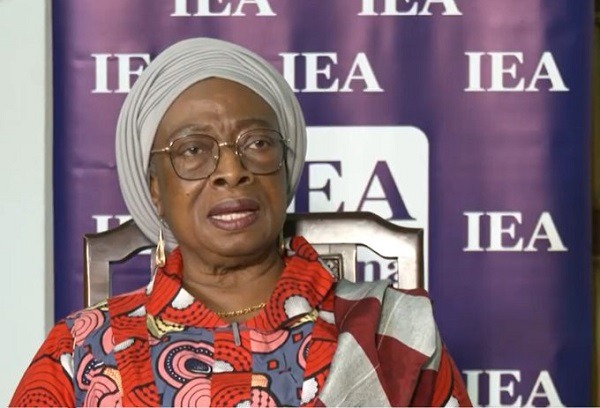
Speaking on Channel One TV’s The Point of View on Wednesday, September 2, 2026, the former Chief Justice said some matters are taken to the country’s highest court even when the substantive cases from which the appeals arise are still pending before the High Court.
She questioned the need for such matters to be escalated to the Supreme Court when the main case has not yet been determined by the lower court.
“Sometimes there are also some matters which come to the Supreme Court only on what is called interlocutory appeal, which is so unnecessary and shouldn’t have come to the Supreme Court because the case itself might still be in the High Court,” she said.
According to Justice Akuffo, the problem goes beyond the additional workload placed on the Supreme Court, because interlocutory appeals can remain pending for extended periods and consequently hold up the substantive proceedings from which they originated.
She said a case that is still being heard at the High Court could effectively be delayed while parties pursue an interlocutory matter through the appellate system, creating further difficulties for litigants seeking a final determination.
Call for More Cases to End at Court of Appeal
The former Chief Justice consequently advocated for a clearer limitation on the category of cases that proceed from the Court of Appeal to the Supreme Court.
She argued that cases which do not involve significant constitutional questions or raise genuinely new legal issues should ordinarily be concluded at the Court of Appeal rather than automatically progressing to the Supreme Court.
“A lot of other matters should end in the Court of Appeal if they don’t raise new issues or very sensitive constitutional issues,” she said.
Her comments come amid broader concerns about delays within the justice system and the capacity of the courts to dispose of cases within reasonable periods.
The proposal effectively places emphasis on ensuring that the Supreme Court focuses its limited judicial resources on matters of significant national, constitutional or jurisprudential importance rather than becoming another avenue for prolonged litigation over procedural or interlocutory issues.
IEA Rejects Five-Year Presidential Term
Justice Sophia Akuffo also used the interview to clarify the position of the Institute of Economic Affairs (IEA) on a separate constitutional reform proposal concerning the tenure of the President and Parliament.
She said the IEA does not support the proposal by the Constitutional Review Committee, popularly referred to as the Prempeh Committee, to extend Ghana’s presidential term from four years to five years.
According to her, the institute’s position is that the existing four-year presidential term should be maintained.
“I think we did mention that the proposal by the Prempeh Committee, which of course is acceptable to the Executive, that the term should be five years rather than four years and the IEA says no, we do not support such an extension,” she said.
Her position comes after government accepted the recommendation to extend both presidential and parliamentary terms from four years to five years.
Attorney-General and Minister for Justice Dr Dominic Ayine announced the government’s position in July 2026 as part of its response to the recommendations of the Constitutional Review Committee.
Questions Delays in Forming Government
Sophia Akuffo’s objection to a longer presidential term is also linked to her concerns about how governments transition into office and begin implementing their programmes.
She argued that elected leaders should ideally enter office with a clear agenda and a prepared team capable of immediately taking responsibility for the administration.
She questioned why significant periods can be spent constituting governments, including appointing ministers, regional ministers and governing boards of public institutions.
“One would expect that you arrive and you’re on your feet and you’re running and within hours of assuming office you’re naming your ministers, you’re naming your regional ministers and so on and so forth,” she said.