BY ISSAH OLEGOR
The Ghana Health Service (GHS) has intensified preparations against a possible Ebola outbreak, conducting multiple simulation exercises and activating emergency response mechanisms amid concerns over the spread of the deadly disease in parts of Africa.
The Director-General of the GHS, Dr Samuel Kaba Akoriyea, disclosed that the country had stepped up disease surveillance, emergency planning and inter-agency coordination to strengthen its capacity to respond swiftly should an Ebola case be detected in Ghana.
He said the Service was closely monitoring developments in affected countries, including the Democratic Republic of the Congo (DRC) and Uganda, while paying attention to reports of possible cross-border transmission and the spread of infections to other African countries.
Dr Kaba Akoriyea told JoyNews that Ghana remained in the preparedness phase but had begun testing its response systems through simulation exercises to identify potential gaps and improve coordination.
According to him, the movement of people across countries and the interconnected nature of international air travel make it necessary for Ghana to remain vigilant even when reported outbreaks occur outside its borders.
He explained that the GHS was maintaining regular contact with health officials in affected countries to obtain updates on the situation and assess the possible implications for Ghana.
The Director-General said the Service had activated its preparedness system since the outbreak was reported in the DRC, with additional simulation exercises conducted as concerns emerged about developments elsewhere in the region.
GHS Emergency Operations Centre on 24-Hour Alert
As part of the preparedness measures, the GHS is relying on its Public Health Emergency Operations Centre at Pantang to monitor emerging health threats and coordinate national response activities.
Dr Kaba Akoriyea said the centre operated around the clock, allowing health officials to monitor international developments and identify threats that could require intervention.
He stressed that continuous monitoring was essential to ensuring that Ghana could respond promptly to emerging public health emergencies.
The Director-General disclosed that the Service had conducted approximately three simulation exercises since concerns about the disease emerged in the region.
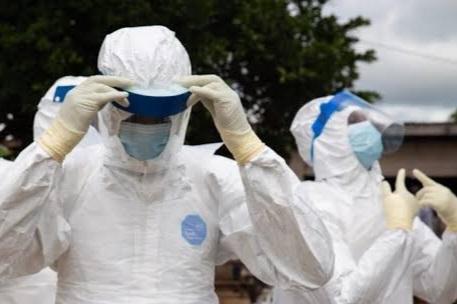
The exercises are intended to test the country’s readiness, including the identification and management of suspected cases, coordination among relevant institutions, emergency communication and the mobilisation of resources.
Although the exercises do not mean an Ebola outbreak has been detected in Ghana, they form part of efforts to ensure that health authorities and other emergency responders understand their responsibilities if a case is suspected.
33 Institutions Mobilised for Possible Ebola Emergency
In a further indication of the scale of the preparations, Dr Kaba Akoriyea revealed that approximately 33 institutions were involved in Ghana’s broader emergency preparedness arrangements.
He said the response went beyond the health sector, bringing together agencies responsible for national security, education, disaster management, local government, social welfare and public communication.
Among the institutions he identified were the Food and Drugs Authority (FDA), the National Disaster Management Organisation (NADMO), the National Commission for Civic Education (NCCE), the Ghana Education Service (GES), the Veterinary Services Department, the National Peace Council and the Ghana Armed Forces.
The Ghana Police Service and the military were also among the institutions involved in the inter-agency coordination arrangements.
Dr Akoriyea said the participation of these agencies was necessary because managing a potential outbreak would require more than medical intervention alone.
The involvement of security agencies, local authorities and disaster management officials is expected to support emergency coordination, logistics, public education and other operational requirements in the event of a health emergency.
Ghana Strengthens Cross-Border Cooperation
Beyond domestic preparations, the GHS is also engaging neighbouring countries to improve cooperation on infectious diseases and other public health threats that could spread across national borders.
Dr Kaba Akoriyea said Ghana had held cross-border meetings with health counterparts in Burkina Faso and Côte d’Ivoire, as well as a tripartite meeting to exchange information and compare developments.
He explained that the engagements were aimed at strengthening communication and enabling countries to coordinate their responses to potential threats.
The meetings are particularly important because frequent cross-border travel and trade can complicate efforts to contain infectious diseases when information is delayed or coordination is weak.
According to the Director-General, the discussions allowed participating countries to share updates on developments within their territories and consider how best to address emerging challenges collectively.
The GHS believes that closer cooperation with neighbouring countries will help strengthen regional surveillance and improve the flow of information needed to respond to potential outbreaks.