BY Daniel Bampoe
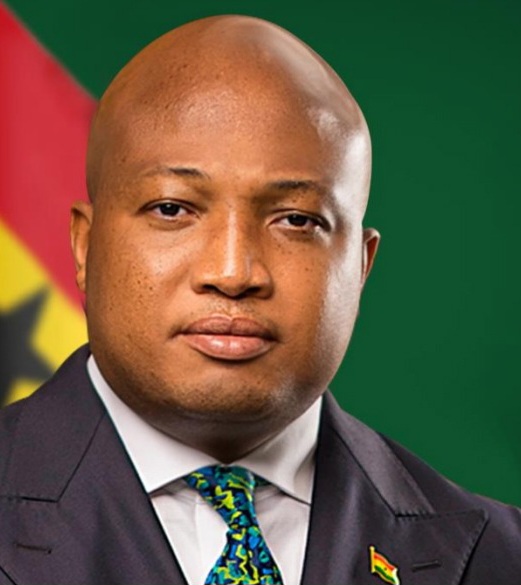
The Minority Caucus in Parliament has intensified pressure on President John Dramani Mahama to dismiss Foreign Affairs Minister Samuel Okudzeto Ablakwa over alleged financial irregularities surrounding the evacuation of Ghanaians from South Africa, warning that the minister’s continued stay in office could undermine public confidence and compromise efforts to establish accountability.
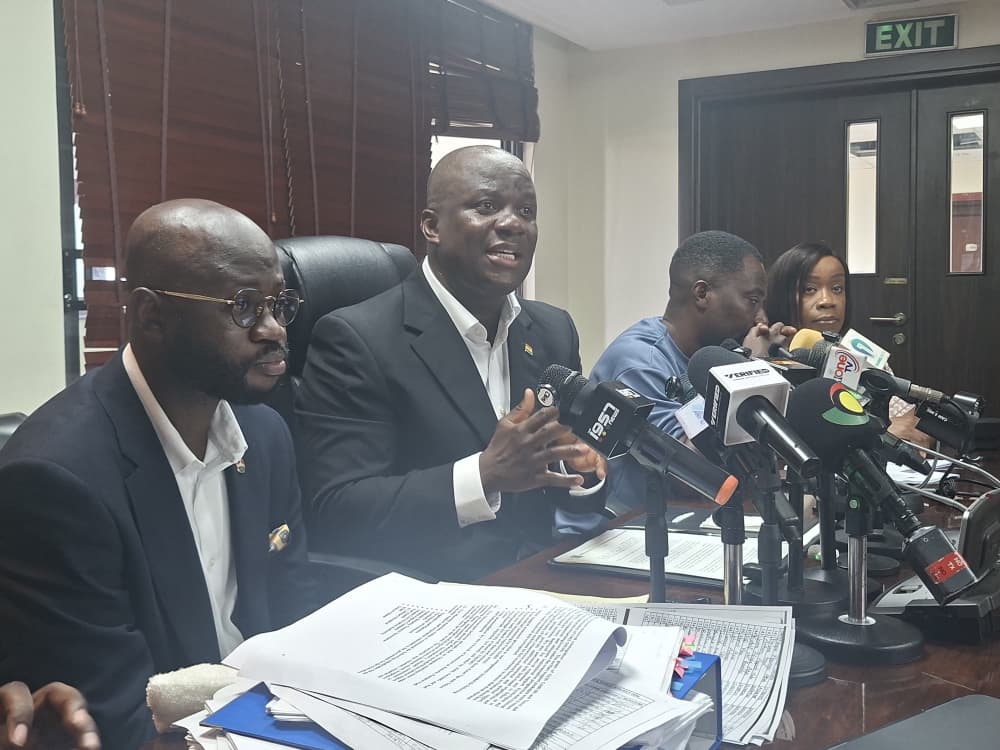
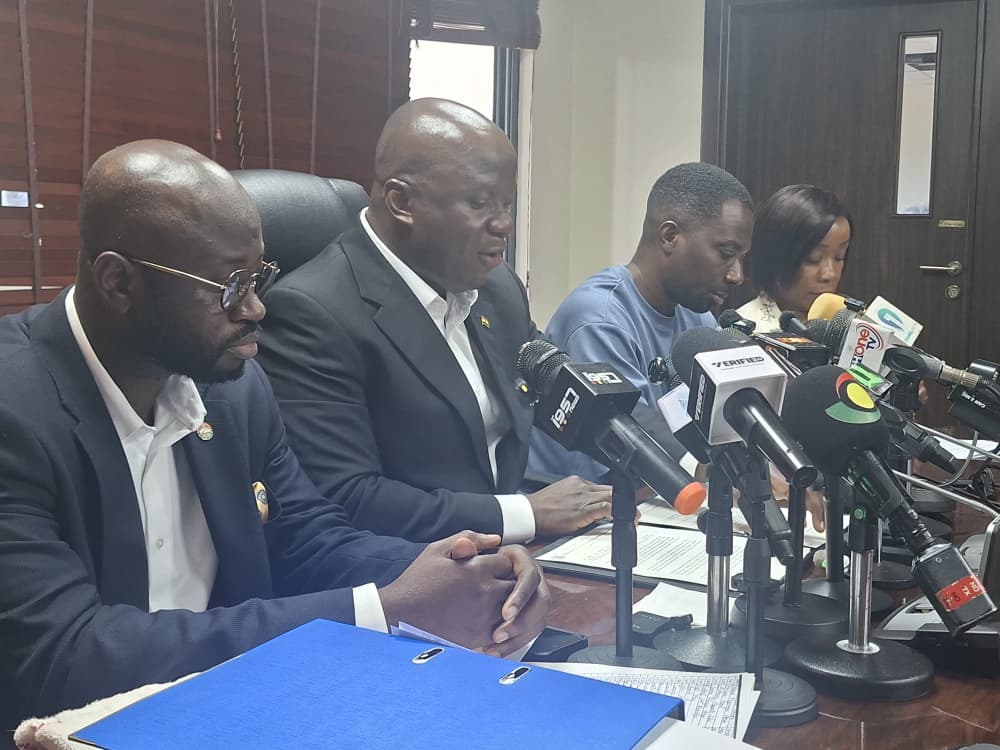
Addressing a press conference in Parliament on Tuesday, October 27, 2026, the Ranking Member of Parliament’s Foreign Affairs Committee, Samuel Abdulai Jinapor, and his deputy, Nana Asafo-Agyei Ayeh, accused the Ministry of Foreign Affairs of failing to provide satisfactory explanations for discrepancies identified in expenditure records relating to the evacuation exercise.
The Minority argued that the emerging revelations raise serious questions about public-fund management and demanded an independent forensic examination of the expenditure. It further called on Ablakwa to resign immediately, insisting that President Mahama must terminate his appointment if he refuses to step aside.
The controversy centres on the evacuation of Ghanaians from South Africa following concerns about their safety. According to the Minority, it initially supported the government’s intervention because it considered the protection and safe return of affected Ghanaian nationals a matter of national importance.
However, the caucus says its support for the exercise came with the expectation that public funds allocated to facilitate the operation would be properly managed, transparently accounted for and used for their intended purpose.
The Foreign Affairs Minister subsequently announced that the evacuation of 1,964 Ghanaians had cost GH¢49,721,786, a figure that has since become central to the Minority’s demand for a comprehensive examination of the expenditure.
GH¢49.7m Evacuation Bill Under Scrutiny
According to Jinapor, the Minority initiated its own examination of the evacuation expenditure after requesting an itemised account of the operation under the Right to Information Act, 2019 (Act 989).
The caucus said the Ministry of Foreign Affairs responded to the request by providing documents, which its members examined and compared with the minister’s public statements about the cost of the exercise.
That review, the Minority claimed, revealed discrepancies between the figures presented by the minister and what the payment registers appeared to establish.
It also alleged that the records contained duplicate entries, gaps in supporting documentation and expenditure items requiring further clarification.
The caucus said it subsequently raised the concerns publicly and called for an independent audit to establish whether the funds had been properly accounted for.
Jinapor explained that the minister later appeared in the media to defend the Ministry’s handling of the evacuation and offer explanations for the expenditure.
However, the Minority maintains that the responses did not resolve its original concerns.
Instead, it said further inquiries had uncovered additional anomalies and contradictions, deepening its suspicions about how the public funds were administered.
The Minority is demanding an external examination of the financial records to establish the facts, identify any wrongdoing and determine whether the expenditure complied with the relevant financial and administrative requirements.
Media Investigations Deepen Controversy
The controversy has also attracted attention following media investigations that have reportedly raised questions about payments allegedly made to some evacuees.
According to the Minority, media reports have highlighted cases in which some evacuees allegedly did not receive the allowances they were supposed to receive, despite entries suggesting that payments had been made.
The caucus also cited reports of duplicate entries, payment records allegedly lacking beneficiaries’ signatures, and expenditure for which supporting receipts were reportedly unavailable.
These claims, if substantiated by an independent investigation, could raise questions about the accuracy of the evacuation payment records and the effectiveness of the financial controls governing the operation.
The Minority’s Deputy Ranking Member, Nana Asafo-Agyei Ayeh, presented the caucus’s detailed findings and address issues arising from the additional inquiries and media investigations during the press conference.
The allegations have placed the management of the GH¢49.7 million evacuation expenditure under renewed scrutiny, with the Minority insisting that the government must establish a clear account of how the money was disbursed and who ultimately received the payments recorded in the relevant documents.
Minority Rejects Claims It Paid Evacuees to Attack Government
The Minority also used the press conference to respond to allegations made at a separate media engagement by some individuals who identified themselves as evacuees.
According to Jinapor, the caucus had followed reports of a press conference at which some evacuees allegedly accused the Minority of paying members of their group to speak against the government over the evacuation controversy.
He categorically denied the accusation, stating that the Minority had neither paid nor persuaded the evacuees to make statements against the government.
Jinapor maintained that some of the individuals had chosen to speak voluntarily after becoming aware of what they believed they were entitled to receive compared with what they actually received.
The Minority argued that the central issue should not be whether the individuals who raised concerns supported the opposition or the government, but whether the payment records accurately reflected the amounts received by the intended beneficiaries.
It also questioned reports that the Ghana High Commission in Pretoria had issued a stern warning to evacuees against speaking to the media about the matter.
The caucus challenged the Ministry and the High Commission to explain why such a warning would be necessary if the evacuation exercise had been properly managed and there were no irregularities to conceal.
Jinapor further claimed that some evacuees who participated in the separate press conference had acknowledged that they did not receive the amounts the Ministry reportedly indicated they had been paid, including sums they were allegedly recorded as having signed for.
These claims are central to the Minority’s demand for an independent audit. However, the allegations concerning the High Commission, the payment records and the conduct of officials require verification, including responses from the institutions and individuals implicated.
Ablakwa Faces Calls to Resign
The Minority has placed direct responsibility for the controversy on Foreign Affairs Minister Samuel Okudzeto Ablakwa, arguing that, as the political head overseeing the Ministry, he must account for the management of the evacuation exercise.
Jinapor accused the minister of presiding over what the caucus described as grave financial irregularities, possible misapplication of public funds and circumstances warranting investigation into potential fraud.
The Minority further alleged that the pattern of discrepancies raised suspicions about possible deliberate wrongdoing. It called for accountability at the highest level of the Ministry, arguing that the minister’s leadership had brought his office into disrepute.
The accusations represent the opposition caucus’s position and do not constitute a judicial determination of wrongdoing by Ablakwa.
Nevertheless, the Minority insists that the seriousness of the allegations requires the minister to take political responsibility while the issues are investigated.
Its demand for Ablakwa’s resignation also invokes President Mahama’s 2025 Code of Conduct and Ethics for Political Appointees. The caucus cited Section 2.1(j), which it says requires a minister to resign where their actions or leadership result in significant failure, corruption or a breach of public trust.
The Minority argued that the standard set by the President for political appointees must be applied consistently, particularly when questions arise over the administration of public resources.
It maintained that the minister should not remain in charge of the Ministry while the same institution’s records and handling of the evacuation are the subject of serious allegations requiring independent scrutiny.
President Mahama Told to Dismiss Foreign Affairs Minister
Beyond demanding Ablakwa’s resignation, the Minority has challenged President Mahama to demonstrate that his administration’s stated standards of public accountability carry consequences.
The caucus called on the President to terminate the minister’s appointment under Article 81(a) of the 1992 Constitution if Ablakwa fails to resign.
The demand places the President at the centre of the political dispute, requiring his administration to respond to the opposition’s allegations and determine whether any action is warranted while investigations are pursued.
For the Minority, the issue extends beyond the evacuation itself to the broader question of how public officials should respond when the handling of taxpayers’ money becomes the subject of serious public concern.
The caucus argued that allowing the minister to remain in office without an independent examination of the allegations could undermine confidence in the government’s commitment to transparency and accountability.
It has therefore framed the demand for Ablakwa’s removal as a test of the President’s willingness to enforce the ethical standards he has established for members of his administration.
Censure Motion Looms in Parliament
The Minority has also warned that it may initiate parliamentary proceedings for a vote of censure against Ablakwa if he remains in office.
Jinapor said the caucus would consider invoking Article 82 of the Constitution and Order 138 of Parliament’s Standing Orders to pursue the process.
A censure motion would move the dispute beyond public exchanges and into Parliament, where the minister’s conduct could become the subject of formal scrutiny under the applicable parliamentary procedures.
The threat signals that the Minority intends to sustain pressure on the Foreign Affairs Minister unless its demands are addressed.
The proposed parliamentary action would also intensify political scrutiny of the Ministry’s handling of the evacuation, particularly if further information emerges about the payment registers, the supporting documentation and the amounts reportedly received by individual evacuees.
The Minority has not, however, established through an independent audit or court ruling that the alleged irregularities amount to fraud. Its stated objective is to compel a transparent investigation and ensure that any wrongdoing established is dealt with through the appropriate processes.
Independent Audit Becomes Central Demand
At the heart of the Minority’s demands is a call for a comprehensive independent audit of the South Africa evacuation exercise.
The caucus wants the audit conducted by an internationally reputable accounting firm with a proven record and what it describes as unquestionable integrity.
It argues that an independent firm would be better positioned to examine the expenditure, compare payment registers with supporting records, identify discrepancies and establish whether the amounts disbursed correspond with what beneficiaries actually received.
The audit would also help determine whether the reported irregularities resulted from administrative failures, inaccurate record-keeping, improper payments or more serious misconduct.