BY Daniel Bampoe
The seizure of 46.7 kilogrammes of cocaine at Lebanon’s Rafic Hariri International Airport, reportedly transported from Ghana aboard a Middle East Airlines flight from Accra, has triggered fresh questions about the effectiveness of the country’s airport security systems and its efforts to combat international drug trafficking.
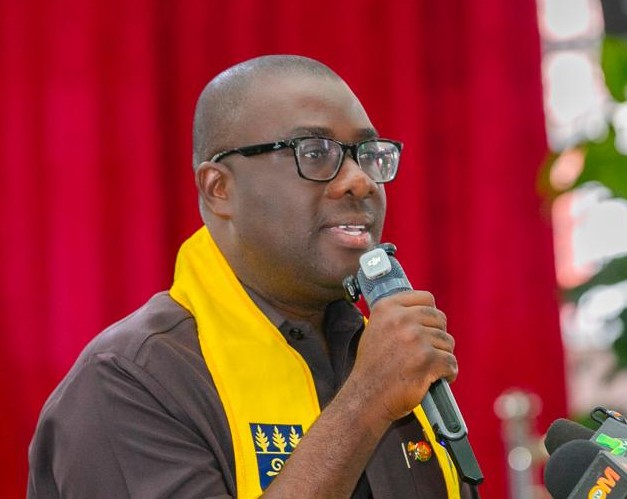
Former National Lottery Authority Director-General and Member of Parliament for Akuapem North, Samuel Kwabena Awuku, has called on the government and security agencies to provide a detailed account of how the consignment was able to leave Ghana, despite the security procedures expected to prevent illicit substances from being transported through the country’s airports.
In a statement titled “46.7KG of Cocaine from Accra: Government Must Answer the Hard Questions,” Mr Awuku argued that the incident raises concerns about the capacity of Ghana’s anti-drug trafficking institutions to detect and disrupt organised criminal networks operating through the country’s aviation sector.
The cocaine was reportedly discovered at Beirut’s Rafic Hariri International Airport after arriving from Accra aboard Middle East Airlines flight MEA 576. According to the account cited by Mr Awuku, Lebanese authorities had been monitoring the suspect, who was allegedly connected to an organised drug-smuggling operation.
Approximately 40 packages of cocaine, reportedly concealed through sophisticated methods, were intercepted before the suspect was arrested.
For Mr Awuku, the circumstances surrounding the seizure raise a fundamental question: how could such a substantial quantity of narcotics pass through Kotoka International Airport without being intercepted by Ghanaian security and customs officials?
He questioned whether the relevant security agencies had intelligence about the suspected operation before the shipment departed Ghana and, if so, what action was taken to prevent the drugs from being transported out of the country.
The Akuapem North MP also drew attention to the initial public account from Lebanese authorities, which reportedly highlighted the role of their customs and security institutions in the arrest without mentioning any Ghanaian involvement or intervention at Kotoka International Airport.
He said the absence of an immediate explanation about Ghana’s role created uncertainty over whether local authorities had detected, monitored or participated in the operation before the cocaine left the country.
NACOC clarification raises further questions
The discussion took another turn following a statement from the Narcotics Control Commission (NACOC), which explained that the arrest resulted from a coordinated controlled delivery operation involving Ghanaian and Lebanese drug enforcement authorities.
Mr Awuku acknowledged the clarification and commended the cooperation between the two countries. However, he insisted that the explanation should not end public scrutiny of the circumstances surrounding the shipment.
He wants NACOC and the other relevant security institutions to explain precisely what Ghana contributed to the operation, including how the consignment was identified, monitored and tracked, and what role Ghanaian authorities played in securing the eventual arrest.
A central issue he raised is why the cocaine was permitted to leave Kotoka International Airport if Ghanaian authorities were involved in a controlled delivery exercise.
Controlled delivery is an investigative technique that allows law enforcement agencies to monitor the movement of suspected illegal consignments, sometimes permitting them to proceed under official supervision to identify and apprehend other members of a criminal network.
However, Mr Awuku argued that Ghanaians deserve to know the safeguards applied in this particular operation and whether it achieved any additional investigative or enforcement objectives on the Ghanaian side.
He maintained that the public should be given sufficient information to understand the operation without compromising legitimate security or intelligence procedures.
Two-week anti-drug roadmap still under scrutiny
Beyond the Beirut cocaine seizure, Mr Awuku linked the incident to President John Dramani Mahama’s earlier directive instructing heads of security agencies to produce a roadmap within two weeks to address the movement of illicit drugs into and out of Ghana.
He questioned why, with the deadline reportedly having passed and the country entering a second month, there had been no publicly communicated update on the promised roadmap or the concrete measures arising from it.
The MP wants the government to explain whether the security agencies have completed the assignment, what recommendations were made and how those recommendations are being implemented.
His concern is that without visible measures and regular public updates, Ghanaians may remain uncertain about the progress being made to strengthen the country’s anti-narcotics operations and prevent international trafficking networks from exploiting its borders and aviation facilities.
Ghana’s international reputation at stake
Mr Awuku warned that the incident should not be treated as an isolated drug seizure, arguing that repeated concerns about narcotics trafficking could affect Ghana’s international reputation and raise questions about the reliability of its aviation security arrangements.
He stressed that cooperation with foreign law enforcement agencies remains important in combating organised crime, but such collaboration must be accompanied by transparency and accountability to the Ghanaian public.
The cocaine seizure in Beirut has therefore placed renewed attention on the responsibilities of NACOC, airport security officials, customs authorities and other agencies involved in preventing illicit substances from entering or leaving the country.
While acknowledging NACOC’s explanation of a coordinated controlled delivery exercise, Mr Awuku insists that several issues remain unanswered, particularly the circumstances under which the consignment passed through Kotoka International Airport and the specific role played by Ghanaian authorities.
He said the government must provide answers and demonstrate that the country is taking concrete steps to protect its borders, strengthen airport security and prevent Ghana from becoming a convenient transit point for international drug trafficking.