By Daniel Bampoe
The Akyempimhene Foundation, under the leadership of the Akyempimhene of Suhum Traditional Council in the Eastern Region, Barima Amoako Darko, has partnered with Professor Linda Eva Amoah of the Noguchi Memorial Institute for Medical Research and a team of Japanese researchers and educators to introduce schoolchildren in Suhum to the traditional Japanese art of paper folding known as Origami.
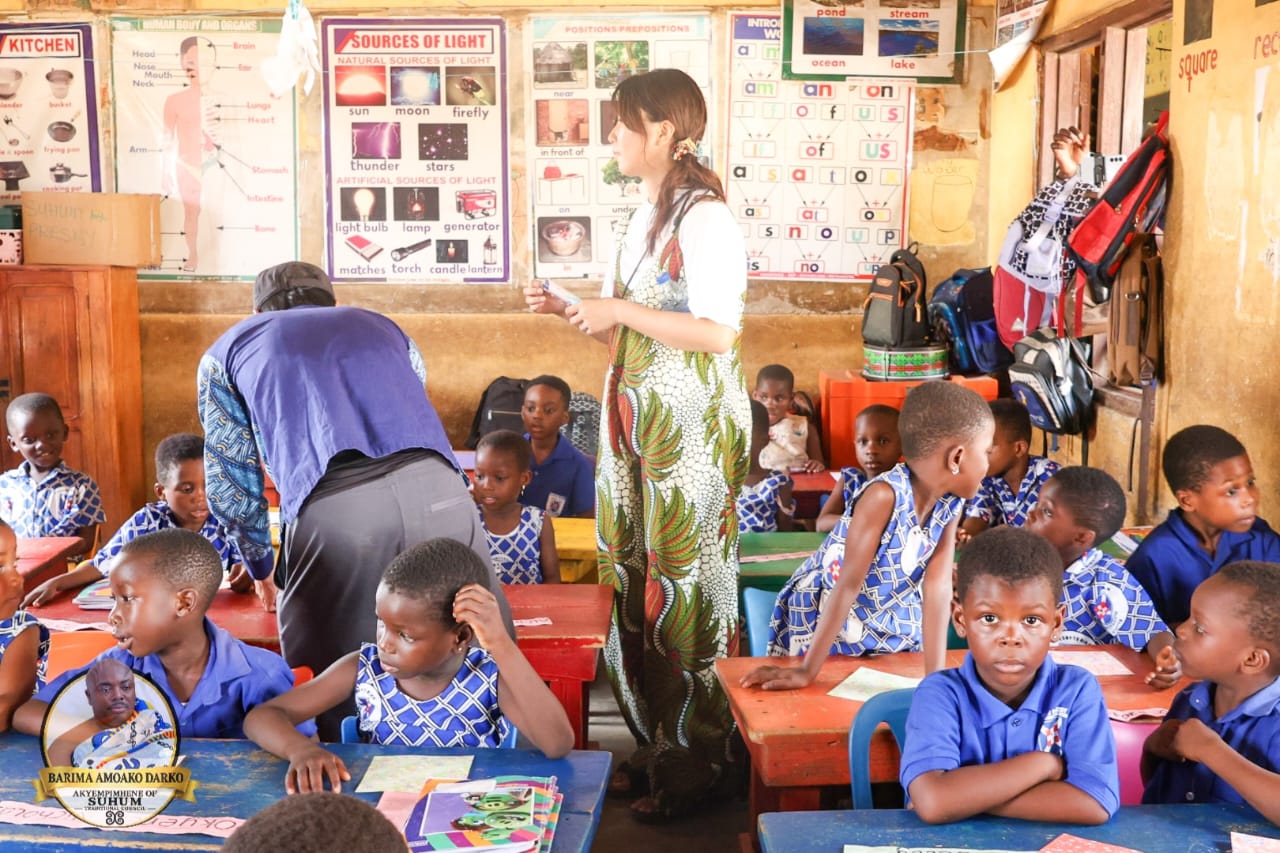
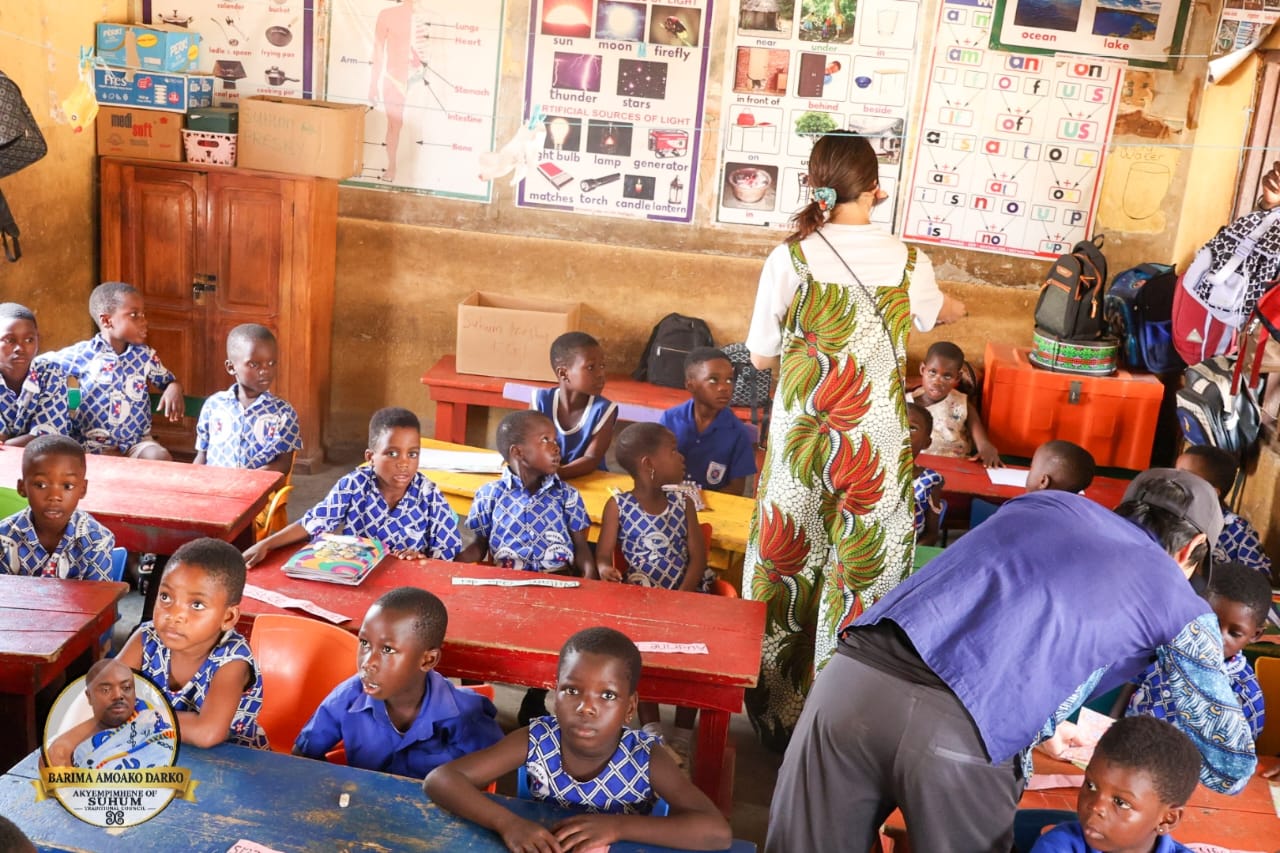
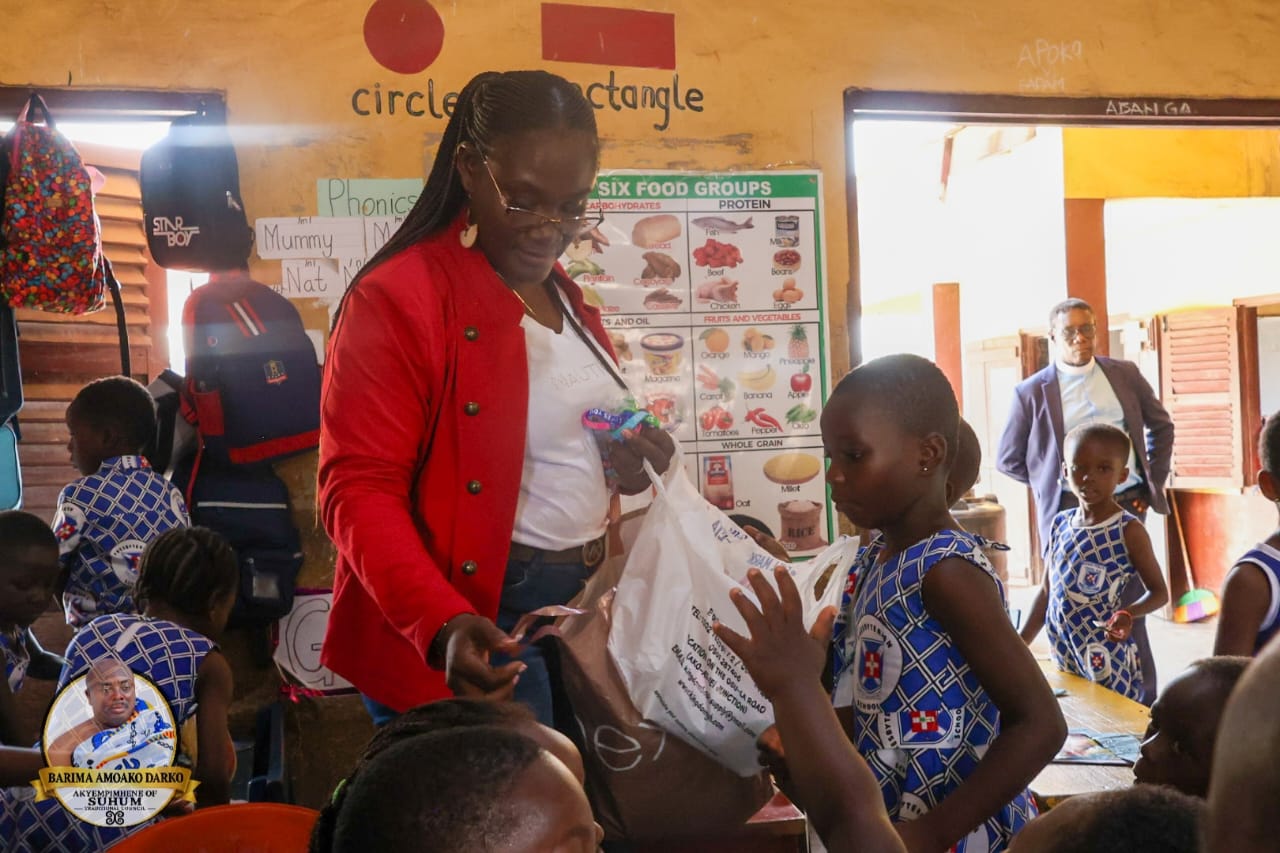
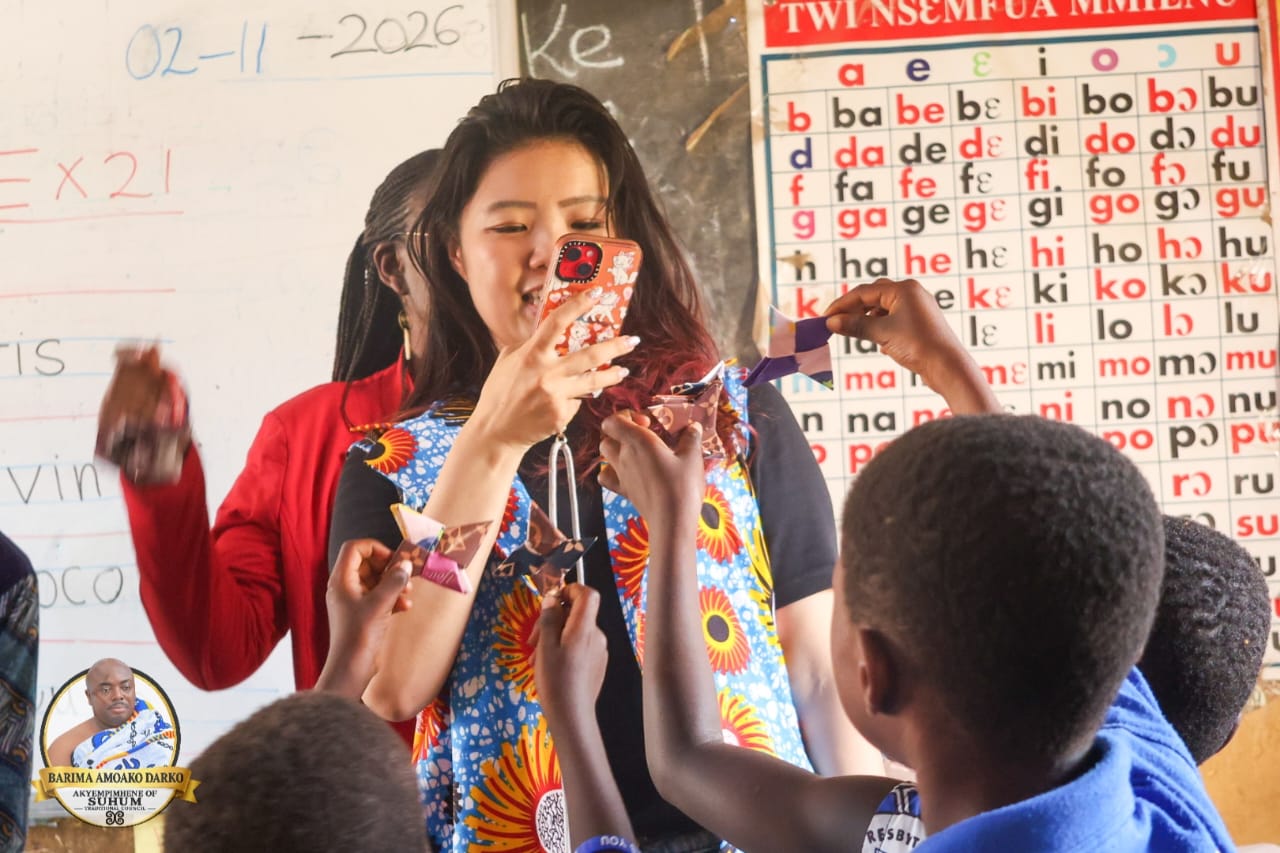
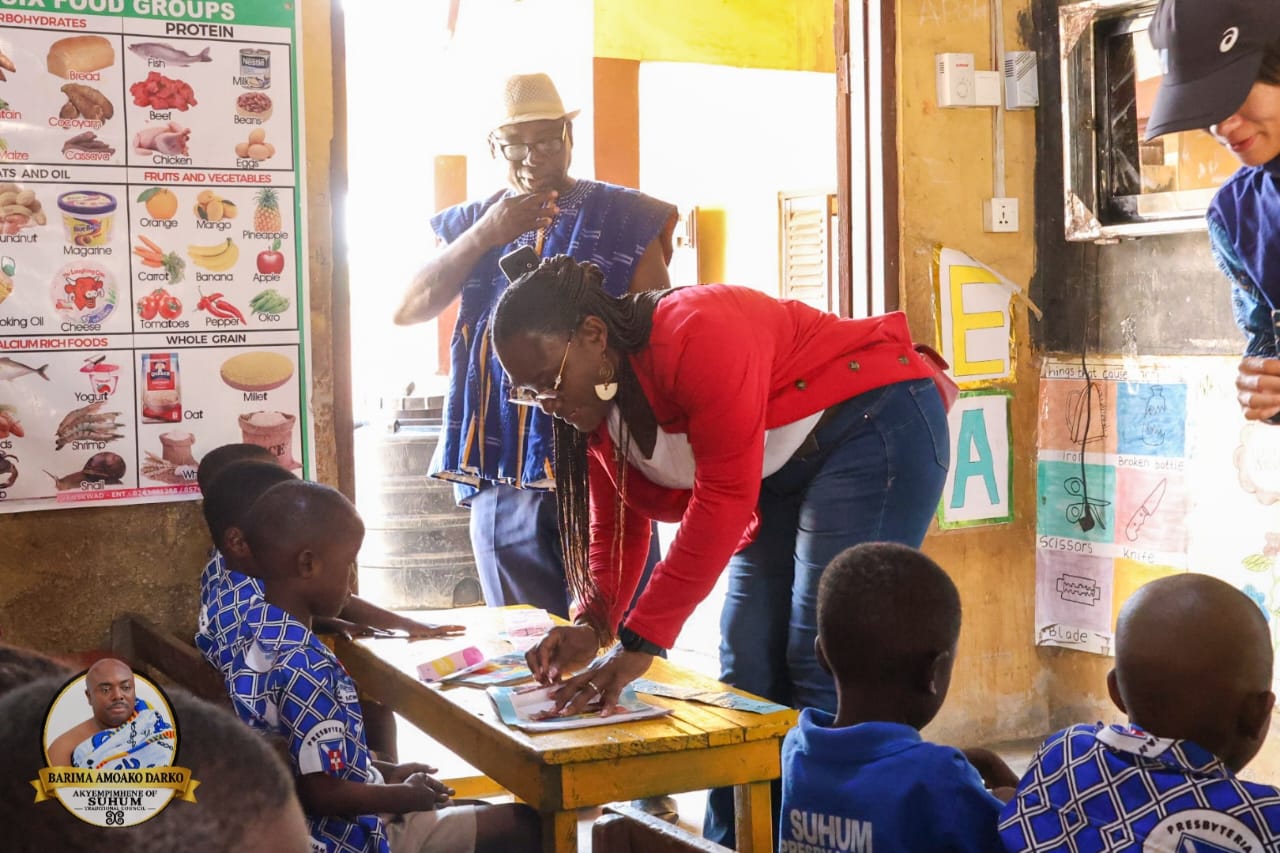
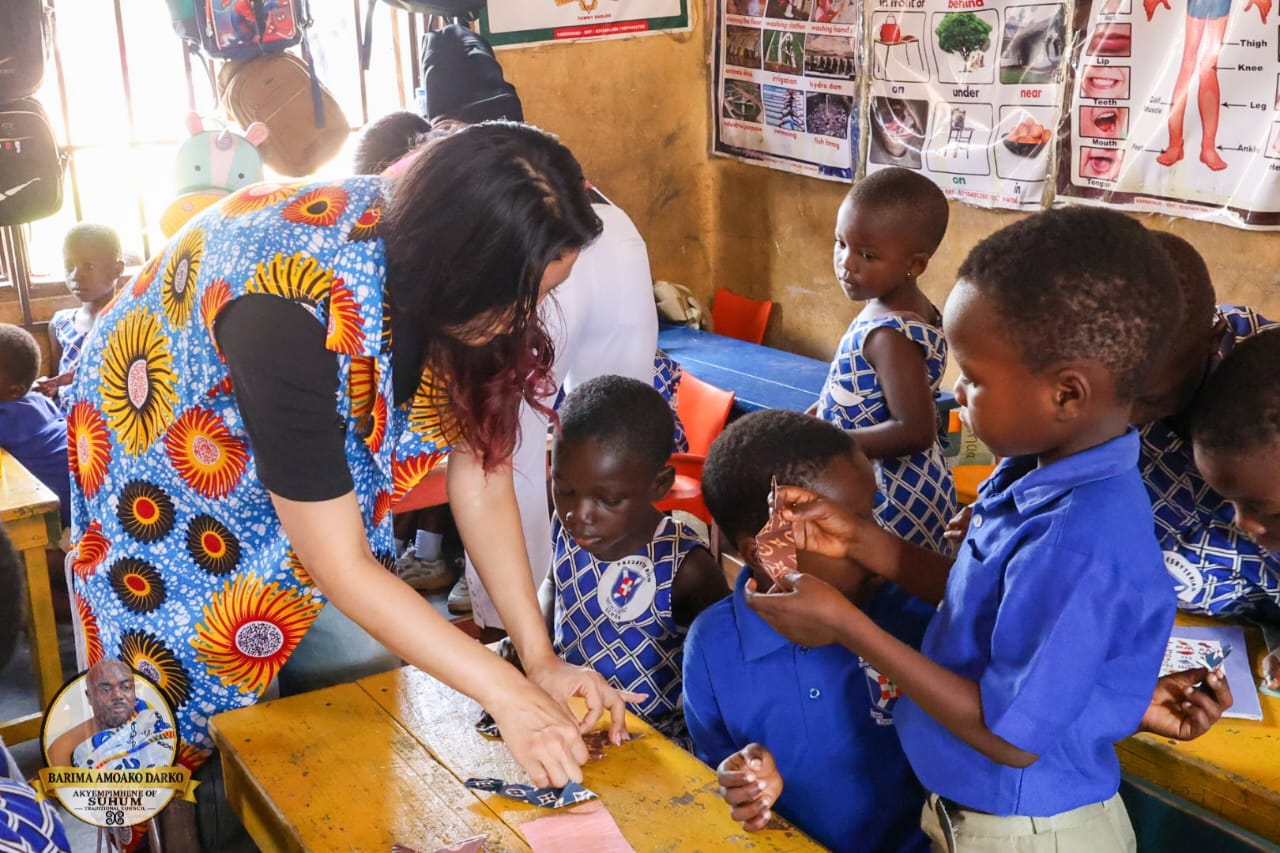
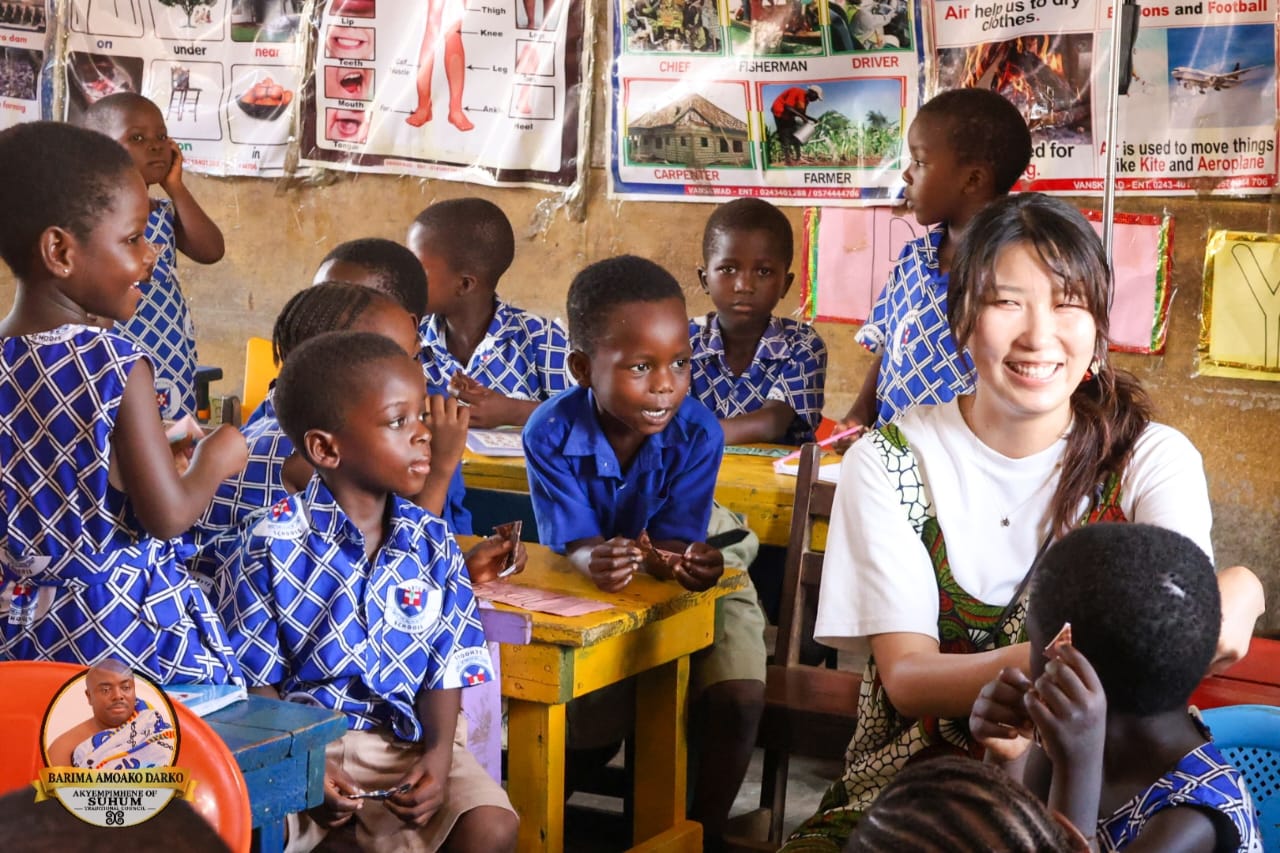
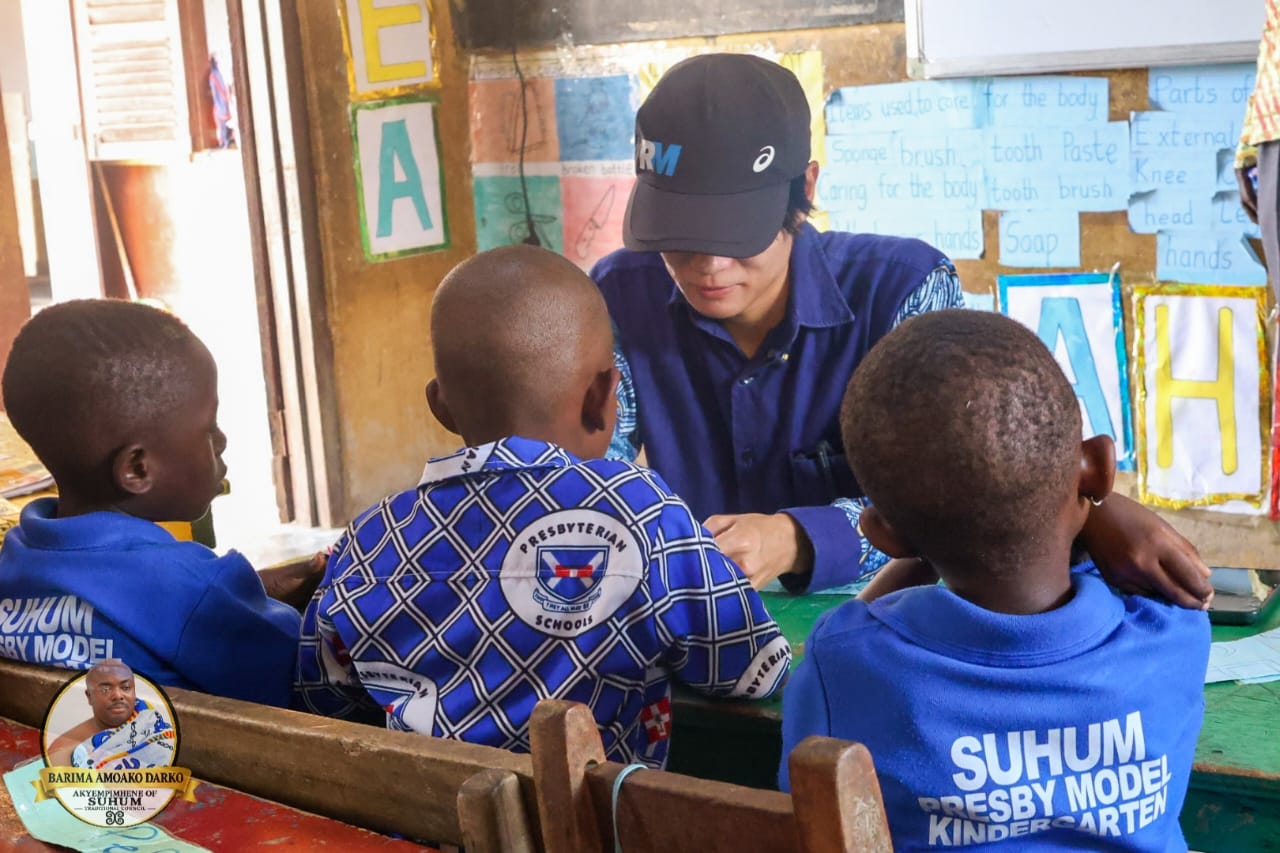
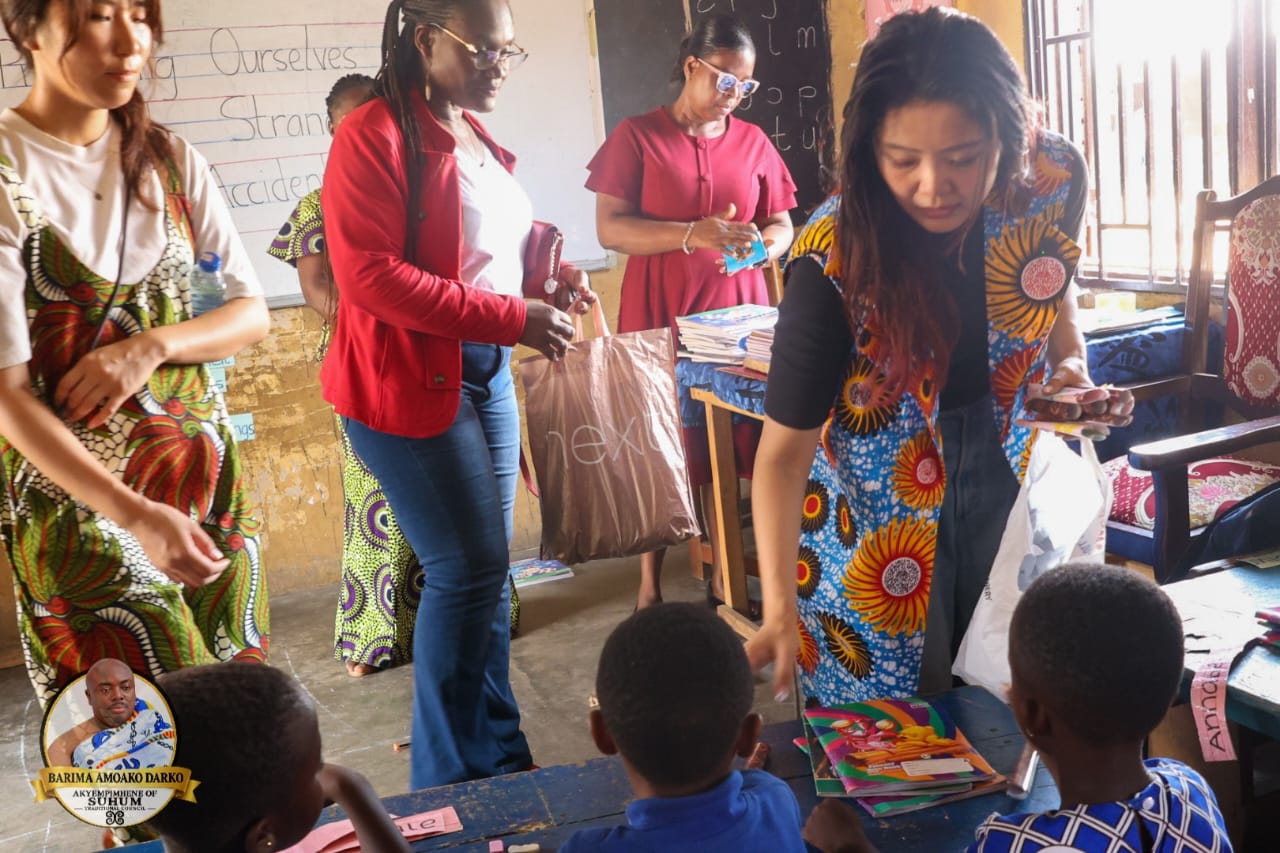
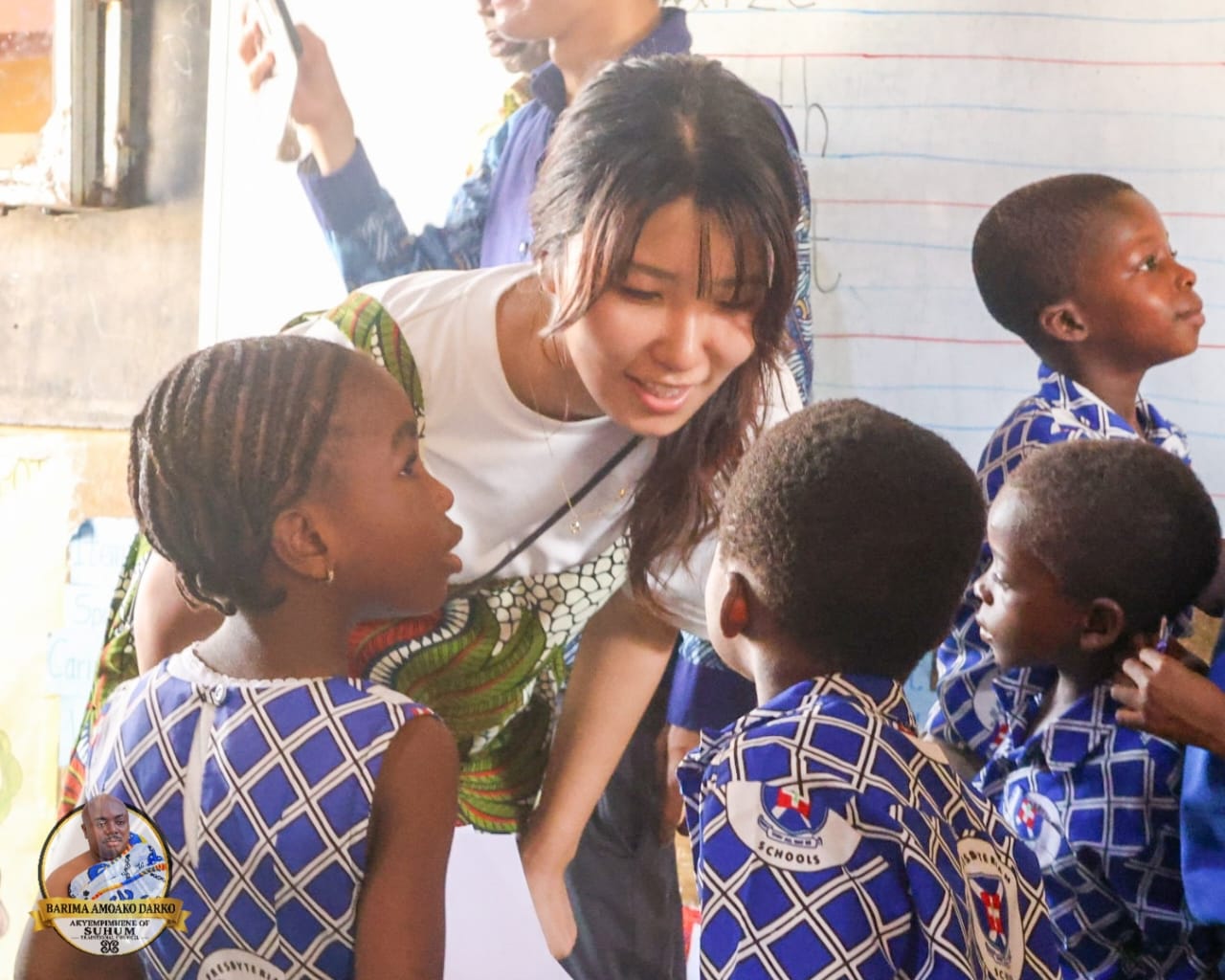
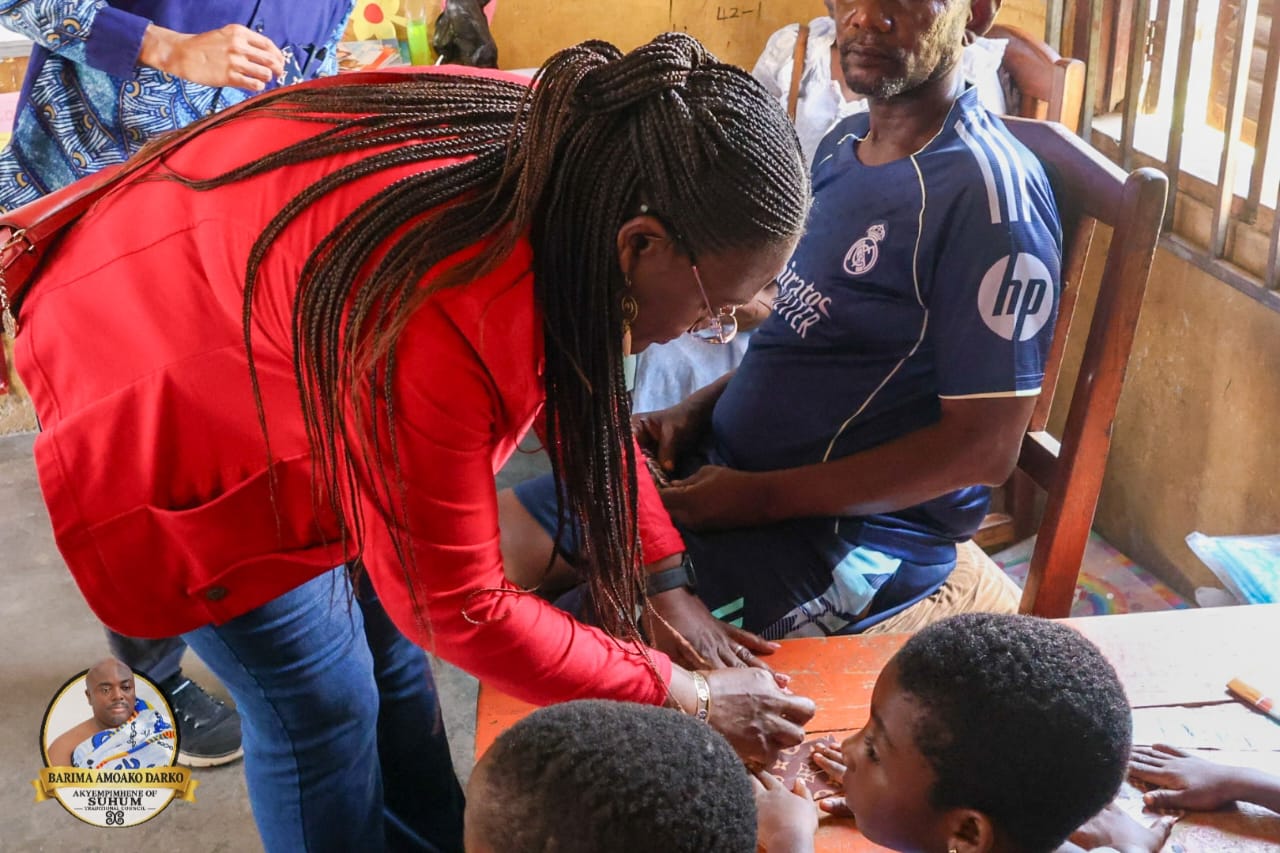
The initiative, which seeks to promote creativity, practical learning and innovation among children, was undertaken on Monday at Suhum Presby Basic School, where pupils participated in interactive sessions involving the creation of different shapes and designs using ordinary sheets of paper.
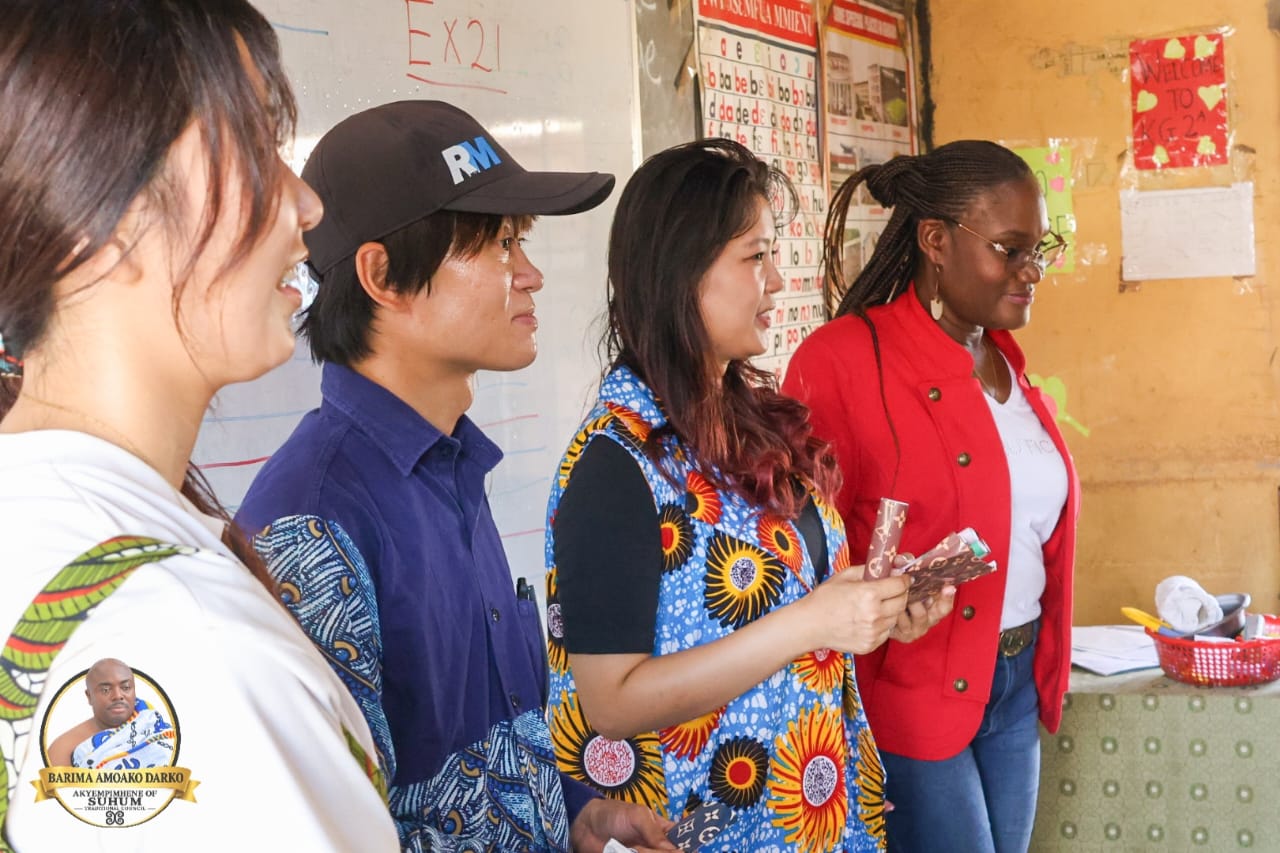
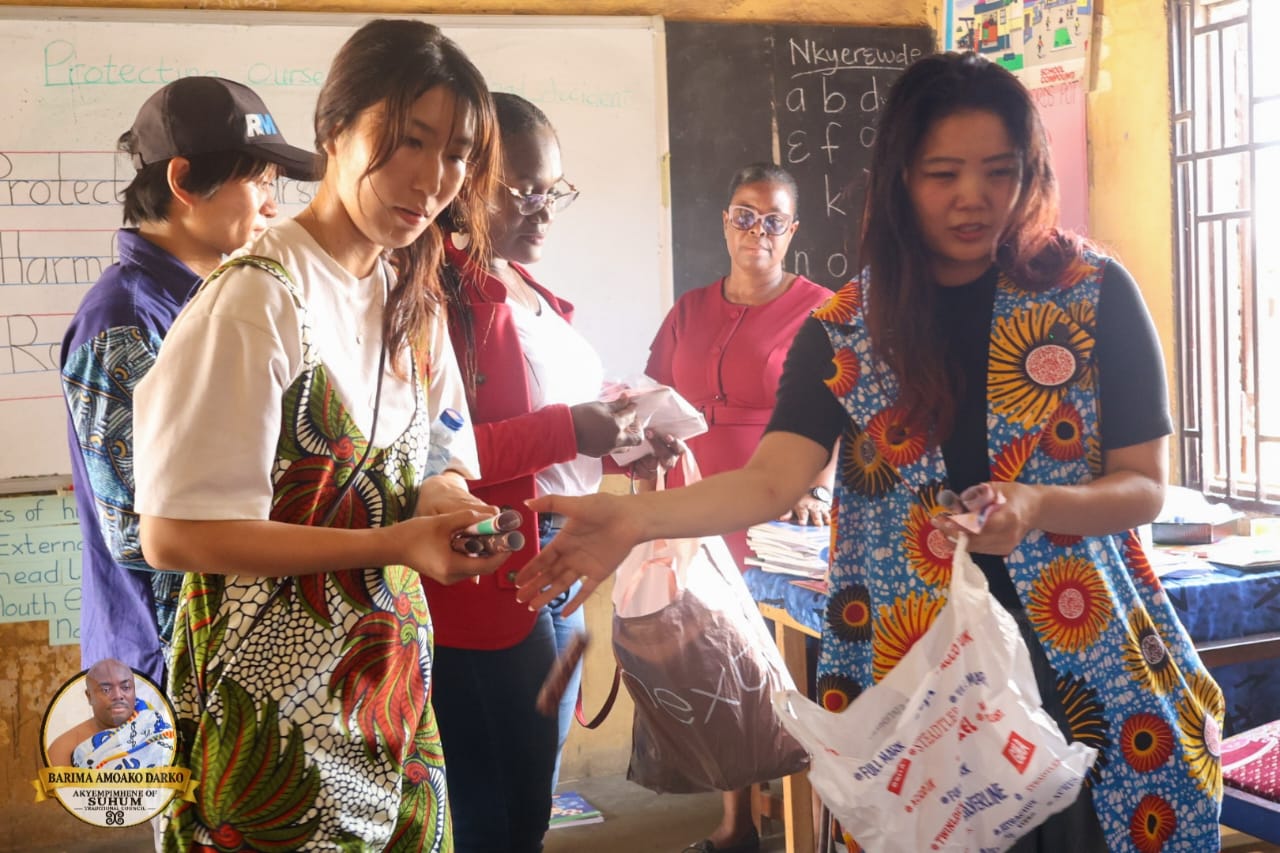
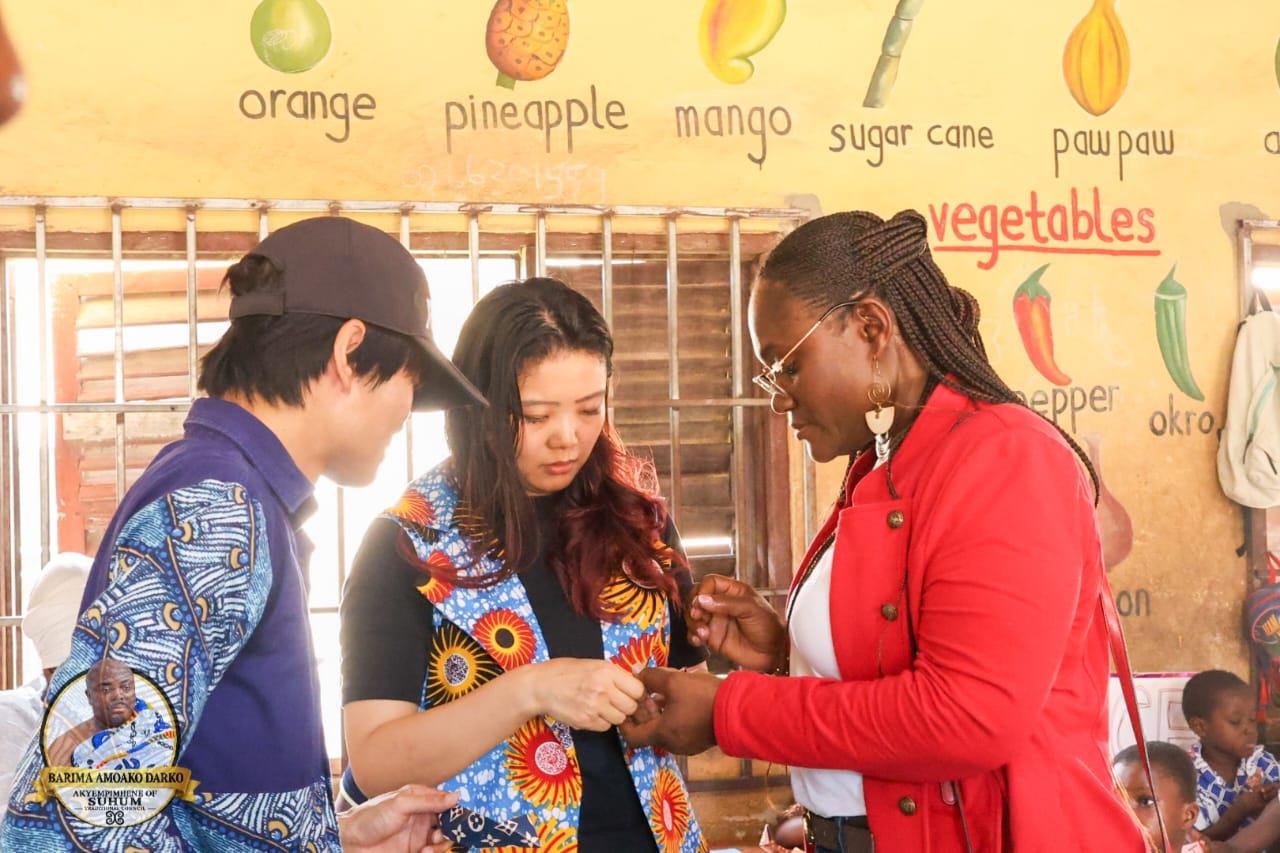
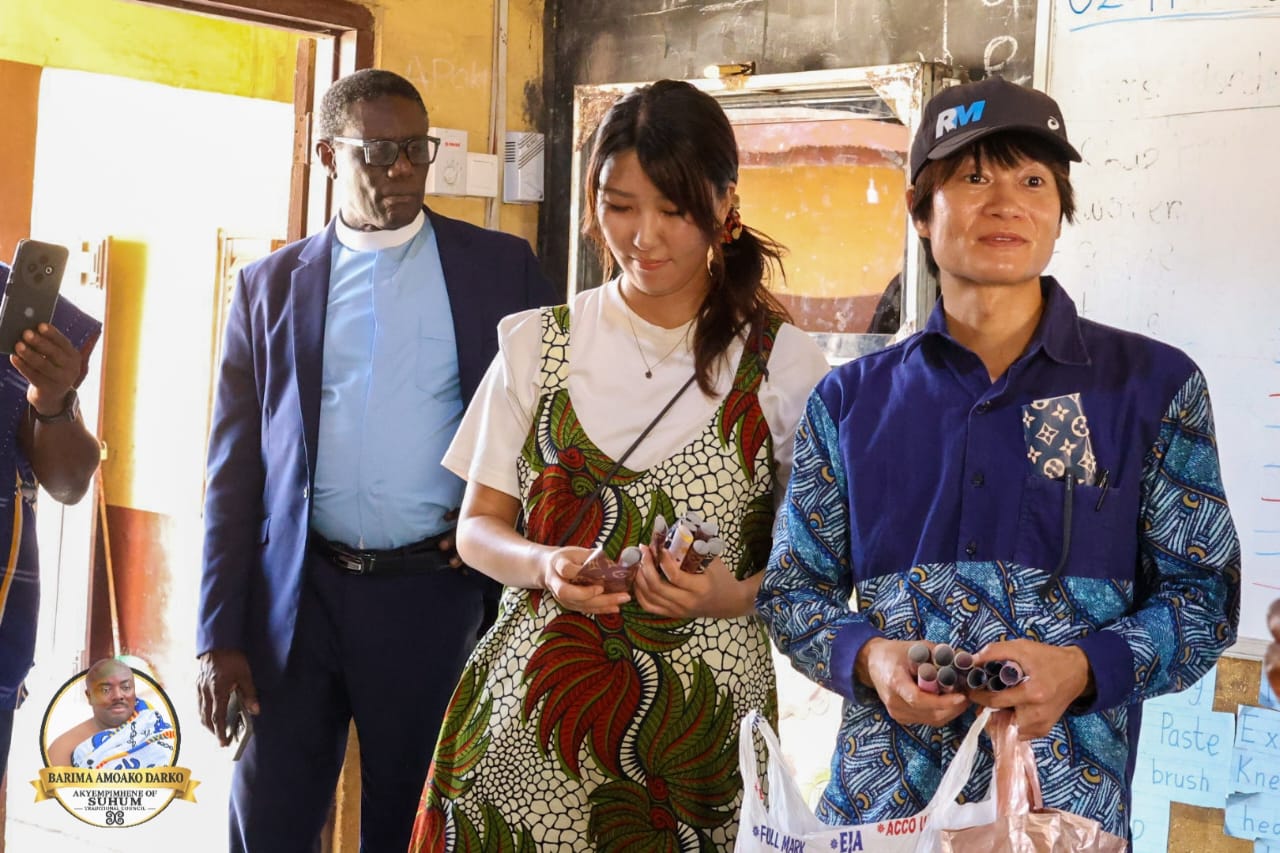
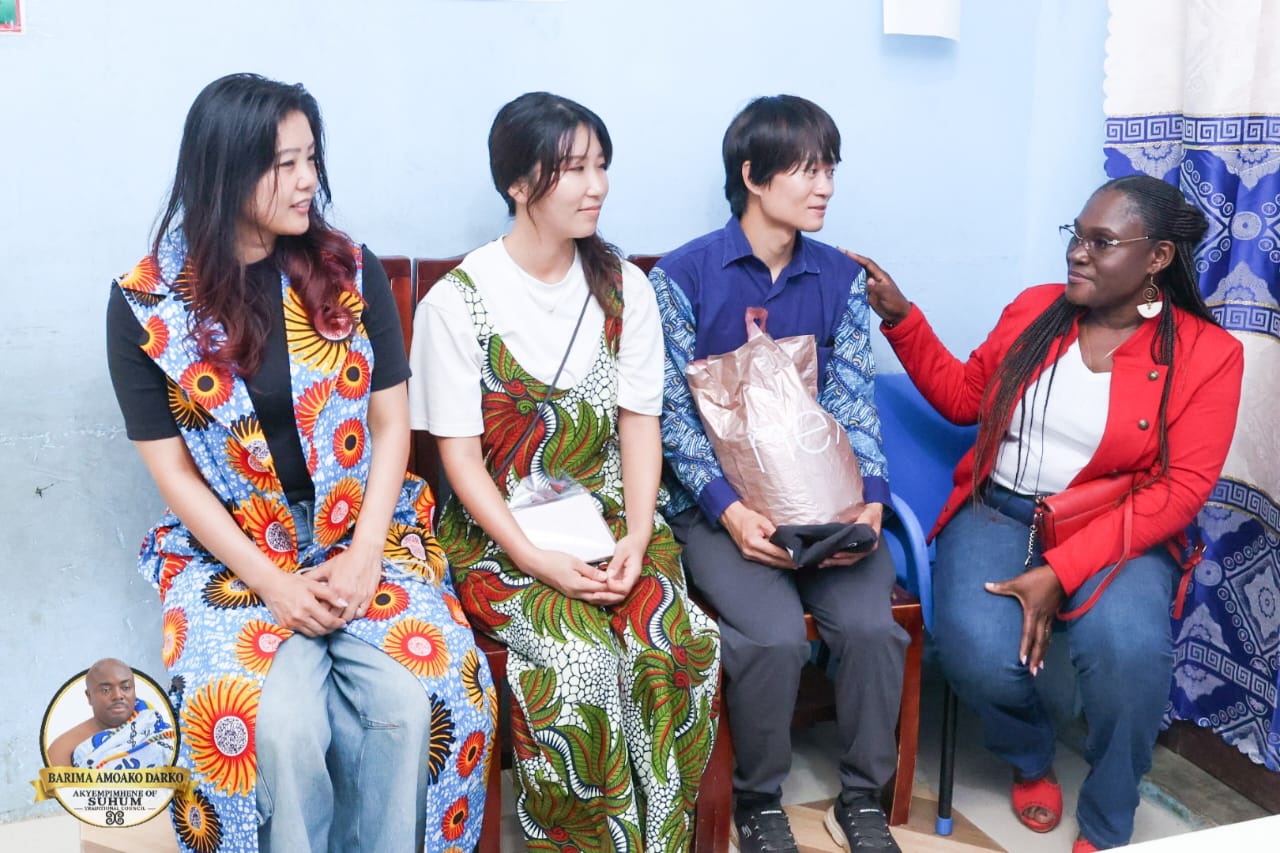
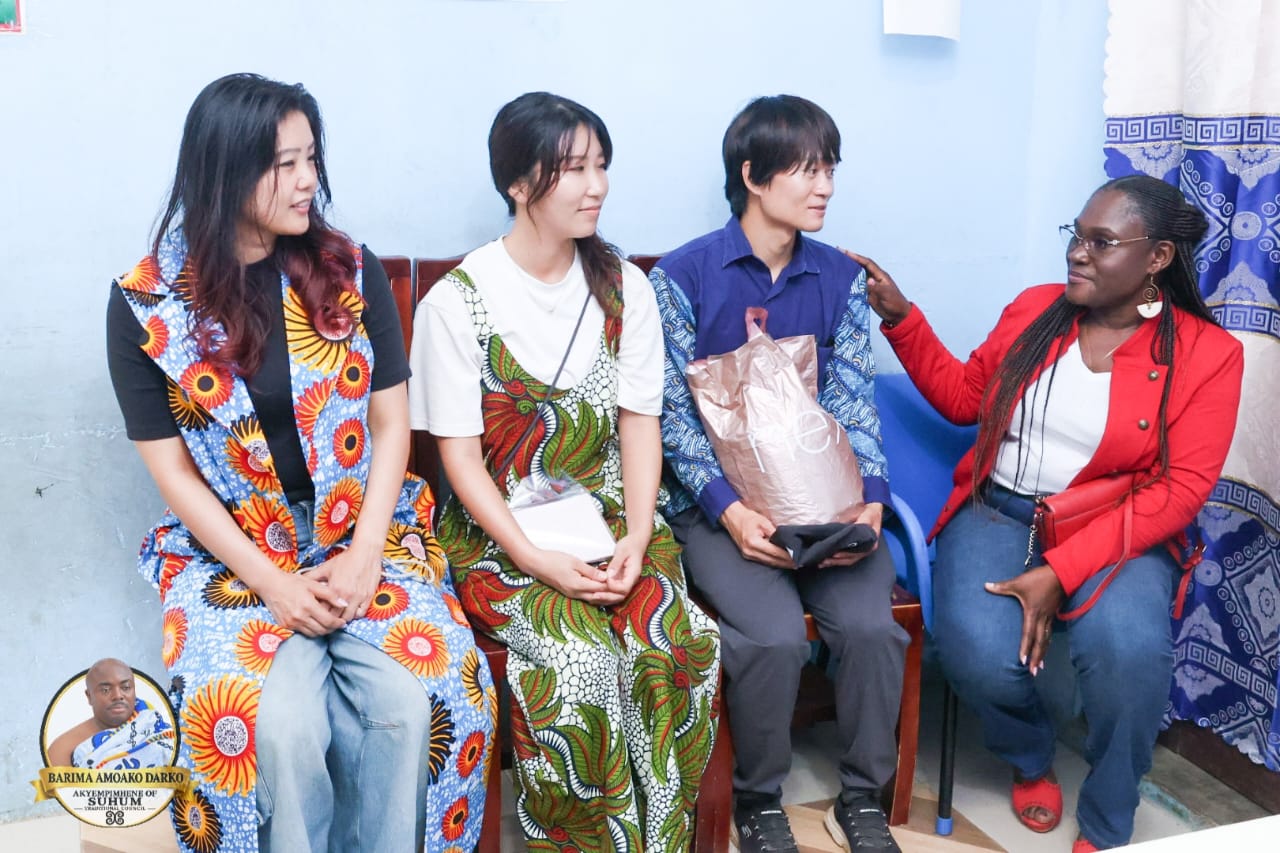
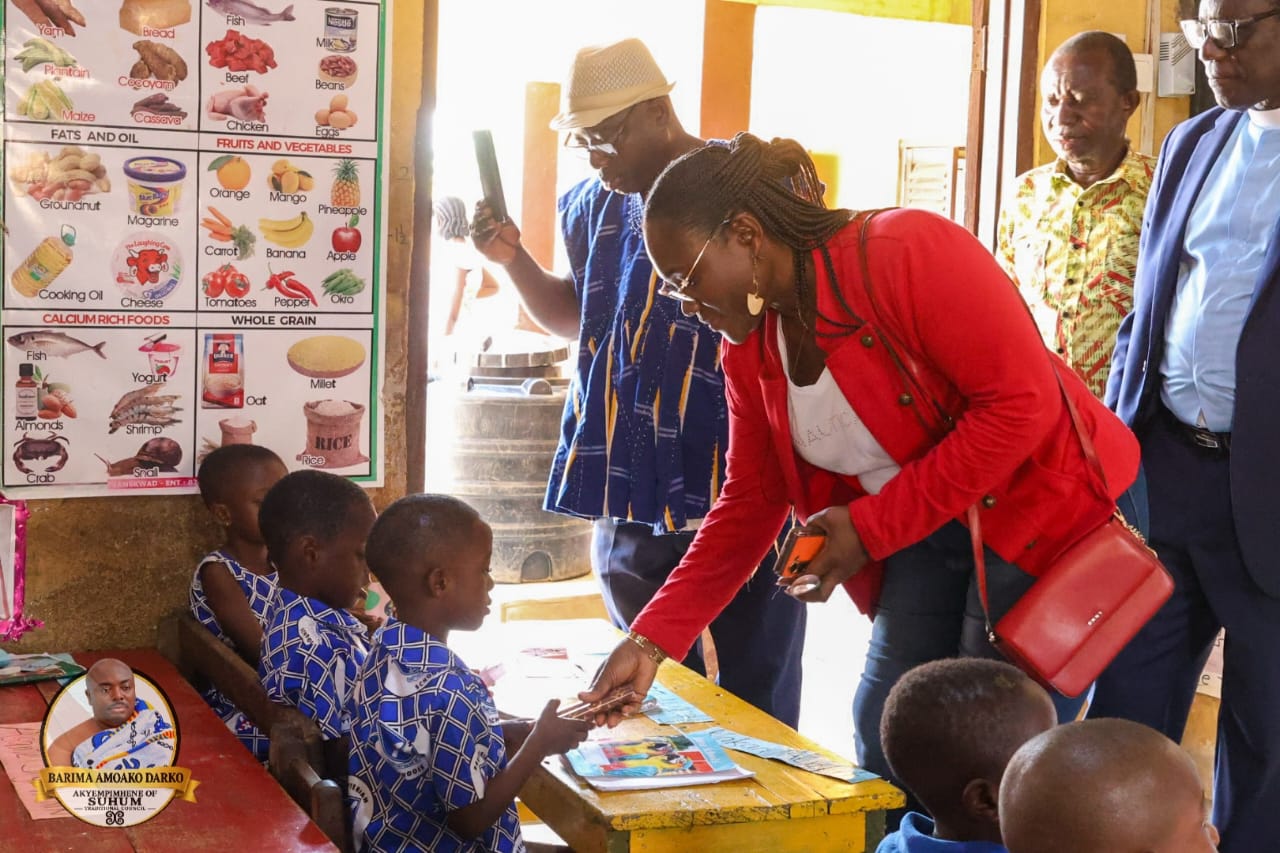
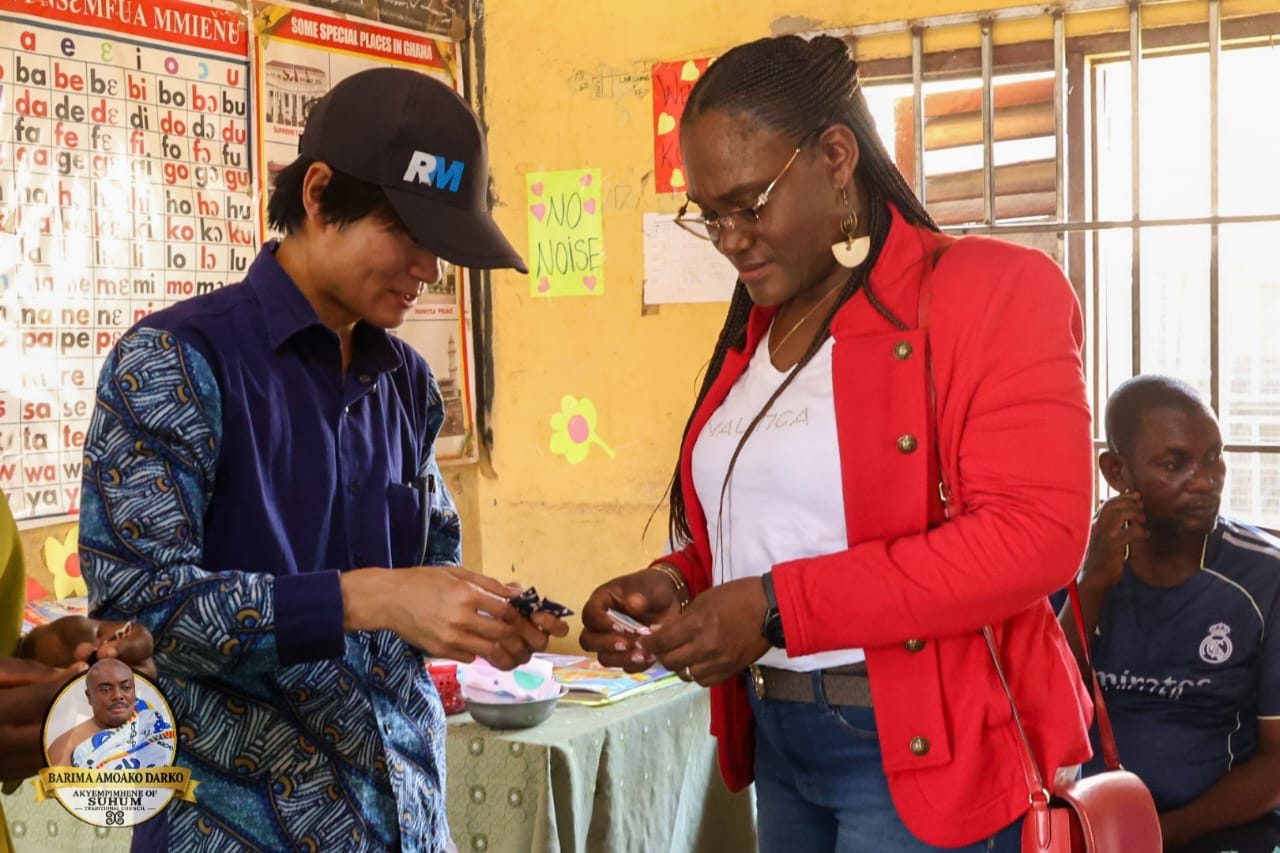
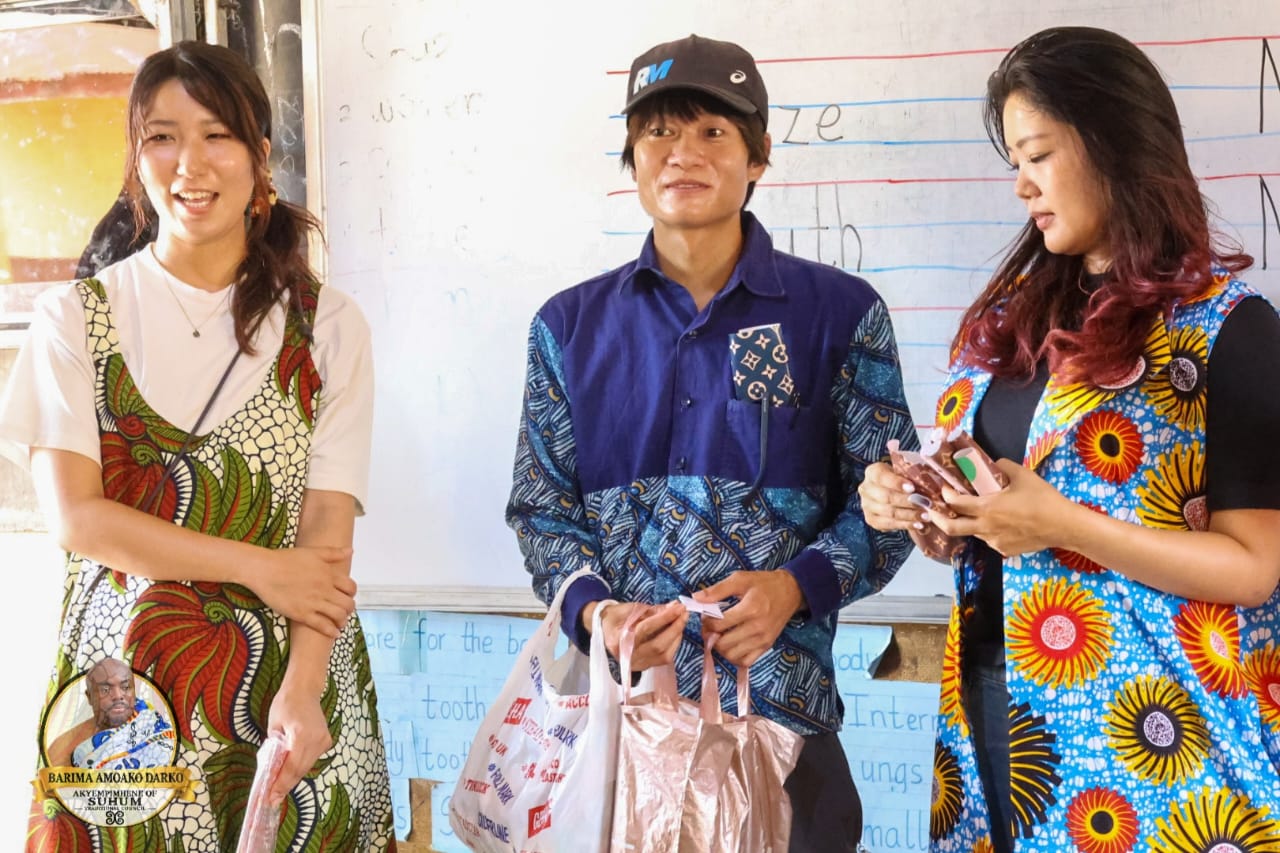
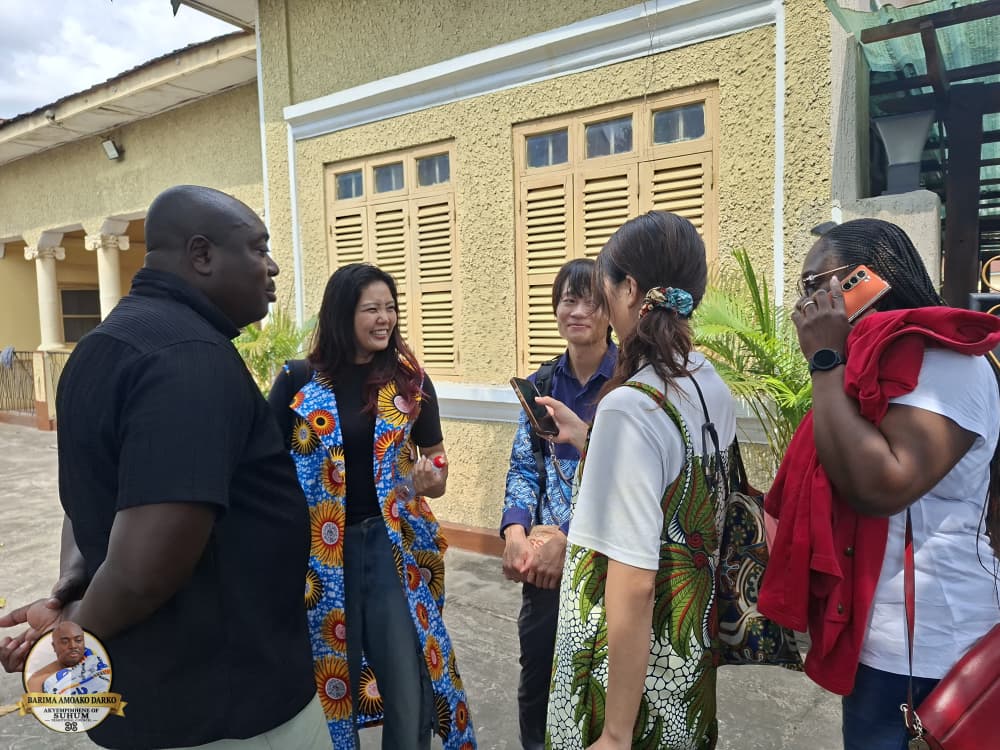
The exercise brought together Professor Linda Eva Amoah, alongside researchers from JiCAPA and a Japanese delegation led by Dr. Hikaru Nagaoka, Associate Professor of Parasitology at Ehime University in Matsuyama, Japan.
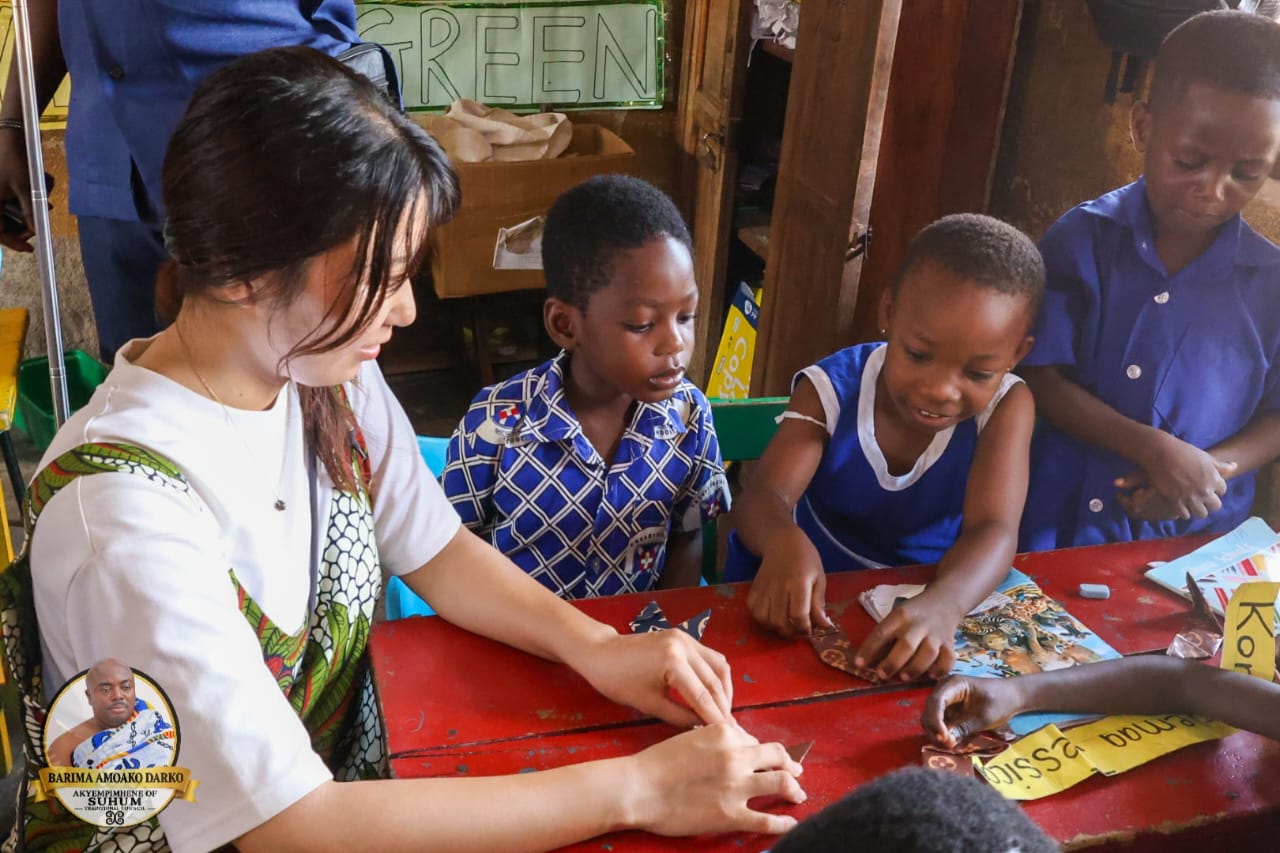
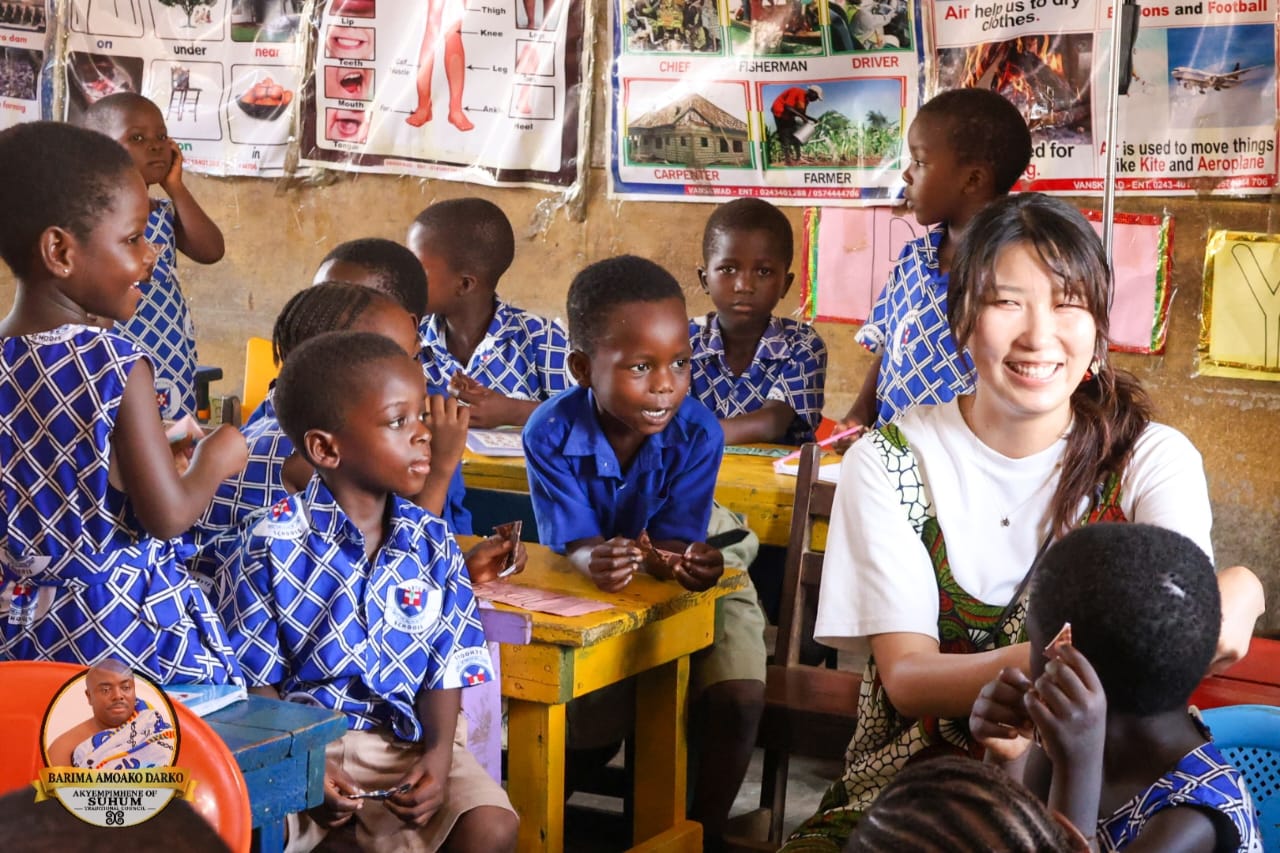
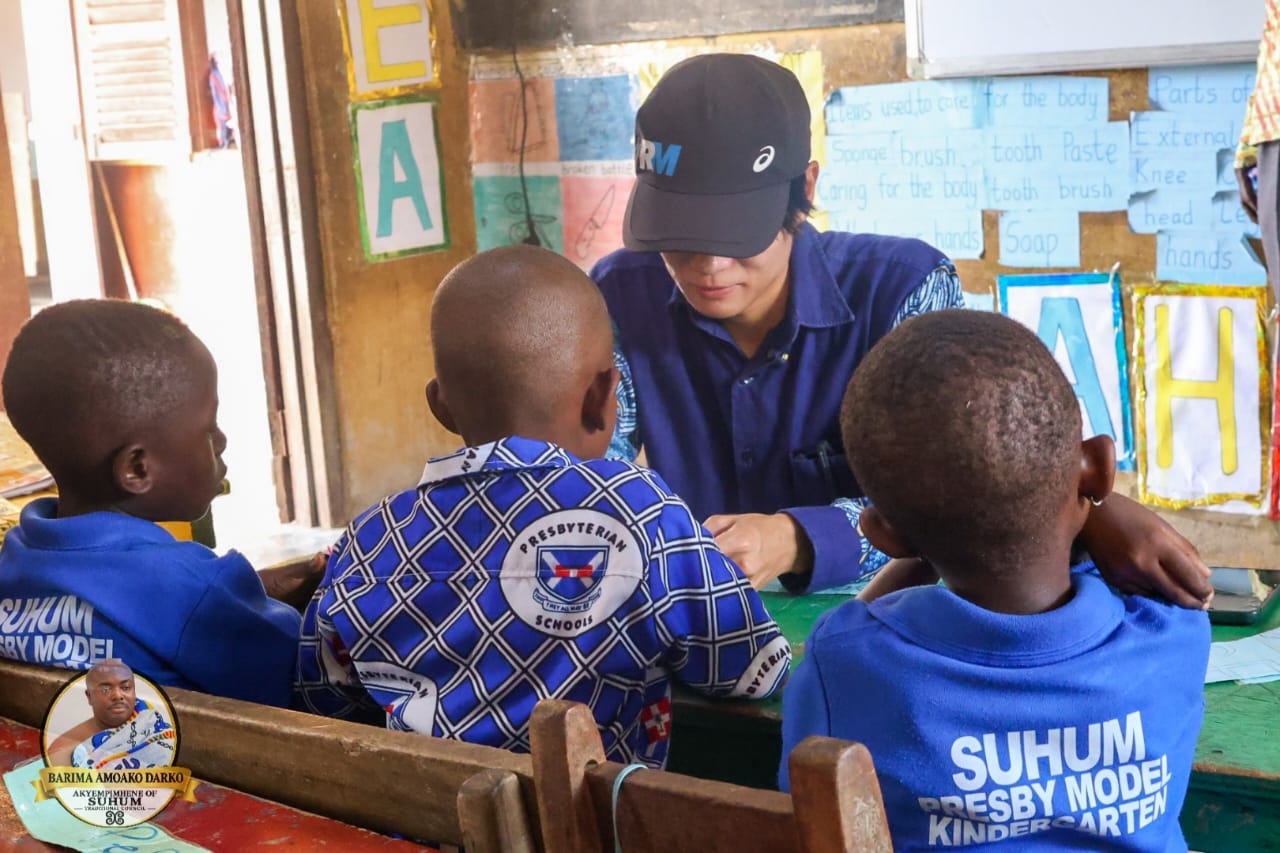
During the engagement, the pupils were introduced to the fundamentals of Origami through practical demonstrations and guided activities. They were encouraged to fold paper into different objects, giving them the opportunity to explore their creativity, develop practical skills and learn through experimentation.
The atmosphere was filled with excitement as the children enthusiastically participated in the activities, interacted with the visiting researchers and discovered how ordinary sheets of paper could be transformed into interesting shapes and designs.
Explaining the motivation behind the initiative, Professor Linda Eva Amoah noted that arts and crafts play an important role in the early development of children, particularly in countries such as Japan, where creative activities are introduced to children from an early age.
She observed that exposing children to practical arts and crafts helps stimulate curiosity, improve creativity and encourage them to develop the confidence to make things with their own hands.
According to her, introducing similar activities to Ghanaian children, beginning at the kindergarten and basic school levels, could help nurture a generation of creative thinkers, engineers, inventors and innovators.
She explained that the initiative is intended to make children curious about creating and experimenting, while gradually developing their interest in practical problem-solving and innovation.
The Akyempimhene Foundation described the initiative as part of its broader commitment to improving educational opportunities for children in Suhum by exposing them to practical learning experiences beyond the conventional classroom environment.
The Foundation believes that children must be given opportunities to explore their talents, acquire new skills and interact with people from different backgrounds to broaden their knowledge and understanding of the world.
The collaboration also provides an opportunity for educational and cultural exchange between Ghana and Japan, bringing together researchers and educators to share knowledge and introduce innovative approaches to teaching and learning.
The Foundation has expressed its intention to extend the programme to other schools across Suhum to enable more children to benefit from the initiative.
The introduction of Origami is expected to serve as a starting point for broader creative learning activities aimed at encouraging pupils to think independently, explore new ideas and develop practical skills that could shape their future careers.