
By Daniel Bampoe
The New Patriotic Party (NPP) has launched a fresh attack on the John Dramani Mahama-led government following the arrest of a Syrian national in Lebanon with 46.7 kilogrammes of cocaine allegedly transported from Ghana, accusing the administration of failing to dismantle international drug trafficking networks operating through the country’s ports and airports.
The opposition party says the latest interception at the Rafic Hariri International Airport in Beirut is part of an alarming pattern of Ghana-linked narcotics seizures recorded across Europe, Africa and the Middle East since the National Democratic Congress (NDC) assumed office in January 2025.
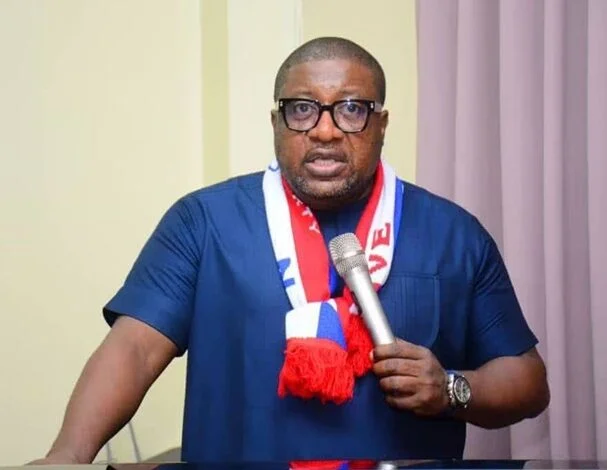
Addressing a press conference at the NPP headquarters in Accra on Wednesday, November 4, 2026, the party’s Second National Vice Chairman, Henry Nana Boakye, popularly known as Nana B, described the situation as a serious national security threat and questioned the government’s commitment to fighting international drug trafficking.
Speaking under the theme, “From Dunkirk to Beirut: Ghana Cannot Wait Any Longer,” Nana Boakye alleged that Ghana was increasingly becoming a major transit point for international cocaine cartels, warning that the country’s reputation as one of Africa’s peaceful and stable democracies was being put at risk.
According to the NPP, Ghana has recorded at least 14 major cocaine and other narcotics interceptions between March 2025 and October 2026, with an estimated street value of cocaine seized outside the country alone ranging between US$1.3 billion and US$1.7 billion.
The party claims that seven of the interceptions occurred within Ghana, involving approximately 3.6 tonnes of cocaine, while more than 12 tonnes allegedly linked to Ghanaian shipments were intercepted in foreign jurisdictions, including Amsterdam, Antwerp, Dunkirk and Beirut.
Among the major incidents cited was the June 2025 seizure by Dutch authorities of nearly 4,500 kilogrammes of cocaine concealed in a shipment of wood originating from Ghana. The operation was described as the largest cocaine interception recorded at the Port of Amsterdam.
The NPP further recalled the November 2025 interception of 2,829 kilogrammes of cocaine at the Port of Antwerp in Belgium. The consignment was reportedly concealed in a shipment of cassava flour from Tema. Barely a month later, in December 2025, another 1,158 kilogrammes of cocaine allegedly shipped from Ghana were intercepted at the same port.
The party also referenced an April 2026 incident in which Australian police reportedly seized 320 kilogrammes of illicit drugs, valued at approximately US$210 million, concealed in a shipment of charcoal from Ghana.
In September 2026, French customs authorities intercepted approximately 3.9 tonnes of cocaine at the Port of Dunkirk, concealed in a container declared as plastic waste and shipped from Ghana. The consignment was estimated to have a street value of about €225 million.
The NPP said the Dunkirk seizure was particularly disturbing because of the quantity involved and the alleged involvement of individuals connected to Ghana’s security and customs structures.
Following the interception, the party, on September 22, 2026, demanded a bipartisan parliamentary investigation and called for the heads of relevant security institutions to step aside to allow an independent examination of the circumstances surrounding the shipment.
On September 17, President Mahama reportedly chaired an emergency security meeting and directed the establishment of an inter-agency task force to address drug trafficking through Ghana’s borders. The task force was given two weeks to produce a roadmap outlining measures to prevent the country from becoming a transit route for narcotics.
However, Nana Boakye complained that the deadline expired on October 1 without the government making the roadmap public.
He also questioned the effectiveness of additional security measures introduced at the Accra International Airport, including the deployment of officers of the Narcotics Control Commission (NACOC) to screen travellers at the entrance of the terminal.
The NPP argued that the subsequent Beirut cocaine interception raised serious questions about the effectiveness of the measures and whether individuals within Ghana’s airport security system were facilitating the movement of narcotics.
The latest controversy followed the arrest of a Syrian national at Beirut’s Rafic Hariri International Airport on Saturday, October 31, 2026, after arriving from Accra aboard Middle East Airlines flight MEA 576.
According to details contained in the NPP statement, Lebanese Customs, working with Lebanon’s General Security, discovered 40 packages of cocaine weighing approximately 46.7 kilogrammes in the suspect’s two suitcases. The luggage reportedly contained electronic tracking devices, suggesting a sophisticated method of monitoring the consignment during transportation.
Lebanese authorities reportedly described the interception as the largest drug seizure in the history of the airport.
The development has triggered controversy in Ghana following NACOC’s explanation that the cocaine was allowed to leave the country as part of a coordinated international operation known as a controlled delivery.
Under such an arrangement, law enforcement authorities may permit a suspected illegal consignment to proceed under surveillance to identify and apprehend the intended recipients, financiers and other members of a trafficking network.
However, the NPP has questioned the credibility of NACOC’s explanation, insisting that the government has failed to provide sufficient evidence to establish that the operation was jointly coordinated with Lebanese authorities.
Nana Boakye said the party was particularly concerned about conflicting accounts from officials of the Ministry of the Interior and NACOC regarding the alleged arrest of three foreign nationals in Ghana in connection with the Beirut operation.
He cited statements attributed to Julius Kwame Anthony, spokesperson for the Ministry of the Interior, and Alexander Twum-Barimah, Deputy Director-General of NACOC, arguing that their explanations had created confusion over the identities and circumstances of the alleged arrests.
The opposition party is demanding that government publicly disclose the names, nationalities and alleged offences of the three individuals and ensure that they are brought before a court.
It further questioned why Ghana was reportedly not mentioned in the initial public accounts issued by Lebanese authorities, which credited Lebanese Customs and General Security with the successful interception.
The NPP said Lebanese Prime Minister Nawaf Salam had congratulated the two institutions without publicly acknowledging NACOC or any Ghanaian security agency as a partner in the operation.
The party also raised concerns over reports by Lebanese broadcaster LBCI that the Syrian suspect allegedly paid bribes at the Accra International Airport to facilitate the passage of his two suitcases through check-in and security procedures.
Nana Boakye questioned who allegedly received the money and why no Ghanaian airport official had been publicly identified or arrested over the reported bribery allegations.
He maintained that if the operation was genuinely conducted under NACOC’s supervision, government must explain why the suspect allegedly needed to bribe officials to transport the cocaine out of Ghana.
The NPP also pointed to differences in the figures and dates provided by the two countries, noting that Lebanese authorities reported 46.7 kilogrammes and October 31 as the date of the arrest, while NACOC officials reportedly referred to approximately 40 kilogrammes and October 30.
According to the party, the discrepancies further reinforce the need for a transparent account of what happened before and after the suspect departed Accra.
Nana Boakye also recalled an earlier cocaine interception in Lebanon in December 2025, when approximately 70 kilogrammes of the substance were reportedly discovered in an air-freight consignment declared as coconut oil and originating from Ghana.
He argued that the two separate Accra-to-Beirut interceptions within eleven months should have prompted stronger security measures at the airport.
Beyond the latest Beirut incident, the NPP revisited the prosecution of individuals arrested in connection with the September 2026 Dunkirk cocaine seizure.
The party referenced the arrest of ten suspects, including four officers of the Customs Division of the Ghana Revenue Authority (GRA), following the French interception.
It said four Ghanaian nationals had subsequently been charged before a court, including Musah Attah, popularly known as “Kromo”, while a Dutch national was reportedly still at large.
The opposition also questioned the circumstances under which Musah Attah allegedly gained access to the security cordon of President Mahama and Vice President Professor Naana Jane Opoku-Agyemang.
Although NACOC has reportedly described him as a farmer and denied that he was a member of any presidential security detail, the NPP claims that photographs circulating publicly show him repeatedly within the close security environment of the country’s two highest officeholders.
The party is therefore demanding an explanation of how he obtained such access and who authorised it, particularly given his prosecution in connection with the high-profile cocaine case.
Another major issue raised at the press conference concerned the issuance of diplomatic and service passports.
The NPP alleged that international drug trafficking networks could exploit official travel documents to facilitate movement across borders and called on the government to publish details of all diplomatic and service passports issued since January 2025.
It wants the names and official positions of beneficiaries, the reasons for their eligibility and the authorities responsible for approving the documents made public. The party also demanded the cancellation of any passports found to have been improperly issued.
The NPP further questioned the security implications of the government’s proposed direct maritime shipping arrangement between the Port of Tema and the Port of Cartagena in Colombia.
The arrangement followed negotiations in Bogotá in March 2026. Nana Boakye noted that Colombia is internationally recognised as a major source of cocaine and that Cartagena has featured in international drug trafficking concerns.
While insisting that the NPP was not opposed to legitimate trade between Ghana and Colombia, he demanded full disclosure of the security arrangements governing the route and details of cargo transported through it since its introduction.
The party called for the suspension of the Tema-Cartagena shipping arrangement until a comprehensive security assessment is conducted and presented to Parliament.
In a further attack on the government, Nana Boakye rejected attempts by government supporters to attribute the drug trafficking concerns to weaknesses inherited from the previous NPP administration.
He argued that the Dunkirk consignment and the latest Beirut interception occurred under the current government, making the security of Ghana’s ports and airports the direct responsibility of President Mahama and his appointees.
The NPP accused the government of failing to hold officials of the country’s key security and anti-narcotics institutions accountable despite the growing number of international seizures.
It specifically mentioned the Narcotics Control Commission, Ghana Airports Company Limited, Ghana Ports and Harbours Authority and National Security, arguing that the leadership of these institutions had failed to prevent Ghana-linked narcotics consignments from reaching foreign destinations.
Nana Boakye consequently demanded the immediate removal of the heads of the four institutions and called for independent investigations into their respective tenures.
He maintained that the continued presence of the officials in office, despite the series of interceptions, raised questions about the government’s willingness to confront the alleged networks operating within the country’s security architecture.
The NPP warned that the consequences of allowing international drug trafficking networks to establish a strong presence in Ghana could extend beyond the country’s diplomatic image.
According to the party, the cocaine trade could create opportunities for money laundering, illegal arms trafficking, corruption within state institutions and organised criminal activities, potentially exposing the country to the same security challenges experienced in other parts of Africa and Latin America.
It also warned that Ghanaian businesses, exporters and ordinary travellers could face increased scrutiny at international airports and seaports as the country’s name becomes increasingly associated with narcotics interceptions.
To address the situation, the opposition party outlined nine demands to the Mahama administration.
First, it called for a bipartisan parliamentary inquiry with public hearings into every Ghana-linked cocaine seizure recorded since January 2025.
Second, it demanded the publication of the inter-agency task force’s roadmap, which was expected to be ready by October 1.
Third, the government should obtain and publish a joint statement with Lebanese authorities, including Lebanon’s Internal Security Forces, clarifying whether the Beirut interception formed part of a Ghanaian-led controlled delivery and when Ghanaian authorities were first informed.
Fourth, NACOC must disclose the identities and nationalities of all individuals allegedly arrested in Ghana in connection with the Beirut operation and ensure their prompt arraignment before a court.
Fifth, all airport officials found to have accepted bribes to facilitate the movement of the cocaine should be arrested and prosecuted, with their identities and institutional affiliations made public.
Sixth, the heads of NACOC, Ghana Airports Company Limited, Ghana Ports and Harbours Authority and National Security should be removed immediately and subjected to independent investigations.
Seventh, the government should provide regular public updates on the prosecution of Musah Attah, popularly known as Kromo, and his co-accused, while explaining how he allegedly gained access to the security cordon of the President and Vice President.
Eighth, all diplomatic and service passports issued since January 2025 should be disclosed, with improperly issued documents cancelled.
Finally, the party demanded the suspension of the Tema-Cartagena direct shipping arrangement pending a comprehensive security review and the disclosure of all cargo transported under the agreement.
In a pointed message to President Mahama, Nana Boakye said the government had promised Ghanaians a 24-hour economy but had not been given a mandate to allow the country to become a 24-hour cocaine corridor.
He insisted that the NPP would continue demanding accountability until concrete measures were taken to address the situation.
The press conference came a day after the NPP’s National Youth Wing, led by Abanga Fuseni, organised a demonstration over the alleged drug trafficking developments and other controversies involving government institutions.
Nana Boakye commended the youth wing for what he described as a massive and peaceful protest, while calling on President Mahama to demonstrate decisive leadership over the cocaine interceptions, the alleged South African evacuation scandal involving the Ministry of Foreign Affairs and the World Cup visa controversy involving the Ministry of Sports and the Ghana Tourism Authority.


