Issah Olegor
President John Dramani Mahama’s government has introduced a fresh economic transformation agenda, dubbed the New Economy, with a proposed investment of US$10 billion over four years, raising questions about the future of the much-publicised 24-Hour Economy policy that was presented as the National Democratic Congress’ flagship economic promise ahead of the 2024 general election.
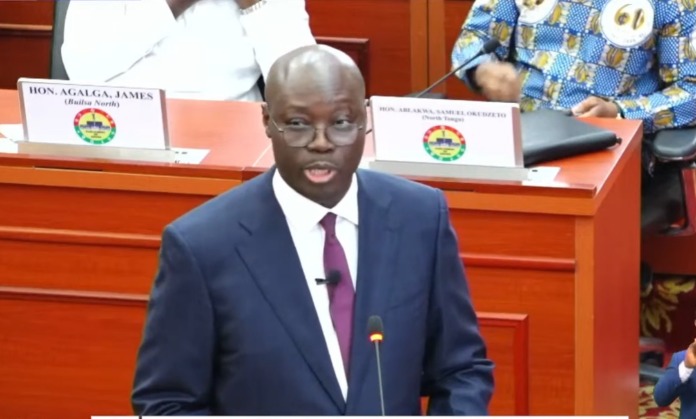
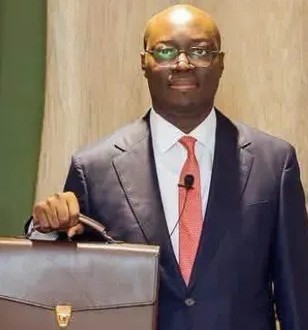
The new programme, unveiled in the 2027 Budget Statement and Economic Policy presented to Parliament by Finance Minister Dr Cassiel Ato Forson on Thursday, November 12, 2026, is expected to commit approximately US$2.5 billion annually between 2027 and 2030 to agriculture, manufacturing, infrastructure, energy, industrial expansion and other productive sectors.
The announcement marks a significant change in the government’s economic messaging. After campaigning extensively on the 24-Hour Economy as the centrepiece of its plan to create jobs, increase production and transform Ghana into an export-driven economy, the administration is now placing the New Economy at the centre of its next phase of economic policy.
Although the government has not formally announced the cancellation of the 24-Hour Economy, the introduction of the new programme as the principal economic transformation agenda in the 2027 Budget has revived questions about whether the earlier flagship policy has been abandoned, substantially altered or absorbed into a new framework.
The development is particularly significant because the 24-Hour Economy was not merely an ordinary campaign promise. It was promoted by the NDC as a major solution to unemployment, low productivity, excessive imports and the limited operating hours of businesses and public institutions.
During the 2024 election campaign, then-presidential candidate John Mahama presented the policy as a deliberate intervention to encourage businesses and public institutions to operate around the clock through three eight-hour shifts. Under the proposed 1-3-3 model, one job opportunity was expected to support three workers operating in three separate shifts.
The NDC manifesto described the initiative as a comprehensive industrialisation and import-substitution strategy intended to increase production, expand exports, improve productivity and create decent, sustainable and well-paying employment. It also promised supporting investments in infrastructure, energy and security, alongside a new employment framework to regulate the additional shifts.
The policy was expected to cover several sectors of the economy, including agriculture, manufacturing, logistics, transportation, healthcare and public services. Its central objective was to ensure that Ghanaian businesses could produce more, operate for longer hours and compete more effectively in local and international markets.
After assuming office in January 2025, President Mahama’s administration proceeded with preparations for the programme. In June 2025, the government outlined its policy framework around three main anchors: Production Transformation, Supply Chain and Market Efficiency, and Human Capital Development.
The framework also included sub-programmes such as Grow 24, Make 24, Connect 24, Show Ghana, Go Ghana, Digital Technology and Aspire 24. These were intended to strengthen agricultural production, expand manufacturing, improve market access, develop supply chains and equip workers with the skills required to support an economy operating beyond conventional working hours.
President Mahama formally launched the 24-Hour Economy and Accelerated Export Development Programme, popularly known as 24H+, on July 2, 2025. At the launch, the government presented it as a strategy to reduce dependence on imports, strengthen local value chains, expand exports and create employment through increased industrial and agricultural activity.
However the programme continuing to be on the drawing board with no concrete action on the ground.
The administration subsequently took steps to establish an institutional structure for the programme. On February 19, 2026, President Mahama assented to the 24-Hour Economy Authority Bill, 2025, creating a statutory authority to coordinate the implementation of the policy and align the activities of ministries, regulatory agencies and private-sector organisations.
At the time, the President described the initiative as one of his flagship strategies for economic transformation and said the country needed to move from policy formulation to implementation. The establishment of the authority was expected to provide the institutional direction required to translate the programme into practical investments and employment opportunities.
However, barely months after the legal framework was established, the government’s latest budget has placed a different economic programme in the spotlight, with a proposed US$10 billion investment envelope and a new set of priorities running from 2027 to 2030.
The scale of the new announcement is also attracting attention because the 24-Hour Economy had previously been associated with an estimated US$4 billion investment requirement and a target of creating 1.7 million jobs by the end of 2028. The government was expected to provide between US$300 million and US$400 million as seed capital to support the programme and attract further investment.
The Minority Caucus has questioned the progress made under the earlier initiative, including the level of funding allocated to it and the number of jobs actually created. In its criticism ahead of the 2027 Budget, the Minority cited an allocation of GH¢110 million to the programme in the 2026 Budget and demanded an account of the financing arrangements and reported joint development agreements valued at US$5.5 billion.
The Minority also questioned the status of the 1.7 million jobs target, arguing that the government needed to provide verifiable figures showing how many jobs had been created, the sectors involved and whether those opportunities were permanent or temporary.
The redesignation of the 24-Hour Economy markets has also become part of the debate. The Minority has raised concerns over reports that the markets were being rebranded as District Economy Markets and that their completion timelines had been pushed further into the future. The government’s explanation of the relationship between those projects and the original 24-Hour Economy programme will be important in determining whether the initiative is being continued under a different structure.
Against this background, the New Economy announcement has prompted questions about whether the administration is starting a fresh economic programme or repackaging objectives that were already contained in the 24-Hour Economy policy.
The new agenda, as outlined in the 2027 Budget, shares several objectives with the earlier flagship initiative, particularly the emphasis on domestic production, agricultural modernisation, manufacturing, value addition, industrial expansion and employment creation.
Under the New Economy programme, agriculture and agro-processing are expected to receive significant attention. The government intends to strengthen commercial farming, expand local food production and encourage public institutions to procure more Ghanaian agricultural produce.
The administration has also outlined plans to reduce the country’s dependence on imported rice, with an ambition to end commercial rice imports by 2030. Measures are expected to support domestic rice production, improve processing capacity and create a stronger market for locally produced food.
The poultry sector is another major focus. The government intends to support poultry production and animal-feed financing, while changes to the allocation of proceeds from the Ghana EXIM Bank levy are expected to direct 40 per cent of the relevant proceeds to the poultry industry from 2027. The programme also includes support for oil palm production and the proposed Pwalugu dam project as part of broader agricultural and irrigation development.
Manufacturing is expected to be supported through policies aimed at expanding local production and reducing dependence on imported finished goods. The government has identified textiles and garments, pharmaceuticals and the processing of critical minerals as priority areas for investment.
In the pharmaceutical sector, the administration intends to increase local manufacturing of essential medicines, with a target of producing between 60 and 80 per cent of such medicines domestically by 2030. The government also plans to use public procurement to give preference to medicines manufactured in Ghana, subject to the relevant standards and requirements.
The programme further places emphasis on infrastructure, energy and industrial development, with the government seeking to expand the country’s productive capacity and improve the conditions required for businesses to operate and grow.
Among the other measures announced in the budget are the removal of import duties and Value Added Tax on solar panels and batteries, a move intended to reduce the cost of renewable energy equipment and encourage households and businesses to adopt solar power.
The government has also announced an additional GH¢1 billion for youth employment and apprenticeship interventions through changes to the allocation of proceeds from the Communications Service Tax. This is expected to complement the GH¢3.5 billion allocation to the Ministry responsible for youth development.
On taxation, the Finance Minister announced that the government would not introduce new taxes in 2027. The budget also builds on the administration’s earlier abolition of selected taxes, including the Electronic Transfer Levy, the COVID-19 Health Recovery Levy, the betting and lottery winnings withholding tax, the Emissions Levy and VAT on motor vehicle insurance.
Education and social protection also feature in the new economic measures. The government has outlined continued support for the No Fees Stress policy, free sanitary pads for schoolgirls, payment of examination fees for BECE candidates and measures aimed at ending the double-track system. Funding has also been provided for social interventions, including the Livelihood Empowerment Against Poverty programme and the school feeding programme.
The transport and infrastructure agenda includes continued investment in roads under the Big Push programme, plans relating to the Accra-Kumasi Expressway and development of the Western Corridor Railway. These projects are expected to support trade, reduce transportation bottlenecks and improve the movement of goods and people.
The government is presenting the New Economy programme against what it describes as an improved macroeconomic environment following a period of economic stabilisation. The budget points to stronger economic growth, declining inflation and improvements in some key indicators as providing an opportunity to shift attention towards production, investment and employment.
However, the proposed US$10 billion programme raises important questions about its financing, particularly at a time when Ghana is expected to maintain fiscal discipline and protect the gains made under its economic recovery programme. The government will have to explain how much of the investment will come from public funds, private-sector participation, development finance institutions and other sources.