
By Issah Olegor
The Bank of Ghana (BoG) is reportedly facing technical concerns ahead of the planned introduction of the new Ghana Cedi Heritage Series, following reports that some Automated Teller Machines (ATMs) have failed to recognise or dispense the redesigned banknotes during preliminary tests.
Information reaching The Daily Gist indicates that the Central Bank has been testing the new notes with old notes on selected bank ATM machines ahead of their scheduled entry into circulation on December 1, 2026.
However, the tests have reportedly exposed compatibility problems, with the machines rejecting the notes because of differences in their physical dimensions, security futures and other features compared with the existing currency specifications programmed into the systems.
The reported development has raised questions about the readiness of the banking system to accommodate the new currency, particularly as ATMs remain an important channel through which customers access cash across the country.
Sources familiar with the matter have told The Daily Gist that the rejection of the notes during the reported tests has become a concern for the Bank of Ghana, given the limited time remaining before the official rollout. The concerns reportedly centre on whether the existing ATM infrastructure can recognise and process the new banknotes without technical adjustments.
There are also claims that the Central Bank could be compelled to review aspects of the new notes if the reported compatibility problems are not resolved before December 1.
However, The Daily Gist has not independently confirmed that the Bank of Ghana has decided to redesign or replace any of the new banknotes. The Central Bank has also not publicly announced that ATM machines are rejecting the Heritage Series.
The reported technical challenge comes barely weeks after President John Dramani Mahama officially launched the new banknotes at the Bank of Ghana headquarters in Accra on November 12, 2026. The launch was presented as a major step towards modernising Ghana’s currency, improving its durability and strengthening security against counterfeiting.
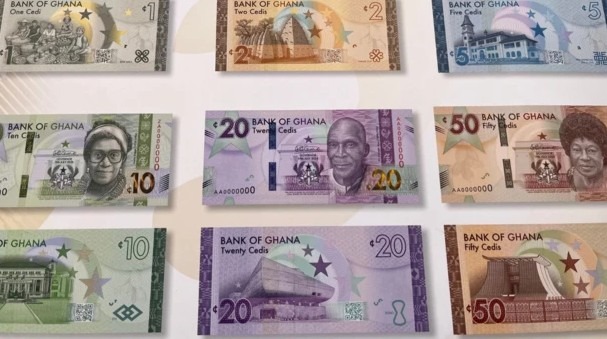
The new currency, known as the Ghana Cedi Heritage Series, is expected to enter circulation on December 1, 2026. It will cover eight denominations: GH¢1, GH¢2, GH¢5, GH¢10, GH¢20, GH¢50, GH¢100 and GH¢200 notes.
The Bank of Ghana has explained that the redesigned notes are printed on reinforced cotton paper, making them more durable and better suited to withstand the country’s climatic conditions and frequent handling. They are also smaller and easier to handle, with enhanced security features and designs reflecting Ghana’s historical, cultural and national identity.
Governor of the Bank of Ghana, Dr Johnson Pandit Asiama, has assured the public that the existing banknotes will remain legal tender and circulate alongside the new series during the transition. This means that Ghanaians will not be required to exchange their old notes immediately when the new currency enters circulation.
But the reported ATM difficulties, if confirmed, could create an additional challenge for the Central Bank as it seeks to ensure that banks, financial institutions, businesses and members of the public are adequately prepared for the change.
The controversy surrounding the new currency, however, began even before the reported ATM concerns emerged. Since the unveiling, the Heritage Series has generated public debate over the selection and representation of historical personalities featured on the notes, particularly the decision to replace the familiar collective portrait of the Big Six with individual Ghanaian personalities.
Under the new arrangement, only Ghana’s first President, Dr Kwame Nkrumah, among the Big Six, retains a place on the new banknotes. His portrait appears on the GH¢200 denomination, while the other personalities selected include prominent figures from commerce, religion, education, justice, arts and culture, freedom and international diplomacy.
The GH¢1 note features Makola market personality Agnes Oforiwaa Tagoe-Quarcoopome, while the GH¢2 carries the portrait of the late Cardinal Peter Poreku Dery. Dr James Emman Kwegyir Aggrey appears on the GH¢5 note, with Justice Annie Jiagge featured on the GH¢10.
The GH¢20 note bears the image of renowned Ghanaian composer and educationist Dr Ephraim Amu, while the GH¢50 features Theodosia Salome Okoh, designer of Ghana’s national flag. Former United Nations Secretary-General Kofi Annan appears on the GH¢100 note, with Dr Kwame Nkrumah featured on the GH¢200.
One of the most widely discussed issues has been the appearance of Cardinal Peter Poreku Dery on the GH¢2 note, with some members of the public initially confusing him with Cardinal Peter Kodwo Appiah Turkson, who became Ghana’s first cardinal.
The debate intensified after questions were raised about the historical description of Cardinal Dery. The Bank of Ghana subsequently clarified that it did not describe him as the first Ghanaian cardinal. Rather, it identified him as the first Ghanaian from the northern part of the country to be elevated to the College of Cardinals.
Historical records show that Cardinal Turkson was appointed to the College of Cardinals by Pope John Paul II on October 21, 2003, while Cardinal Dery was elevated by Pope Benedict XVI in 2006. Cardinal Dery therefore became the second Ghanaian cardinal and the first from northern Ghana to attain the position. The Central Bank’s explanation was that the selection of Cardinal Dery was intended to honour his contribution to religious and community development.
The portrait of Theodosia Salome Okoh on the GH¢50 note also generated public discussion after some people questioned its resemblance to the familiar images of the national flag designer. The Bank of Ghana issued a clarification on November 13, explaining that the portrait was developed from different photographs of Mrs Okoh and not from a photograph of her sister, Dr Letitia Obeng. It said certain artistic adjustments had been made to meet the technical and security requirements of banknote production.
Dr Ephraim Amu’s appearance on the GH¢20 note has also attracted attention as part of the broader debate over the replacement of the Big Six. While his contribution to Ghanaian music, education and national identity is widely recognised, the new arrangement has prompted questions about the historical figures selected and those left out.


