By Daniel Bampoe
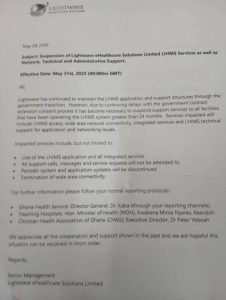
Ghana’s healthcare sector is bracing up for a return to paper-based operations as Lightwave eHealthcare Solutions Limited—the tech firm behind the Lightwave Health Information Management System (LHIMS)—announced the suspension of all system and support services effective May 31, 2025 at 00:00 GMT.
This sudden move will force hundreds of public and mission health facilities across the country to abandon the paperless hospital systems they have relied on for years and revert to the traditional manual folder-based records management.
The development, which many health workers and patients see as a major setback, follows prolonged delays by the National Democratic Congress government in finalizing contract extension agreements with Lightwave.
From Digital Leap to Digital Lapse
Ghana’s LHIMS project was introduced as part of a broader national vision to digitize the health sector, eliminate inefficiencies, and improve access to patient records in real-time.
It marked a pivotal step toward modernizing healthcare delivery and was instrumental in reducing misdiagnoses, duplicate testing, and delays in accessing care.
Lightwave, a private health IT solutions provider, was contracted to develop, deploy, and manage the LHIMS platform and its associated infrastructure.
Since its launch, the system has been running in major teaching hospitals, Ghana Health Service (GHS) facilities, and institutions under the Christian Health Association of Ghana (CHAG).
Despite political transitions and bureaucratic bottlenecks, Lightwave had continued maintaining the system and providing full technical, administrative, and network support.
But the company now says continued uncertainty and failure by the NDC government to complete its contract renewal process have left it with no choice but to terminate services for facilities that have used the system beyond the 24-month operational window.
What’s Being Shut Down?
According to the notice issued by Lightwave’s senior management, the following services will be affected:
Full suspension of LHIMS application access, including all electronic patient data systems and integrated services
Termination of Wide Area Network (WAN) connectivity, affecting real-time data sharing across health facilities
Discontinuation of all technical support, including assistance with networking and application issues
Ceasing periodic system And security updates
Non-response to support calls, service requests, or emergency troubleshooting
The suspension affects all hospitals and health facilities that have used LHIMS for more than two years—a substantial portion of Ghana’s healthcare network.
Official Communication Channels
In its notice, Lightwave directed affected institutions to route concerns through their existing reporting structures.
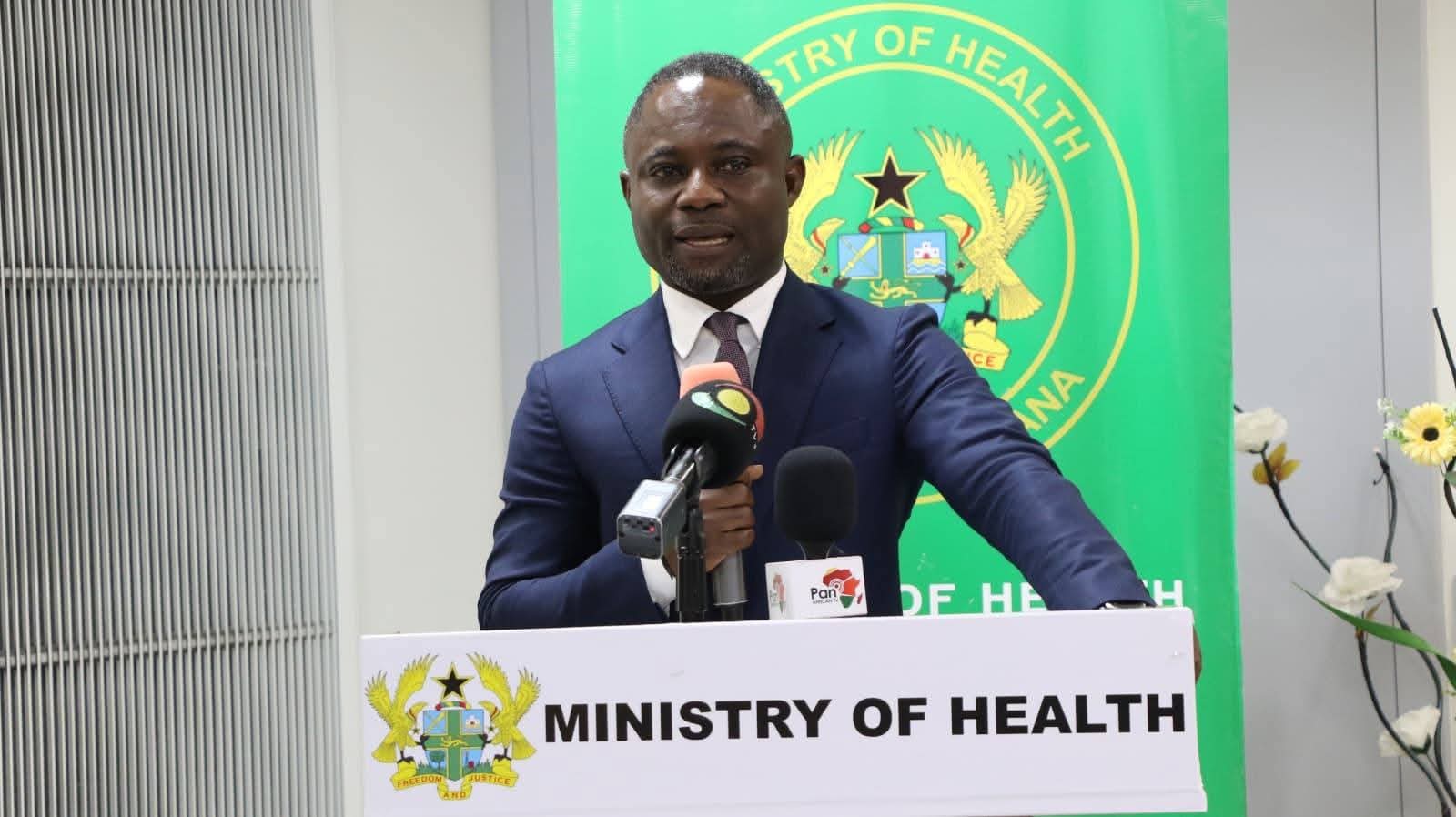
These include: Dr. Kaba, Director General of the Ghana Health Service, Kwabena Minta Akandoh, Minister of Health and Dr. Peter Yeboah, Executive Director of CHAG.
While the company expressed gratitude for past cooperation and said it hopes for a quick resolution, no timeline has been given for a potential restoration of services.
From Seamless to Scattered: The Impact on Health Delivery
With LHIMS going offline, patients and health professionals will face immediate disruptions.
Health workers will now be forced to search for physical folders, reintroducing inefficiencies the digital system had nearly eliminated.
This abrupt transition threatens to increase: Waiting times, human errors in medication and diagnosis, delays in emergency care, and loss of critical patient history.
The situation could also impact health data reporting, which is vital for planning, disease tracking, and resource allocation.
The Bigger Picture: Poor Contract Management
Critics say the issue reflects a deeper problem with the government’s handling of public-private partnerships.
Despite knowing that Lightwave powers critical infrastructure in the health sector, authorities failed to treat the contract renewal as a priority—leaving a vital national service vulnerable.
National Setback
While job losses in IT departments are a concern, the greater cost may be borne by patients and clinicians.
From teaching hospitals in Accra to district clinics in Tamale, the burden of this breakdown will be felt at the frontlines.
The paperless dream is now in reverse.
However, the healthcare system, which took bold steps forward into the digital era, now finds itself walking back into the filing room.