–BY Grace Zigah
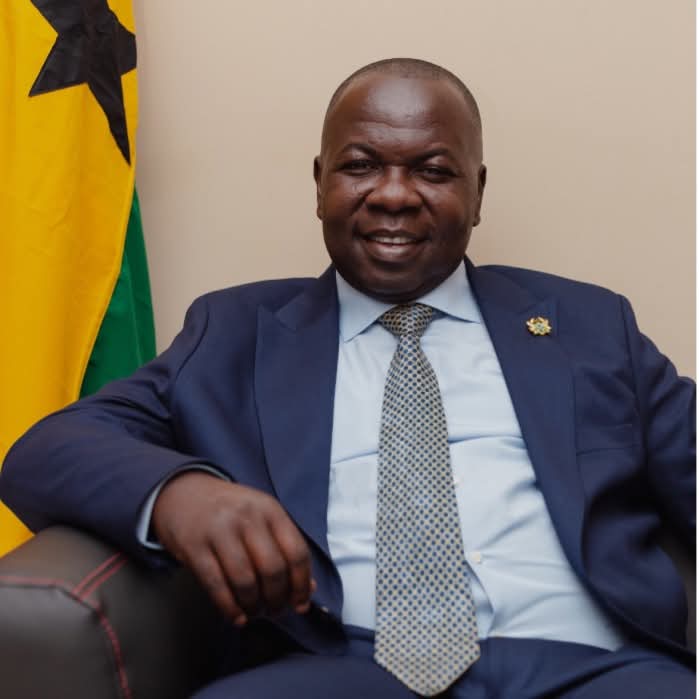
The Economic and Organised Crime Office (EOCO), now under the leadership of investigative journalist Raymond Archer, has formally requested the docket on the high-profile case involving former Sanitation Minister Cecilia Abena Dapaah.
The case, which drew intense national scrutiny in 2023, revolves around unexplained cash sums and suspected money laundering.
Special Prosecutor Kissi Agyebeng disclosed at a press briefing on Monday, June 2, that EOCO’s new administration had, by a letter dated May 14, 2025, requested the return of the docket for further review and possible investigations.
In response, the Office of the Special Prosecutor (OSP) handed over a duplicate of the full case docket on May 29.
“It is our considered opinion that the docket serves as a valuable background resource for EOCO to commence its own investigation in respect of aspects of the case the OSP does not have a direct mandate over,” Agyebeng stated.
He added that the OSP would cooperate fully with EOCO during their review and any subsequent investigations or legal actions.
Background
The investigation into Cecilia Dapaah began in July 2023, following revelations that large amounts of foreign and local currency were discovered in her private residence in Accra.
Public outrage was triggered when it was reported that over $1 million, €300,000, and several millions of Ghana cedis in cash were stolen from the minister’s home by her domestic staff.
The Office of the Special Prosecutor promptly initiated investigations into potential corruption and corruption-related offences.
The inquiry was one of the most high-profile cases handled by the OSP, drawing both local and international attention.
Simultaneously, the Federal Bureau of Investigation (FBI) in the United States launched its own inquiry, as some funds allegedly moved through international financial systems.
After nearly seven months of intensive investigations, the OSP concluded in early 2024 that there was no direct and immediate evidence linking the seized funds and frozen bank accounts to acts of corruption as defined under its mandate.
However, the probe revealed significant red flags pointing toward possible money laundering and illegal structuring of financial transactions—matters falling squarely under EOCO’s jurisdiction.
Consequently, in January 2024, the OSP formally referred the matter to EOCO for further investigations into the money laundering aspects.
In May 2024, EOCO, then under previous leadership, returned the docket to the OSP, stating that it lacked the legal basis to commence investigations.
The EOCO argued that money laundering is not a standalone or substantive offence but rather a derivative one, requiring a predicate criminal act—such as fraud or corruption—on which to base its inquiry. Since the OSP had found no such predicate offence, EOCO claimed it was unable to proceed.
That decision drew criticism from sections of the public and civil society groups who believed Cecilia Dapaah’s case deserved deeper scrutiny, especially given the scale of unexplained wealth involved.
However, the recent change in EOCO’s leadership appears to have reignited the case.
Raymond Archerassumed office as EOCO boss in early May 2025.
Within weeks, his administration requested the return of the docket, signalling a fresh appetite to pursue financial crime investigations with renewed intensity.
A New Chapter in a Long-Simmering Case
With the docket now back at EOCO, the case could enter a new chapter.
While Cecilia Dapaah has not faced formal criminal charges to date, the renewed interest in potential money laundering activities could alter the legal trajectory.