Grace Zigah
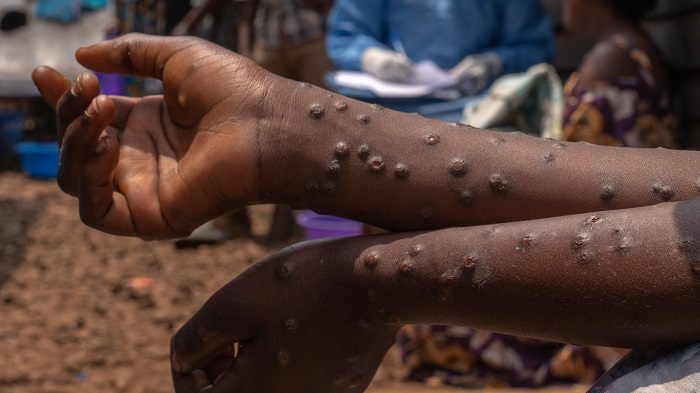
The Ghana Health Service (GHS) has announced plans to prioritize individuals with compromised immune systems and those at high risk of contracting the Mpox disease for vaccination once the vaccine arrives in the country.
According to Dr. Franklyn Asiedu-Bekoe, Director of Public Health at GHS, processes are far advanced to secure the vaccines after a scheduled meeting with officials of the World Health Organization (WHO) this week.
Current Mpox Situation In Ghana
As of July 10, 2025, Ghana has recorded 170 cases of Mpox in over 50 districts across 12 regions, with the Western Region, Western North, and Greater Accra regions being the most affected.
Although the rate of increase in cases is reported to be down, and cases remain mild with no admissions, the GHS is working to detect cases early and prevent further spread.
A total of 1,200 suspected cases have been recorded, and 1,700 contacts have been traced, with only six resulting in infections.
Vaccine Distribution
The GHS has identified the at-risk population and is awaiting the arrival of the Mpox vaccine.
Dr. Asiedu-Bekoe emphasized that the vaccine will be prioritized for those who need it most, stating, “We are working with WHO. We have made the request two weeks ago. We have been promised that we will meet this week and when we receive it, we will try and prioritize the at-risk population.”
Global Context
The Mpox outbreak has been declared a public health emergency of international concern by the WHO, with over 17,000 suspected cases and 517 deaths reported across Africa last year.
The WHO has approved an Mpox vaccine aimed at timely and increased access for millions at risk in Africa.
Other countries, like Kenya, have also received Mpox vaccine doses to curb the spread of the disease, prioritizing high-risk groups such as healthcare workers, close contacts of confirmed cases, long-distance truck drivers, and sex workers.
Prevention Measures
The GHS is actively monitoring infections through its surveillance system and advising the public to take preventive measures, including frequent hand washing with soap and water or hand sanitizer, wearing masks, and covering lesions around others.
The public has been urged to see the outbreak as a national concern and protect themselves accordingly.