
By Daniel Bampoe
Ghanaian businessman and social media personality Frederick Kumi, popularly known as Abu Trica, has been extradited to the United States to face criminal proceedings over alleged involvement in a multi-million-dollar international romance fraud and money laundering scheme.
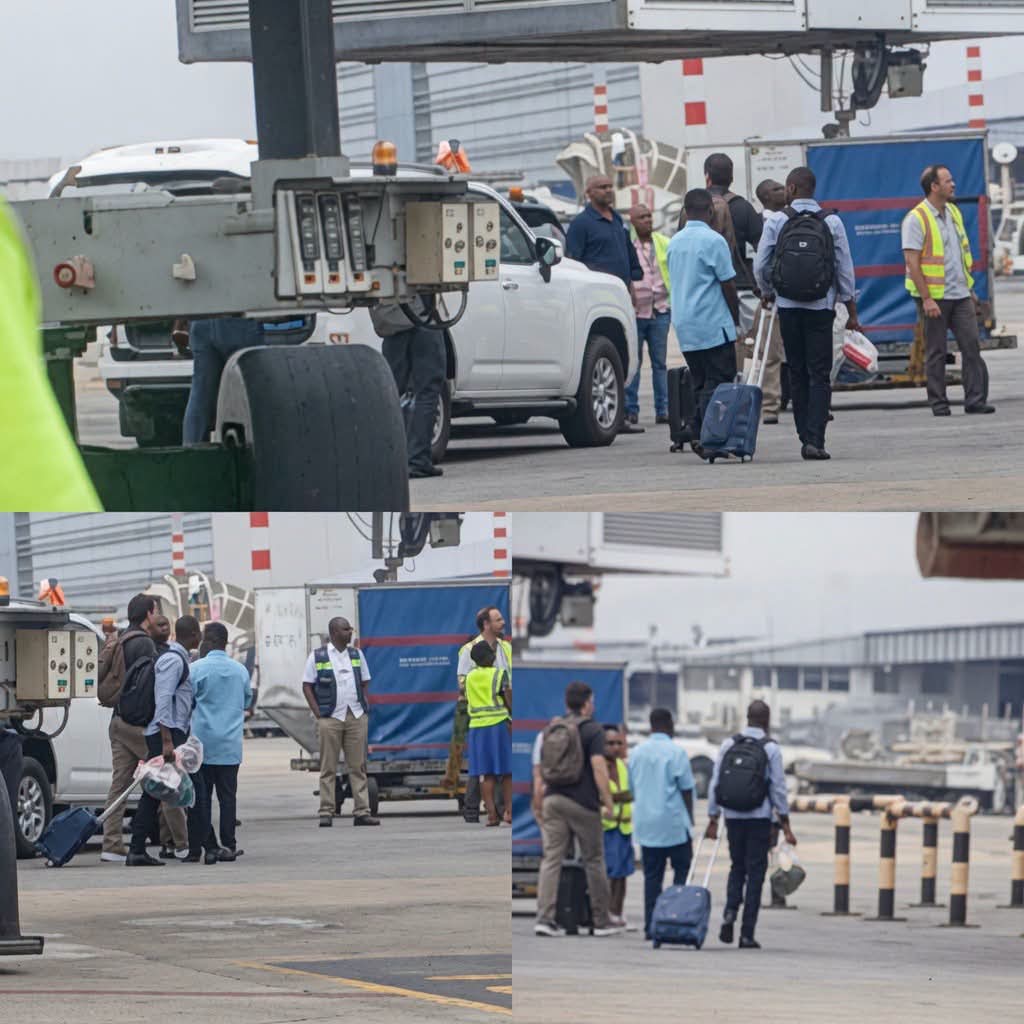
Sources confirmed that he departed Ghana on Thursday morning aboard Delta Airlines Flight DL157, marking the end of months of intense legal proceedings that had attracted widespread public attention and sparked debate over the extradition laws, due process and international law enforcement cooperation.
The extradition comes just hours after his lawyer, Oliver Barker-Vormawor, disclosed that his client had been rushed to the Police Hospital in Accra. The lawyer also raised concerns about what he described as the denial of access to his client, stating that members of the defence team had been unable to meet or communicate with Abu Trica before his transfer out of the country.
According to the lawyer, repeated efforts to locate Kumi ahead of the extradition were unsuccessful.
He indicated that he was not granted access to his client before the businessman boarded the flight to the United States.
Abu Trica’s transfer concludes a lengthy legal battle that began on December 11, 2025, when he was arrested during a joint operation involving Ghanaian security agencies and the United States Federal Bureau of Investigation (FBI) following an indictment issued by the United States Department of Justice.
American prosecutors accuse the 31-year-old businessman of participating in an international criminal syndicate that allegedly targeted elderly Americans through sophisticated online romance scams beginning in 2023.
According to U.S. court documents, members of the network allegedly used fake identities, including artificial intelligence-generated online profiles, to establish emotional relationships with victims before persuading them to send money and valuables under false pretences.
Investigators allege that the fraud scheme generated more than US$8 million, with Abu Trica accused of conspiracy to commit wire fraud, conspiracy to commit money laundering and participating in the movement and distribution of proceeds obtained from the alleged criminal enterprise.
Throughout the proceedings in Ghana, Abu Trica consistently denied any wrongdoing and maintained that the case against him was fundamentally flawed.
In several media interviews following his release on bail, he rejected claims that he was involved in an $8 million fraud scheme and insisted the allegations against him had been exaggerated.
He also alleged that he had been subjected to coercive interrogation during his arrest and questioned the conduct of investigators.
His legal team, led by Oliver Barker-Vormawor, mounted several constitutional and procedural challenges against the extradition request.
The defence argued that the offences listed in the American indictment were not specifically covered under the 1931 extradition treaty between Ghana and the United States and therefore could not lawfully support his extradition.
Lawyers also filed multiple applications before the High Court seeking to halt the extradition process, including a writ of habeas corpus, applications for bail and, most recently, an emergency motion seeking a stay of execution after the High Court dismissed his constitutional challenge on July 2, 2026.
In that latest application, the defence sought orders restraining the Minister for the Interior, the Attorney-General, the Ghana Police Service acting through INTERPOL and other state agencies from surrendering Abu Trica to U.S. authorities until appellate proceedings had been concluded.
Despite those legal efforts, the extradition proceeded, bringing the judicial phase of the case to a close.
During the months-long proceedings, Abu Trica was granted GH¢30 million bail by the Accra High Court after spending several months in custody.
He was eventually released after meeting the strict bail conditions but remained subject to the ongoing extradition proceedings while pursuing legal challenges against his transfer.


