
By Grace Zigah
Health Minister Kwabena Mintah Akandoh is facing mounting criticism from medical professionals, opposition lawmakers, healthcare advocates and sections of the public following his controversial decision to suspend the Chief Executive Officer of the Komfo Anokye Teaching Hospital (KATH), Dr. Paa Kwesi Baidoo, over the hospital’s temporary suspension of emergency admissions due to severe congestion at its Accident and Emergency Centre.
The decision, which was intended to enforce government policy on emergency healthcare delivery, has instead triggered a major healthcare crisis in the Ashanti Region, culminating in an indefinite strike by medical doctors at the country’s second-largest referral hospital and reigniting debate over the longstanding “No Bed Syndrome” confronting Ghana’s health sector.
The controversy began on June 3, 2026, when management of KATH announced a temporary suspension of admissions at its Accident and Emergency Centre following overwhelming congestion caused by increasing referrals from hospitals across the middle and northern sectors of the country.
Hospital authorities explained that the facility had exceeded its operational capacity, creating concerns about patient safety, quality of care and the welfare of healthcare workers.
The decision was widely viewed by medical professionals as an emergency management intervention aimed at preventing avoidable deaths and ensuring that existing patients received appropriate care under extremely difficult circumstances.
However, the temporary suspension of emergency admissions drew the attention of the Health Minister, Akandoh who subsequently summoned Dr. Baidoo and later directed the hospital’s governing board to suspend him for two weeks.
The minister justified his decision by citing provisions of the Ghana Health Service and Teaching Hospitals Act, 1996 (Act 526), arguing that the refusal to admit emergency patients contravened government policy and a presidential directive prohibiting health facilities from turning away emergency cases.
The minister’s directive also instructed the KATH Board to investigate the hospital’s Head of Public Affairs, Kwame Frimpong, for granting media interviews explaining the circumstances that led management to suspend emergency admissions.
The punitive action immediately sparked outrage among healthcare professionals, many of whom argued that the minister had unfairly targeted hospital management for confronting a problem that was fundamentally structural rather than administrative.
Doctors at KATH responded by holding an emergency meeting on June 5, where they overwhelmingly rejected the suspension of their chief executive. The Komfo Anokye Doctors Association described the minister’s decision as unjustified, counterproductive and detrimental to efforts aimed at safeguarding patient care under difficult circumstances.
According to the doctors, management’s actions were not acts of negligence but necessary interventions taken in the interest of patient safety.
They argued that healthcare leaders should not be punished for making difficult decisions during emergencies when hospitals are overwhelmed beyond capacity.
The association subsequently announced an indefinite withdrawal of services by medical doctors beginning at 6:00 a.m. on June 6, 2026.
The industrial action, they said, would remain in force until the suspension of Dr. Baidoo was reversed and clear policies were established to guide hospitals on managing situations where emergency facilities exceed their operational limits.
The doctors further demanded the development of comprehensive national guidelines on patient overflow management and admission restrictions during periods of extreme congestion.
They also called on government to provide timelines for the operationalisation of critical health facilities, including the Sewua Hospital and the Afari Military Hospital, which were constructed to ease pressure on KATH but remain underutilised.
The strike has generated widespread public debate, with many Ghanaians questioning whether the minister’s action addressed the real causes of congestion at referral hospitals. Critics argue that the decision represents an attempt to shift attention away from government delays in operationalising key healthcare infrastructure projects across the country.
Adding to the pressure on the government, the Minority Caucus in Parliament has demanded the immediate reinstatement of Dr. Baidoo and accused the Health Minister of adopting what it described as a reactionary approach to a longstanding healthcare challenge.
In a statement signed by the Ranking Member on Parliament’s Health Committee, Dr. Nana Ayew Afriye, the Minority argued that while every preventable death within the healthcare system deserves investigation, blaming a single hospital administrator for a national infrastructure crisis was misguided.
The opposition maintained that KATH’s overcrowding is largely the result of government’s failure to operationalise major health facilities completed under the previous administration. Among the projects cited were the 500-bed Afari Military Hospital and the Ashanti Regional Hospital at Sewua, both of which were intended to absorb significant referral cases from the Ashanti Region and beyond.
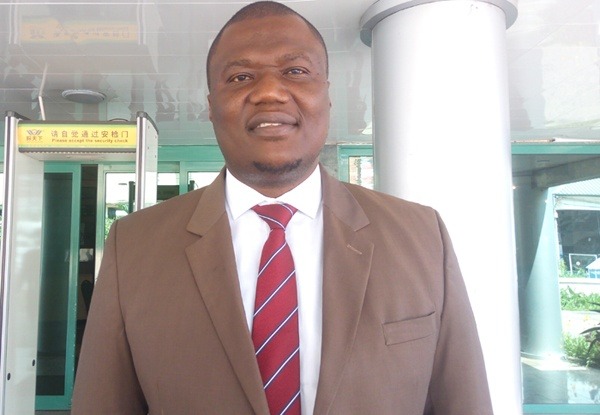
The Minority also pointed to the 100-bed Trede District Hospital and the 100-bed Kokoben-Oforikrom District Hospital, arguing that despite being commissioned in 2024 and equipped with modern healthcare facilities, they remain largely non-operational and unable to reduce pressure on KATH.
According to the Caucus, the challenges confronting KATH are symptoms of broader weaknesses within Ghana’s healthcare system, including inadequate infrastructure, delayed hospital projects, workforce shortages, weak referral mechanisms and insufficient investment in healthcare expansion.
The statement questioned why government would suspend a hospital CEO for managing excess demand when critical hospitals built specifically to address that demand remain underutilised.
The Minority further suggested that political considerations may be influencing the pace at which some health projects are being operationalised, particularly within the Ashanti Region.
The opposition additionally criticized what it described as a growing “Rambo-style” leadership approach within the health sector, where consultation and stakeholder engagement are increasingly being replaced by unilateral decisions and public disciplinary actions.
Meanwhile, healthcare advocates and members of the public have joined calls for a review of the minister’s decision, insisting that the focus should be on addressing the root causes of overcrowding rather than punishing hospital administrators attempting to manage a difficult situation.