BY Daniel Bampoe
The Mahama administration has resisted calls for a supplementary budget despite mounting demands on public spending, opting instead to reshuffle billions of cedis within the existing 2026 budget as Finance Minister Dr. Cassiel Ato Forson declared that the economy has staged a remarkable recovery.
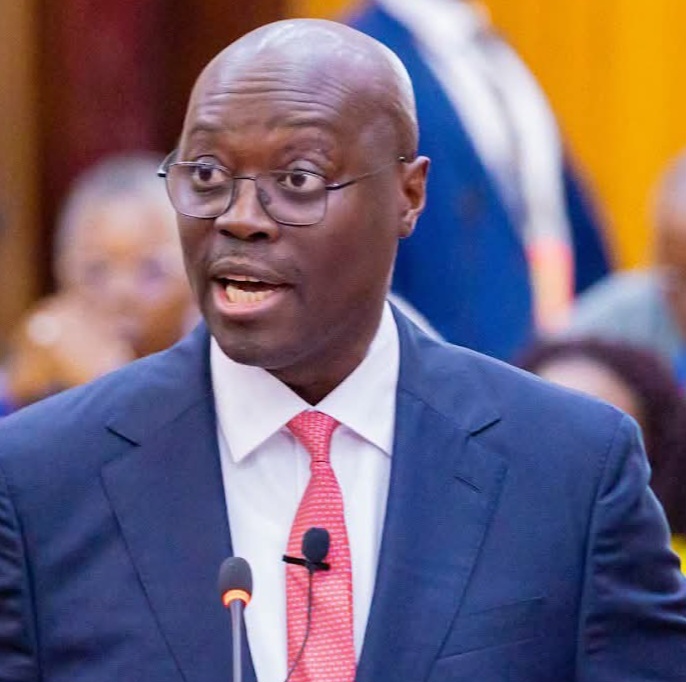
Presenting the 2026 Mid-Year Budget Review in Parliament on Thursday, Dr. Forson announced that the government would not seek Parliament’s approval for a revised national budget. Instead, it will strategically reallocate expenditure within the already approved GH¢357.1 billion appropriation to finance what it describes as priority interventions.
The decision is expected to fuel fresh political debate, with critics likely to question whether the expenditure realignment amounts to an admission that the original budget no longer reflects the government’s spending priorities, while the government insists the move demonstrates prudent fiscal management rather than fiscal distress.
“The 2026 appropriations remain unchanged. However, we are undertaking a strategic realignment of expenditures within the existing appropriations,” Dr. Forson told Parliament.
The Finance Minister argued that the reallocation would allow government to respond to emerging national priorities without increasing expenditure or abandoning its fiscal consolidation programme.
Government Points To Falling Inflation
Seeking to justify the decision, Dr. Forson painted an optimistic picture of the economy, describing recent macroeconomic indicators as evidence that the government’s economic policies are producing tangible results.
He announced that inflation had dropped dramatically from 23.8 percent in December 2024 to 5.4 percent by the close of 2025, before declining further to 5.3 percent in June 2026.
According to him, unemployment has also improved, falling from 13.7 percent during the first three quarters of 2024 to 12.8 percent over the same period in 2025.
The Finance Minister further disclosed that multidimensional poverty—which measures deprivation in education, healthcare, employment and living standards—declined from 24.9 percent to 21.9 percent within a year.
He said the improvement means nearly 950,000 Ghanaians have escaped multidimensional poverty.
While government describes the figures as proof that its economic reset is working, opposition parties are expected to challenge whether the statistics reflect the day-to-day realities confronting households amid persistent concerns over the cost of living and unemployment.
Debt Recovery Narrative
Ato Forson also declared that Ghana has already met its statutory debt target of 45 percent of GDP, reaching the milestone ahead of both the government’s projections and the International Monetary Fund programme timeline.
He argued that the achievement demonstrates that Ghana is steadily restoring debt sustainability after the severe economic crisis that culminated in the Domestic Debt Exchange Programme (DDEP).
As part of that recovery narrative, the Finance Minister assured domestic bondholders that government would honour the GH¢10.8 billion DDEP coupon payment due on August 18, 2026, in full and on time.
He reminded Parliament that government successfully paid the first coupon of GH¢10.1 billion in February this year and disclosed that Ghana has also paid US$2.1 billion in principal and interest to Eurobond holders since January 2025 without placing excessive pressure on foreign exchange reserves.
“There was a time when the world doubted us. Today, every payment made on time answers that doubt,” Forson stated, insisting that consistent repayments—not political rhetoric—are rebuilding investor confidence.
Background
The 2026 Budget, presented in November 2025, programmed expenditure of GH¢302.5 billion on a commitment basis, representing 18.9 percent of GDP, while the total appropriation approved by Parliament stood at GH¢357.1 billion.
Government projected GH¢244.7 billion in primary expenditure, GH¢90.8 billion for compensation of public sector workers, and GH¢57.5 billion for capital expenditure to support infrastructure, education, healthcare and social intervention programmes.
The latest Mid-Year Budget Review therefore keeps the overall spending ceiling intact but significantly reshuffles expenditure priorities at a time when the Mahama administration is seeking to convince Ghanaians, investors and the IMF that the country’s economic recovery is firmly on course.