New Patriotic Party (NPP) flagbearer Dr Mahamudu Bawumia has called for a rethink of Ghana’s healthcare policies after engaging the leadership of the Ghana Medical Association (GMA) on challenges affecting doctors, the health workforce and the delivery of medical services across the country.
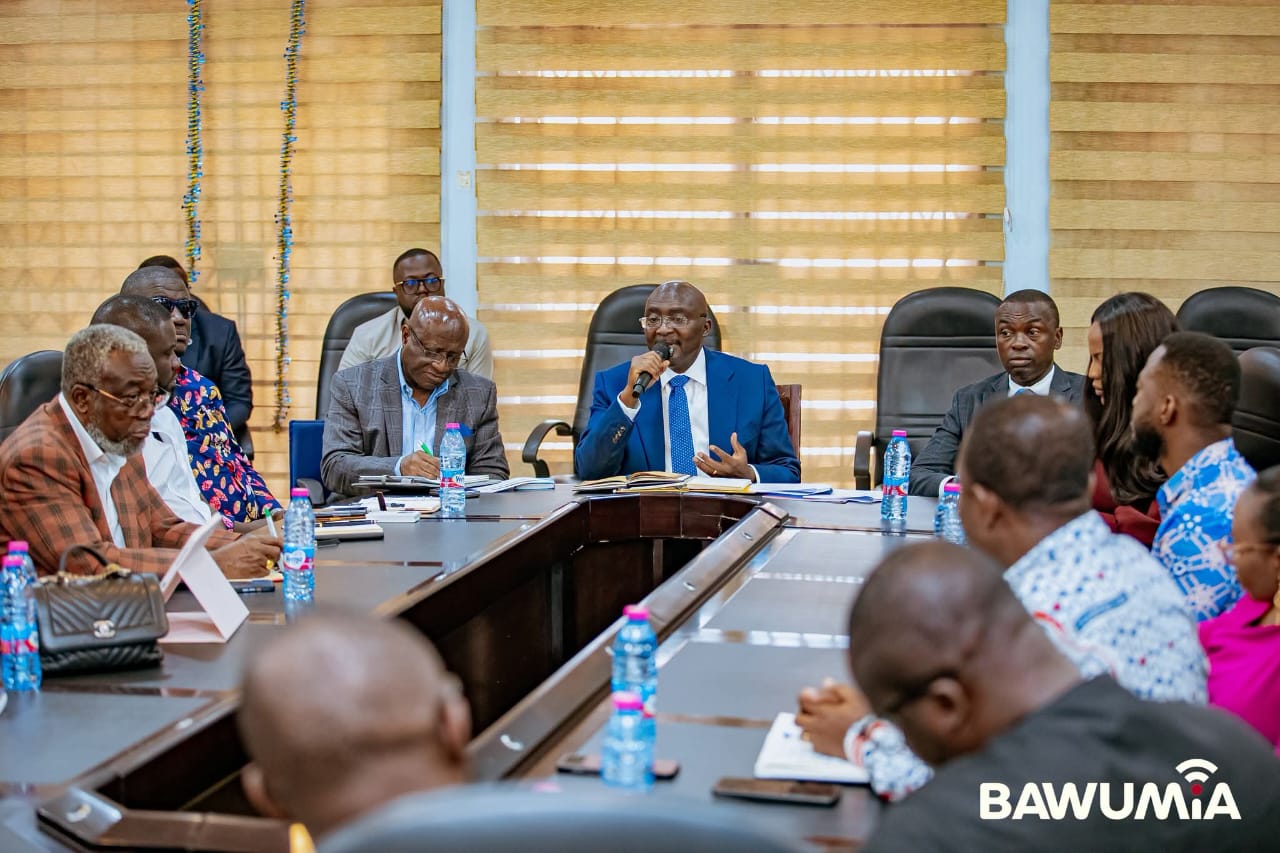
Dr Bawumia met the National Executive Committee of the GMA at the association’s headquarters at the Korle Bu Teaching Hospital as part of his ongoing consultations with professional bodies, key stakeholders and identifiable groups ahead of the 2028 general elections.
The meeting provided an opportunity for the leadership of the country’s medical doctors to present their concerns directly to the NPP flagbearer, with discussions covering issues ranging from the retention of health professionals to remuneration, infrastructure and emergency preparedness.
The President of the GMA, Professor (Dr.) Ernest Yorke, and other members of the executive leadership outlined several challenges confronting medical practitioners and the wider health sector.
Among the issues raised were the retention of Ghana’s health workforce, remuneration, the uneven distribution of doctors across the country, infrastructure deficits, emergency preparedness and conditions of service.
The GMA leadership also drew attention to the deprived-area allowance, the role of private healthcare providers and requirements imposed by the Medical and Dental Council for doctors to undertake licensing examinations.
Dr Bawumia said the breadth of issues discussed convinced him that Ghana’s healthcare policies require what he described as a “paradigm shift.”
According to him, the discussions produced several ideas which, if translated into policy and implemented effectively, could have significant implications for the welfare of medical doctors and the broader healthcare system.
The former Vice President said the engagement was particularly important because doctors are at the frontline of healthcare delivery and therefore possess practical knowledge of the challenges affecting the system.
He noted that addressing healthcare challenges requires more than investment in physical infrastructure, stressing the importance of creating conditions that enable medical professionals to remain in the country and provide quality services.
The issue of health workforce retention has remained a significant concern in Ghana, with medical professionals and other healthcare workers seeking opportunities locally and abroad. Retaining experienced doctors is important for maintaining specialist services, strengthening healthcare institutions and ensuring continuity of patient care.
The distribution of doctors across the country was another major concern raised during the engagement. While major urban centres host some of Ghana’s leading health facilities, rural and deprived communities often face difficulties attracting and retaining specialised medical personnel.
The discussion on deprived-area allowances consequently touched on the broader question of how incentives can be designed to encourage doctors to work in underserved parts of the country.
Infrastructure and emergency preparedness also featured prominently in the discussions, reflecting the need for health facilities to have adequate equipment, personnel and systems to respond effectively to emergencies.
The role of the private sector was another area examined during the meeting. Private healthcare providers constitute an important component of Ghana’s health delivery system, and Dr Bawumia’s engagement with the GMA explored how collaboration between the public and private sectors could contribute to strengthening healthcare provision.
The requirement for doctors to write licensing examinations administered under the Medical and Dental Council was also discussed, adding professional regulation and licensing to the range of issues considered during the engagement.
Dr Bawumia said the ideas presented by the GMA had strengthened his conviction that reforms in the health sector should be informed by the experiences of healthcare professionals themselves.
The engagement forms part of a wider policy consultation programme being undertaken by the NPP flagbearer as he prepares for the 2028 presidential election.
In recent weeks, Dr Bawumia has engaged several professional and stakeholder groups, including young doctors and medical students, engineers, traders and agricultural-sector representatives.
The consultations have focused on obtaining practical perspectives on national challenges before policies are finalised, with Dr Bawumia repeatedly stressing the importance of incorporating professional expertise into policy development.
Healthcare is likely to remain an important issue in the 2028 political debate, particularly as Ghana continues to confront challenges involving health workforce capacity, access to quality care, infrastructure, financing and the distribution of medical professionals.
Dr Bawumia said the ultimate objective should be the creation of a healthcare system that is resilient, responsive and centred on patients while ensuring that communities across the country are not left behind.
“Healthcare delivery is a collaborative mission,” he stated, expressing appreciation to the GMA leadership for what he described as their candid contributions and commitment to the wellbeing of Ghanaians.
He specifically thanked Professor Ernest Yorke, the GMA executive leadership and members of the association for providing what he described as valuable insights into the realities confronting medical practitioners.
The meeting ends another stage in Dr Bawumia’s continuing stakeholder consultations, but it also places health workforce policy, professional welfare and equitable access to medical services firmly within the policy conversation surrounding his preparations for the 2028 election.
The former Vice President said he remains encouraged by the ideas presented during the engagement and expressed confidence that appropriate reforms could transform conditions for medical professionals while strengthening healthcare delivery for patients across Ghana.