
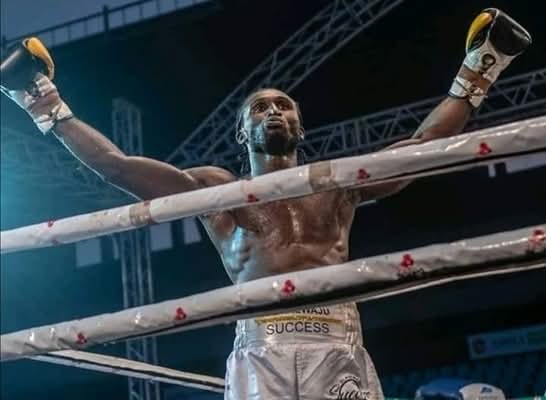
By Grace Zigah
The Ghana Boxing Authority (GBA) is facing renewed scrutiny over its role in the tragic death of Nigerian boxer Gabriel Olanrewaju, as its Communications Director, Mohammed Amin Lamptey, has openly challenged the credibility and intent of the government-appointed investigative committee that probed the incident.
Olanrewaju, a former West African champion, collapsed during a sanctioned bout at the Bukom Boxing Arena in Accra on March 29, 2025.
He was rushed to the Korle-Bu Teaching Hospital but was pronounced dead shortly after.
His death sparked outrage across the West African boxing community, leading to the formation of a fact-finding committee by Sports and Recreation Minister Kofi Adams to establish the circumstances surrounding the incident.
The six-week investigation culminated in a damning report submitted last month by the Amarkai Amarteifio-led committee.
Among its findings was the revelation that the bout had been approved by the GBA despite the absence of a valid contractual agreement between the Nigerian boxer and the event promoter.
The report further noted significant failures in medical preparedness and emergency response, accusing both the GBA and its Nigerian counterparts—the Nigerian Boxing Board of Control (NBBofC)—of gross negligence.
One of the most alarming findings was that Olanrewaju had not undergone a mandatory pre-fight medical assessment.
These evaluations, which typically include neurological and cardiovascular screening, are designed to detect pre-existing conditions that could place fighters at risk of severe injury or death.
Had such an assessment been conducted, any signs of vulnerability might have been detected, potentially preventing the fatal outcome.
The report also highlighted an appalling lack of emergency medical personnel and equipment at the venue.
According to the committee, the only person present to provide ringside medical care was a nurse, misrepresented as a certified doctor.
In a sport where seconds can determine survival, the absence of professional medical intervention was a critical failure.
However, in an unexpected twist, GBA spokesperson Mohammed Amin Lamptey is now challenging the findings and composition of the investigative panel.
Speaking to JoySports, Lamptey—who was the official ring announcer on the night of the incident—questioned why he was not invited to testify, despite being closer to the scene than many of the committee’s selected witnesses.
“I was at the center of it. When it happened, I was the one going from one media house to another, explaining what occurred.
“Yet I wasn’t called. But they invited people like Moses Foh-Amoaning, who has a history of personal disagreements with the GBA,” Lamptey stated.
He also criticized the selection of other witnesses, including trainer and GBA board member Carl Lokko, referee Roger Barnor, and boxing official Yoofi Boham—all of whom, he claims, were not present at the arena when the tragedy occurred.
According to Lamptey, the committee’s process was biased and may have been influenced by individuals with unresolved disputes with the GBA.
While the Ministry of Youth and Sports has accepted the committee’s report, it has yet to announce any concrete actions or reforms.
The GBA, on the other hand, appears to be preparing to defend its position more aggressively, setting the stage for what could be a prolonged battle over accountability.
The death of Gabriel Olanrewaju has shaken confidence in boxing governance in both Ghana and Nigeria. With public outcry growing and pressure mounting for systemic reforms, the credibility of sports regulatory bodies is under the microscope.
The next steps by the Ministry—and the GBA’s response—may prove pivotal in determining whether meaningful change follows this tragic loss.


