BY Daniel Bampoe
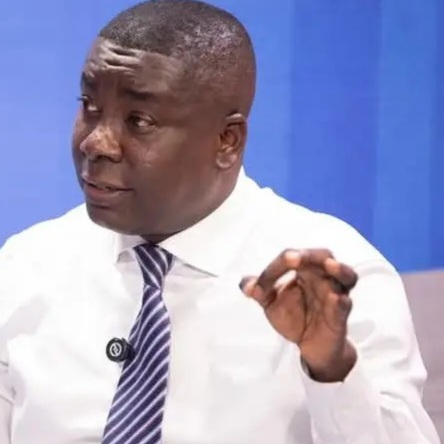
The Member of Parliament for Tano North, Gideon Boako, has launched a sharp critique of the Bank of Ghana following the release of its 2025 financial statement, describing the institution’s GH¢15.6 billion operational loss as “a new low” and attributing it to what he calls policy missteps rather than economic necessity.
The Bank’s audited accounts, published on May 1, 2026, confirmed that the central bank recorded one of its largest losses since the redenomination of the cedi in 2008.
Dr. Boako, who serves on Parliament’s Finance Committee, argued that the scale and timing of the loss raise serious concerns, particularly as 2025 was not characterised by any major global or domestic economic crisis.
Loss in a ‘Non-Crisis Year’ Raises Questions
According to him, the most troubling aspect of the development is that the losses occurred at a time when the central bank’s financial position had begun to stabilise.
“The most damning part? 2025 was not a crisis year,” he stated, pointing out that the Bank’s 2024 financials showed signs of recovery following the economic shocks of 2022.
He explained that in 2024, operating losses had reduced significantly—from about GH¢13.23 billion to GH¢9.49 billion—while other key indicators, including Other Comprehensive Income and foreign exchange valuation losses, had improved.
“The balance sheet was stabilizing. Then 2025 arrived, and the new management at the Bank of Ghana reversed the progress they inherited,” he said.

From Recovery To Reversal
Dr. Boako’s assessment suggests that the central bank’s trajectory shifted from gradual recovery to deterioration within a year, raising questions about the policy direction adopted under the current administration.
He noted that the 2025 loss not only exceeded the previous year’s figures but also reversed gains what had been achieved in the post-crisis recovery period.
Analysts, he indicated, have expressed surprise that the Bank performed worse in 2025 than in 2024, despite relatively stable global conditions.
Policy Choices Under Scrutiny
The Tano North MP attributed the losses to what he described as “politically motivated policy choices”, arguing that the central bank’s actions were driven more by short-term policy objectives than by sustainable economic management.
“The question is not whether losses can occur in central banking—they can,” he said. “The question is why a central bank that had begun to recover suddenly plunged into the largest non-crisis loss in its history.”
He maintained that the explanation being offered by some government officials—that the losses are the cost of stabilising the economy—does not adequately address the underlying issues.
Criticism Of Political Handling
He also criticised the manner in which the issue has been communicated to the public, questioning why political actors appeared to be speaking on behalf of the central bank.
“Since when did parliamentarians become spokespersons of an operationally independent central bank?” he asked, in reference to recent press engagements by members of the Majority in Parliament.
His comments reflect broader concerns about the independence of the Bank of Ghana and the role of political actors in shaping narratives around its financial performance.
Growing Debate Over BoG Losses
The debate over the Bank of Ghana’s losses has intensified in recent days, with the Majority defending the figures as the cost of achieving macroeconomic stability, including lower inflation, a stronger cedi, and improved reserves.
However, opposition figures, including Dr. Boako, argue that the losses point to deeper structural and policy challenges that require greater transparency and accountability.
Call for Deeper Scrutiny
Dr. Boako has called for a more thorough examination of the Bank’s financial decisions, urging policymakers and stakeholders to look beyond headline figures and interrogate the drivers of the losses.
For him, the issue is not merely about the existence of losses, but about how and why they occurred, especially in a period that should have consolidated earlier gains.