BY Issah Olegor
The government has intensified efforts to shield Ghana from a potential Ebola outbreak by activating surveillance, screening and isolation systems at major border entry points, following renewed concerns over the spread of the deadly virus in parts of Central Africa.
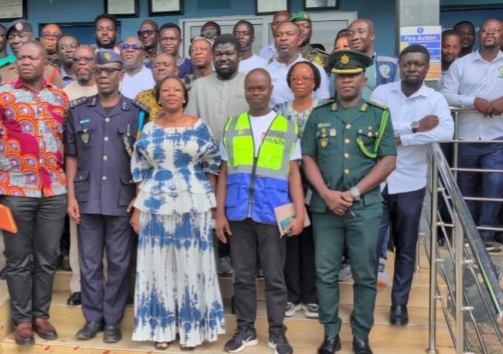
As part of the country’s preparedness strategy, the Deputy Minister for Health, Dr. Grace Ayensu-Danquah, undertook an inspection tour of two of the busiest international border crossings—Aflao in the Volta Region and Elubo in the Western Region—to assess the nation’s readiness to detect, contain and respond to any suspected Ebola cases.
The visit comes amid heightened vigilance across the sub-region following the emergence of Ebola cases in the Democratic Republic of Congo and other Central African countries, prompting governments across Africa to strengthen disease surveillance and emergency response mechanisms.
Dr. Ayensu-Danquah, said the Mahama administration was taking proactive measures to protect citizens from the threat posed by the deadly virus.
The inspection formed part of broader government efforts to reinforce disease surveillance systems and strengthen the frontline defenses against infectious disease threats.
The initiative also reflects growing concern over the increasing movement of people and goods across borders, which health experts say can heighten the risk of cross-border disease transmission.
At both Aflao and Elubo, Dr. Ayensu-Danquah met with officials from the Ghana Health Service, Port Health Units, the Ghana Immigration Service, Customs officials and local authorities to evaluate existing preparedness measures.
The delegation inspected screening points, isolation centres and municipal health facilities established to identify and manage suspected cases before they spread into local communities.
Health officials informed the Deputy Minister that surveillance and screening protocols are already operational at the border posts, with isolation arrangements in place to handle suspected infections should they arise.
The briefings suggested that Ghana has maintained a level of preparedness developed during previous public health emergencies, including the COVID-19 pandemic and earlier Ebola threats that affected parts of West Africa.
However, the assessment also revealed several challenges that could undermine the country’s response capacity if not addressed promptly.
Officials cited inadequate stocks of personal protective equipment (PPE), limited healthcare personnel and deteriorating infrastructure that was established during the COVID-19 pandemic but has since suffered neglect and wear.
The concerns highlighted the need for renewed investment in public health infrastructure and emergency preparedness systems, particularly at border communities that serve as the country’s first line of defense against imported diseases.
Responding to the concerns, Dr. Ayensu-Danquah assured stakeholders that government was moving quickly to address the identified gaps.
She announced plans to establish modern and fully equipped border health facilities while increasing investments in logistics, personnel and essential medical supplies to strengthen disease detection and response efforts.
“The government remains committed to ensuring robust surveillance, screening and response mechanisms are in place to protect the health and safety of Ghanaians,” she said.
The Deputy Minister emphasized that beyond infrastructure development, government is also focused on improving coordination among agencies responsible for border management and public health security.
Her visit therefore sought to strengthen collaboration among institutions such as the Ghana Immigration Service, the Customs Division of the Ghana Revenue Authority, Port Health Services and regional health authorities to ensure a unified response in the event of an outbreak.