
–By Issah Olegor
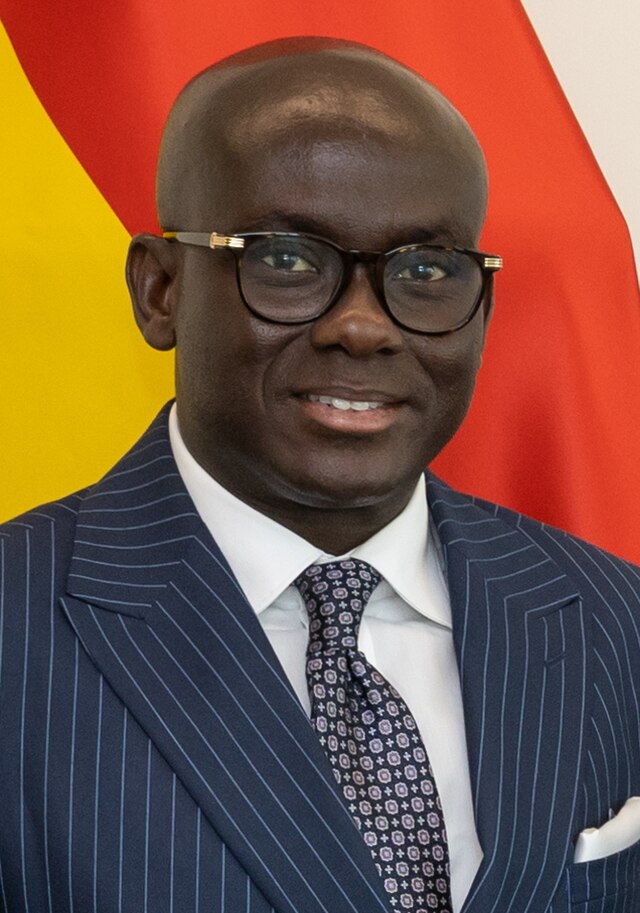
Former Attorney-General and Minister for Justice, Godfred Yeboah Dame, has forcefully rejected growing allegations of conflict of interest following his decision to legally represent the suspended Chief Justice, Gertrude Araba Esaaba Sackey Torkornoo, in a high-stakes case currently before the Supreme Court.
The legal challenge, filed on Wednesday, May 21, 2025, by Justice Torkornoo, seeks to halt the proceedings of a committee set up to investigate multiple petitions demanding her removal from office.
The Chief Justice is also requesting the disqualification of two Supreme Court justices—Gabriel Scott Pwamang and Samuel Kwame Adibu-Asiedu—on grounds of perceived bias and lack of neutrality.
The controversy erupted after Dame filed the suit on her behalf, with critics questioning whether it was appropriate for a former Attorney-General—who previously served under the administration of President Nana Addo Dankwa Akufo-Addo—to take such a prominent role in a case with significant political and judicial implications.
Addressing the concerns in an interview with Joy News on the same day the suit was filed, Dame dismissed the claims outright, characterizing them as politically motivated and baseless.
“It is about time that good men in this country speak for what is righteous and what is right,” he said. “We cannot let people mislead the public and let it go uncorrected.”
Dame further defended his track record, asserting that he has consistently stood in defence of judicial independence throughout his tenure in public service.
“If there is any Attorney-General who, right from his appointment, has stood up for the judiciary and spoken against attacks on it, it is myself,” he said.
In the suit, Justice Torkornoo is asking the Supreme Court to grant an interlocutory injunction against the five-member committee, which includes Justices Pwamang and Adibu-Asiedu, former Auditor-General Daniel Yao Domelevo, Major Flora Bazwaanura Dalugo, and Professor James Sefah Dzisah.
The committee was established following President John Dramani Mahama’s suspension of the Chief Justice under Article 146 of the 1992 Constitution.
The suspension was to pave the way for a full investigation into at least three petitions lodged against her.
The petitions reportedly accuse the Chief Justice of misconduct, although the specific details have not been publicly disclosed.
The case has since become a flashpoint in national discourse, touching on issues of constitutional interpretation, judicial independence, and political interference in the judiciary.
Justice Torkornoo’s legal action is the latest twist in a saga that has already seen reactions from legal and political stakeholders.
While some have praised Dame’s involvement as a bold stand for principle, others—particularly figures aligned with the ruling party—have questioned whether his past role as Attorney-General compromises his objectivity.
The lawsuit and Dame’s involvement also come against a backdrop of heightened political tensions, following President Mahama’s recent controversial decision to suspend the Chief Justice—a move which some legal analysts and civil society groups have described as a threat to the separation of powers and judicial autonomy.
As the Supreme Court prepares to deliberate on the Chief Justice’s application, the outcome could set a major precedent, not only for the fate of Justice Torkornoo but also for how the judiciary navigates internal disciplinary matters in an increasingly polarized political climate.
The matter continues to generate widespread public interest, with analysts, legal practitioners, and ordinary Ghanaians closely watching what could become one of the most consequential judicial cases in recent Ghanaian history.


