BY Nadia Ntiamoah
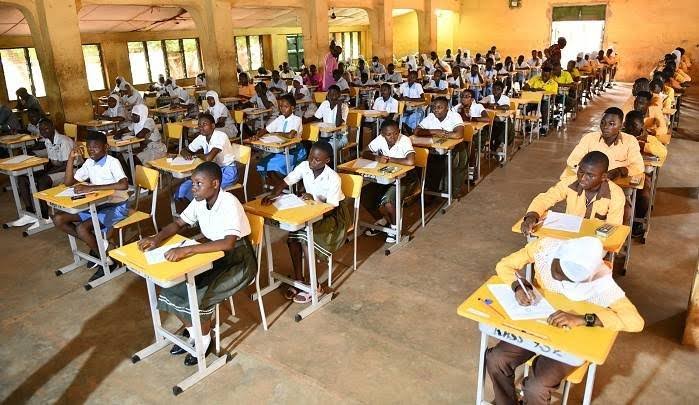
The government has announced a significant overhaul of the Basic Education Certificate Examination (BECE) timetable, extending the examination period from the current five-day schedule to eight days in a move aimed at reducing academic pressure on candidates and improving examination performance across the country.
Education Minister Haruna Iddrisu disclosed the planned reform during an engagement with students at Aburi Girls Senior High School, where he outlined a series of measures being pursued by government to improve teaching, learning and student welfare within the education sector.
The proposed adjustment marks one of the most significant changes to the BECE structure in recent years. It comes amid growing concerns from students, parents and educators about the intensity of the current examination schedule.
For decades, BECE candidates have been required to sit several papers within a compressed five-day period, often writing multiple examinations in quick succession. Education stakeholders have frequently argued that the arrangement places excessive stress on candidates and limits the time available for revision between subjects.
Acknowledging those concerns, Mr. Iddrisu said government had taken notice of complaints regarding the pressure associated with the existing timetable and was determined to introduce reforms that would create a more learner-friendly examination environment.
“I understand that our schedule of the exams for BECE was just Monday to Friday, and that put many of you under some stress,” the Minister told students.
According to him, the Ministry of Education, in collaboration with the Ghana Education Service (GES), is reviewing the examination calendar to provide candidates with additional preparation time during the examination period.
Under the proposed arrangement, the BECE will begin on a Wednesday and conclude on the following Wednesday, effectively extending the examination period to eight days.
The revised schedule is expected to provide students with intervals between papers, including a weekend break, enabling them to adequately prepare for subsequent examinations rather than writing multiple papers within a short timeframe.
“So now the BECE will begin on Wednesday and end the following Wednesday so that adequate time is given to our learners to prepare for BECE across the country,” the Minister explained.
He noted that the new arrangement would particularly benefit students by reducing fatigue and allowing more time for revision between core subject papers.
The implementation of the revised timetable is expected to be supervised by the Director-General of the Ghana Education Service, who will oversee the necessary adjustments to the national examination calendar.
The announcement forms part of broader efforts by the Mahama administration to improve educational outcomes and address longstanding concerns within Ghana’s basic and secondary education systems.
Beyond examination reforms, the Education Minister also used the occasion to provide updates on the government’s efforts to improve conditions in senior high schools, particularly in relation to food supply and student welfare.
One of the major challenges that has confronted the Free Senior High School programme in recent years has been periodic shortages of food supplies in schools, leading to concerns among students, parents and school administrators.
However, Mr. Iddrisu expressed satisfaction with what he described as significant improvements in the feeding situation across senior high schools.
He indicated that for the first time in several years, schools were operating without the widespread food shortages that previously affected the implementation of the Free SHS programme.
“I’m also happy to note that at least for the first time in many years we are not suffering from food shortages in school,” he stated.
The Minister attributed the improvement to government’s decision to decap the Ghana Education Trust Fund (GETFund), which has allowed more resources to be directed toward supporting the Free SHS policy.
According to him, GETFund, working together with the Ghana Commodity Exchange and the National Buffer Stock Company, is now providing adequate support to ensure consistent food supplies to schools across the country.
“Thanks to the de-capping of the GETFund, the GETFund through Ghana Commodity Exchange and the Buffer Stock are adequately making sufficient provisions for food,” he explained.
Mr. Iddrisu further disclosed that government has allocated approximately GH¢4 billion this year specifically to support student feeding nationwide under the Free SHS programme.
“This year alone, we allocated four billion Ghana cedis to take care of your feeding across the country,” he announced.
The Minister emphasized that the investment reflects government’s commitment to sustaining and improving the Free SHS programme while ensuring that students receive adequate nutrition to support their academic performance.
In addition to examination reforms and student welfare initiatives, the government is also pursuing an ambitious infrastructure expansion programme aimed at addressing overcrowding and improving learning conditions in schools.
Mr. Iddrisu revealed that government is expecting approval from the World Bank for a major educational infrastructure project valued at approximately US$300 million.
According to him, the World Bank is scheduled to meet on June 16 to consider and potentially approve the programme.
The initiative is expected to fund the expansion and upgrading of schools across the country as part of efforts to improve access to quality education and reduce infrastructure deficits.
Under the programme, government intends to upgrade 30 Category C schools to Category B status while also upgrading 20 Category B schools to Category A institutions.
“We intend to convert 30 Category C schools to B and 20 Category B schools to A with 300 million US dollars for expanded infrastructure across the country,” the Minister disclosed.
The project is expected to include the construction of additional classrooms, dormitories, laboratories, libraries and other educational facilities aimed at enhancing the quality of teaching and learning.
Category A schools are also expected to benefit from further investments designed to improve infrastructure and academic facilities.
The planned upgrades form part of government’s broader agenda to expand educational opportunities and improve standards across all levels of the education system.m
Concluding his address, Mr. Iddrisu commended the leadership of Aburi Girls Senior High School and praised the headmistress for her role in advancing the development of the institution and supporting student welfare.
The Minister’s announcements signal what could become one of the most comprehensive educational reform programmes in recent years, touching on examinations, school feeding, infrastructure development and overall student welfare.
If successfully implemented, the changes are expected to affect thousands of BECE candidates annually while also strengthening the broader educational environment for students across the country.