By Grace Zigah
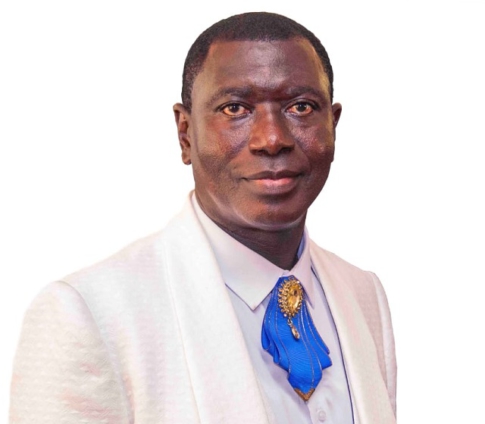
The Ghana Tertiary Education Commission (GTEC) has officially directed Ato Duncan, the Chief Executive Officer of COA Herbal Centre, to immediately cease the use of the academic title “Professor”, citing concerns over academic misrepresentation and non-compliance with formal educational standards in Ghana.
In a letter dated June 3, 2025, and signed by GTEC’s Director-General, Prof. Ahmed Jinapor Abdulai, the Commission raised red flags about what it describes as the unauthorized and misleading use of an honorary academic title by Duncan, who is widely known in the media and business circles as “Prof. Ato Duncan.”
Background of the Controversy
Ato Duncan is a prominent figure in Ghana’s alternative medicine space, largely due to the national and international reach of his company, COA Herbal Centre.
He has long been referred to as “Professor” by media outlets, health conferences, and promotional material for his flagship product, COA Mixture, formerly known as COA
However, GTEC says the title was not awarded through Ghana’s established academic structures and is, therefore, misleading to the public.
The Commission emphasized that the title of “Professor” in Ghana must be earned through a rigorous academic process—usually via appointment at a recognized tertiary institution after years of scholarly research, teaching, and contributions to academia.
“The use of such titles—particularly when not supported by formal academic validation—can be misleading and is inconsistent with the established protocols governing academic ranks in Ghana,” the letter stated.
GTEC’s Directive
The Commission has ordered Duncan to immediately discontinue the use of “Professor” in all public and institutional communications.
This includes:
Official documents
Company profiles and websites
Public letterheads
Professional designations on promotional materials
GTEC also requested verifiable proof that the title has been completely scrubbed from all official and public platforms.
Failure to comply, sources within the Commission hinted, could lead to further regulatory action, including possible legal consequences or referral to the Attorney General’s Department under Ghana’s laws on academic integrity and public deception.
Broader Context: A Rising Trend of “Title Inflation”
GTEC’s letter comes amid growing national concern over title inflation in Ghana, where individuals in politics, media, religious institutions, and private enterprise increasingly adopt titles such as “Doctor” or “Professor” without formal qualifications.
In many cases, honorary degrees or certificates from unaccredited or obscure foreign institutions are used to claim academic ranks—often blurring the lines between honorary recognition and earned credentials.
The Ghana Tertiary Education Commission, mandated to oversee quality assurance in tertiary institutions and regulate academic standards, has in recent years intensified efforts to crack down on unaccredited universities and unearned academic titles.
This recent action is seen as part of that broader agenda.
Public Reactions
The development has triggered mixed reactions.
While some believe the directive is long overdue, others argue that Dr. Duncan has earned his place in society through innovation in herbal medicine and deserves recognition—if not academically, then honorifically.