By Grace Zigah
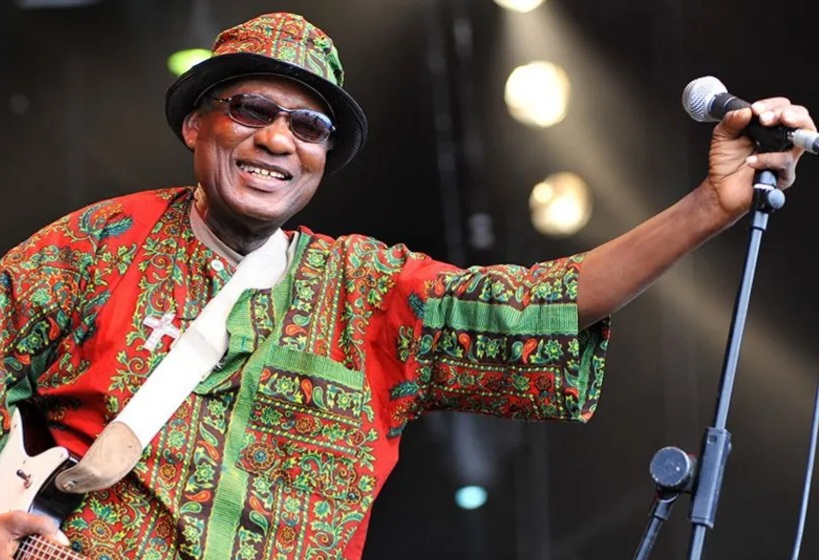
The music industry and the global cultural community are in mourning following the death of legendary highlife musician and producer Ebo Taylor, who passed away at the age of 90.
His death was confirmed by the Musicians Union of Ghana (MUSIGA) and organisers of EBOFEST, marking the end of a remarkable era in African music history.
According to official statements from MUSIGA, the revered musician died in the early hours of Saturday, February 7, 2026, at the Saltpond Hospital.
The news sent shockwaves across the country and beyond, as tributes poured in from musicians, cultural figures, and fans who regard Ebo Taylor as one of the foundational architects of modern Ghanaian highlife and Afro-influenced music.
Ebo Taylor’s passing comes barely a month after he celebrated his 90th birthday, an occasion that saw the launch of the Ebo Taylor Festival — a cultural event established to honour his lifelong contribution to music, heritage, and African artistic identity.
The festival symbolised not just a celebration of longevity, but a formal recognition of his lasting influence on generations of musicians.
Born in Cape Coast in 1936, Ebo Taylor’s musical journey began in the late 1950s, where he rose to prominence as a member of pioneering bands such as the Stargazers and the Broadway Dance Band.
His talent, innovation, and leadership soon placed him among the most respected figures in the emerging highlife movement.
In 1962, Taylor travelled to London with the Black Star Highlife Band, a move that would define his international legacy.
During his time in the United Kingdom, he collaborated with African musicians who would later become global icons, including Afrobeat pioneer Fela Kuti.
These interactions helped shape a cross-continental musical identity that blended highlife, jazz, Afrobeat, and traditional African rhythms into a distinctive sound.
Upon his return to Ghana, Ebo Taylor transitioned into production and mentorship, playing a central role at Essiebons Records, where he helped nurture and produce some of the most celebrated highlife artistes, including Pat Thomas and C.K. Mann.
His influence extended beyond performance into the structural development of the music industry.
In the 21st century, Taylor’s work found renewed global relevance as international producers and artists began sampling his music.
One of the most notable examples was American R&B star Usher, whose song “She Don’t Know” featuring Ludacris sampled Taylor’s classic track “Heaven.” This revival introduced his sound to a new generation of global audiences.
Despite his advanced age, Ebo Taylor remained creatively active, releasing critically acclaimed albums such as Love and Death (2008), Appia Kwa Bridge (2012), and Yen Ara (2018), each of which reinforced his status as a timeless musical innovator whose relevance transcended generations.
Following news of his passing, tributes flooded social media and industry platforms. Veteran musician Reggie Rockstone described his death as the fall of a “big tree,” symbolising the loss of a giant in African music history.
His son, Kweku Taylor, also paid tribute, describing his father as a “colossus of African music” whose legacy would continue to shape the continent’s cultural identity.
Ebo Taylor’s influence remains deeply embedded in Ghanaian highlife, Afrobeat, global sampling culture, and contemporary African music production. His rhythms, compositions, and mentorship have become part of the DNA of modern African soundscapes.