By Grace Zigah
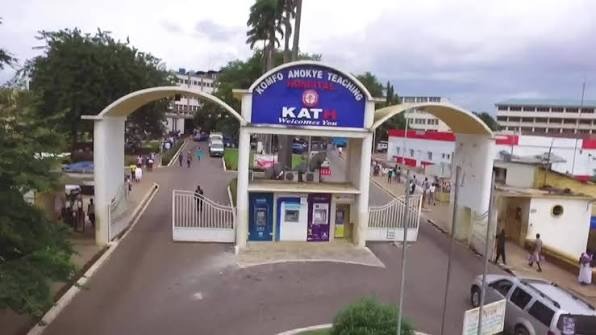
A major healthcare crisis is looming in the Ashanti Region after doctors at the Komfo Anokye Teaching Hospital (KATH) announced an indefinite withdrawal of services in protest against the suspension of the hospital’s Chief Executive Officer, Dr. Paa Kwesi Baidoo, and what they describe as longstanding systemic challenges confronting the country’s second-largest referral hospital.
The decision was taken during an emergency meeting of the Komfo Anokye Doctors Association (KADA) held on June 5, 2026, where members reviewed recent developments surrounding the hospital’s overcrowded Emergency Department and the subsequent actions taken by management to address the situation.
In a notice addressed to the Chairman of the KATH Board, the doctors expressed deep concern that measures introduced by hospital management to protect patients and healthcare workers amid severe congestion had instead resulted in disciplinary action against the hospital’s CEO.
According to KADA, management’s decision on June 3 to temporarily suspend new emergency admissions and coordinate referrals with nearby health facilities was a necessary clinical and administrative intervention aimed at preventing avoidable deaths and ensuring patient safety during a period of extreme pressure on the hospital’s emergency services.
The doctors argued that the decision was not taken lightly but was necessitated by unprecedented overcrowding at the Emergency Department, where healthcare professionals were struggling to provide safe and effective care under increasingly difficult conditions.
The controversy erupted after Health Minister Kwabena Mintah Akandoh directed the Board of KATH to suspend Dr. Paa Kwesi Baidoo for two weeks following the hospital’s temporary halt of emergency admissions.
The Ministry of Health maintained that the action contradicted directives from President John Dramani Mahama regarding healthcare delivery and access to emergency services.

However, the suspension has triggered widespread opposition from doctors, labour unions, and healthcare professionals, who insist that the admission restrictions were implemented in consultation with health authorities and were intended solely to safeguard patients rather than deny them access to care.
KADA noted that KATH serves as the principal tertiary referral centre for the middle and northern sectors of Ghana, receiving thousands of patients from across several regions.
Despite its strategic importance, the hospital continues to face significant infrastructural deficits, inadequate capacity, and increasing patient numbers that have stretched available resources beyond their limits.
The doctors stressed that the current emergency congestion is not a new phenomenon but rather the result of years of systemic challenges within the healthcare sector, including inadequate expansion of referral facilities and delays in operationalising key healthcare projects intended to ease pressure on KATH.
They argued that the suspension of the CEO amounts to punishing hospital leadership for attempting to manage the consequences of broader structural deficiencies that require policy interventions and investment rather than disciplinary sanctions.

Following extensive deliberations, members unanimously resolved to embark on a total withdrawal of services effective 6:00 a.m. on Saturday, June 6, 2026.
According to the association, the strike action will remain in force until three key demands are met. First, the suspension of Dr. Paa Kwesi Baidoo must be reviewed and reversed.
Second, the KATH Board must establish clear policies governing the management of situations where emergency care capacity is exceeded, including protocols for handling patient overflow and circumstances under which admissions may be temporarily restricted in the interest of patient safety.
Third, the Ministry of Health must provide definitive timelines for the operationalisation of the Sewua Hospital and the Afari Military Hospital, as well as timelines for the retooling of KATH and other healthcare facilities within the Ashanti Region to reduce pressure on the referral centre.
The doctors also announced plans to engage the public and other stakeholders through various media platforms to highlight what they describe as a chronic mismatch between patient demand and available infrastructure across the region’s health sector.
KADA emphasized that the industrial action is not intended to undermine healthcare delivery but rather to draw urgent national attention to critical issues involving patient safety, clinical governance, professional accountability, and the long-term sustainability of healthcare services at KATH.
The association has called on the hospital’s Board to immediately engage the Ministry of Health and all relevant stakeholders to find an amicable resolution and prevent further disruption to healthcare delivery in the region.
The latest development adds another chapter to ongoing concerns about healthcare infrastructure in the Ashanti Region.
For years, health professionals have raised concerns over overcrowding at KATH, with repeated calls for the completion and full operationalisation of the Sewua Regional Hospital and the Afari Military Hospital to help decongest the referral facility.
With doctors now threatening an indefinite strike and labour unions rallying behind the suspended CEO, attention is turning to the Ministry of Health and the KATH Board to determine whether urgent dialogue can avert what could become one of the most significant healthcare labour disputes in recent years.