
By Nadia Ntiamoah
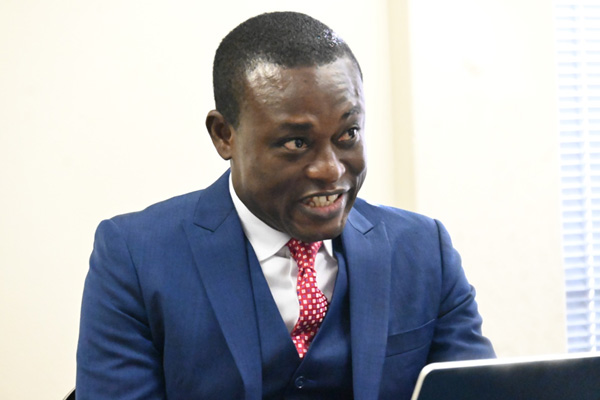
The anti-corruption fight may be far from secure, according to the Special Prosecutor, Kissi Agyebeng, who has warned that efforts to abolish the Office of the Special Prosecutor (OSP) remain active despite earlier political assurances.
Speaking at a public forum, Kissi Agyebeng revealed that attempts to scrap the OSP—particularly those that surfaced in late 2025—have not been abandoned, cautioning civil society and governance stakeholders against complacency.
“The attempt to scrap the office of the Special Prosecutor last year is not dead. It is alive,” he stated, urging renewed vigilance and advocacy to safeguard the institution.
His remarks come in the wake of heightened political tension surrounding the OSP, including a controversial parliamentary initiative that sought to dismantle the office.
That move, which drew widespread criticism from civil society organisations and governance experts, was ultimately halted following intervention by President John Dramani Mahama, who withdrew the proposal from Parliament amid public backlash.
However, Agyebeng cautioned against relying on executive goodwill as a safeguard for institutional survival. He stressed that the anti-corruption framework must be anchored in law, not personalities or political discretion.
According to him, the continued existence and effectiveness of the OSP should not depend on whether a sitting president supports or opposes it.
“We should not depend on the goodness of the President,” he noted, advocating instead for a long-term legal solution that would make the office resilient against political interference. He called for the OSP’s mandate, powers, and independence to be entrenched within the Constitution as part of ongoing constitutional review efforts.
The Special Prosecutor disclosed that discussions around reforming the office have often been personalised around his leadership, a trend he firmly rejected.
He emphasised that legal and institutional reforms must be designed to outlast individual officeholders.
“Do not make proposals because of my nature,” he said, acknowledging that public perceptions of his leadership may differ but should not shape the legal foundation of the institution.
His comments reflect the broader struggles the OSP has faced since its establishment in 2018 under Act 959.
The office was created to address longstanding concerns about political interference in corruption prosecutions, particularly given the Attorney-General’s dual role as both legal advisor to government and chief prosecutor.
Since assuming office in 2021, Agyebeng has navigated a turbulent environment marked by legal challenges, political scrutiny, and institutional resistance.
He lamented that much of his tenure has been consumed by efforts to defend the very existence of the office, rather than focusing solely on its core mandate of investigating and prosecuting corruption.
“It has been most unfair,” he remarked, noting that future Special Prosecutors should not be burdened with constant battles for institutional survival.
Encouragingly, Kissi Agyebeng pointed to recommendations by the Constitution Review Committee, which have proposed embedding the OSP’s independence within the Constitution.
He described this as a “glorious opportunity” to secure the office for future generations and ensure it operates without undue interference.
The Special Prosecutor’s call places renewed responsibility on civil society, lawmakers, and the public to push for reforms that will strengthen the anti-corruption architecture.


