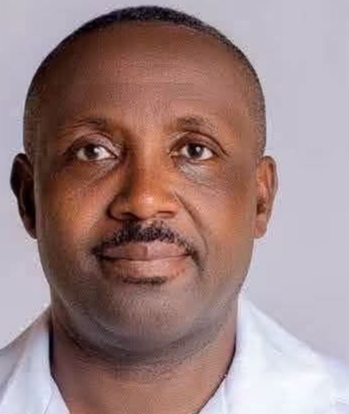
BY Issah Olegor
Kwadwo Fosu Boadu, popularly known as Kojo Bamba, has been elected First National Vice Chairman of the New Patriotic Party (NPP), completing a remarkable political transition from grassroots activism and the controversial Delta Force era to one of the party’s most senior national leadership positions.
Boadu secured 3,116 votes at the NPP’s National Delegates Conference held at the Baba Yara Sports Stadium in Kumasi on Saturday, October 3, 2026.
He emerged as the leading candidate in a contest involving 13 aspirants competing for the party’s three vice-chairmanship positions.
His victory places him directly in the leadership team that will oversee the NPP’s rebuilding efforts and preparations for the 2028 general election, alongside newly elected National Chairman John
Boadu,Second Vice Chairman Henry Nana Boakye, and Third Vice Chairman Nana Akomea.
From Delta Force to the NPP’s national leadership
Kojo Bamba’s rise is particularly significant because of his history with Delta Force, a pro-NPP security group that became prominent in the Ashanti Region following the party’s victory in the 2016 general election.
Before entering formal party leadership, Boadu was an auto mechanic and became associated with Delta Force, which operated during a period of heightened political tension following the NPP’s return to power.
One of the most controversial episodes involving the group occurred when members resisted the appointment of George Adjei as Ashanti Regional Security Coordinator.
The episode became one of the more controversial chapters in the NPP’s early period in government, putting the spotlight on the activities of political vigilante groups and their relationship with political parties.
For Boadu, however, the subsequent years marked a transition from informal grassroots activism into the formal structures of the NPP.
In 2018, he was appointed Deputy National Director of Operations of the NPP’s youth wing, giving him an official role within the party organisation and marking a significant change in his political trajectory.
A grassroots-focused campaign
His campaign for First Vice Chairman was built largely around the argument that the NPP’s chances of returning to government in 2028 would depend heavily on the strength of its grassroots organisation.
While engaging delegates, particularly in constituencies across the Ashanti Region, Boadu presented constituency executives as the frontline of the party’s electoral machinery.
He argued that these executives are responsible for mobilising supporters, organising at the local level and protecting the party’s interests at polling stations, yet often receive inadequate attention once elections are over.
His campaign therefore focused on strengthening the welfare and effectiveness of party executives and ensuring that grassroots members become a central part of the NPP’s rebuilding process.
Kojo Bamba had said the constituency executives are the people who work to secure political power but can sometimes feel sidelined after power is attained.
He consequently promised to remain closely connected to the grassroots and advocate for better conditions for party members and executives.
A different political posture
His emergence as a national executive also represents a significant shift in the public image associated with his earlier political career.
Having once been linked to a group at the centre of controversy over political vigilantism, Boadu has in more recent years publicly advocated peaceful elections.
That evolution—from leading a controversial pro-party group to occupying a senior elected position within the formal leadership structure—has become a defining feature of Boadu’s political journey.
A crucial role in the 2028 rebuilding effort
Kojo Bamba now assumes office at a critical period for the NPP. The party is rebuilding following its defeat in the 2024 general election and has selected Dr Mahamudu Bawumia as its presidential candidate for the 2028 election.
The party’s new national leadership has consequently been tasked with restoring its grassroots structures, strengthening internal cohesion and reconnecting with voters ahead of the next national contest.
Boadu’s emphasis on constituency executives could therefore become an important component of the new administration’s organisational strategy.
His position as First Vice Chairman is expected to require close coordination with the National Chairman, other vice-chairpersons, the General Secretary,
National Organiser, regional and constituency executives and the party’s wider grassroots membership.