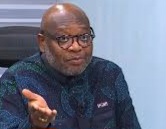
By Daniel Bampoe
Evangelist Lawrence Tetteh now a board member of the Ghana Lands Commission under President John Mahama administration has come under intense public criticism following remarks urging politicians to depoliticise LGBTQ-related issues, with critics accusing him of inconsistency and political opportunism in light of his earlier activism on the same subject.
The backlash, which has gained traction across political and religious circles, stems from Dr. Tetteh’s recent comments in which he appealed to political leaders to avoid turning LGBTQ+ debates into partisan tools.
He cautioned that excessive politicisation could alienate sections of society and strain relationships with international partners, while also calling for a balanced approach that respects the cultural, religious, and traditional values.
“I am appealing to politicians not to politicise homosexualism,” he stated, adding that while religious groups, traditional leaders, and cultural institutions largely oppose LGBTQI+ practices, the issue should not be handled in a way that creates division or hostility.
He further expressed personal support for President John Dramani Mahama, describing him as a close associate and offering prayers for his leadership and protection.
From Advocacy To Caution
However, these remarks have triggered sharp reactions from critics who recall Dr. Tetteh’s prominent role during the heated national debate on the Human Sexual Rights and Family Values Bill in the lead-up to the 2024 general elections.
At the time, the outspoken preacher was among several religious figures who publicly criticised the then administration of Nana Addo Dankwa Akufo-Addo for failing to assent to the bill after it was passed by Parliament.
He participated in advocacy efforts that framed the legislation as essential for protecting the moral and cultural fabric, with some religious leaders even threatening demonstrations if action was not taken.
The bill itself, originally introduced in 2021 and passed in February 2024, became one of the most polarising issues in the recent political history, drawing strong support from conservative groups while attracting criticism from human rights organisations and sections of the international community. Its eventual lapse—after it failed to receive presidential assent before the dissolution of Parliament—became a major campaign issue ahead of the elections.
Accusations Of Double Standards
Critics now argue that Lawerance Tetteh’s current call for restraint contradicts his earlier activism, which they say contributed to the politicisation of the issue during the election period.
Some have gone further to question whether his proximity to the current administration has influenced his tone, particularly following reports of his appointment to a public board, including links to the Lands Commission.
The criticism has been particularly sharp in political circles aligned with the opposition New Patriotic Party (NPP), where some figures have accused the cleric of benefiting from the same political climate he now seeks to protect.
They argue that religious leaders who once mobilised public opinion on the issue should maintain consistency, especially as the debate continues to shape national policy and public discourse.
While many religious and traditional leaders maintain strong opposition to LGBTQI+ practices, there is growing recognition among some stakeholders of the need for measured engagement that avoids inflaming divisions or undermining democratic processes.
President Mahama has similarly adopted a more cautious tone since assuming office, emphasising dialogue, constitutional processes, and national priorities such as economic recovery and social development, rather than immediate legislative action on the bill.