By Issah Olegor
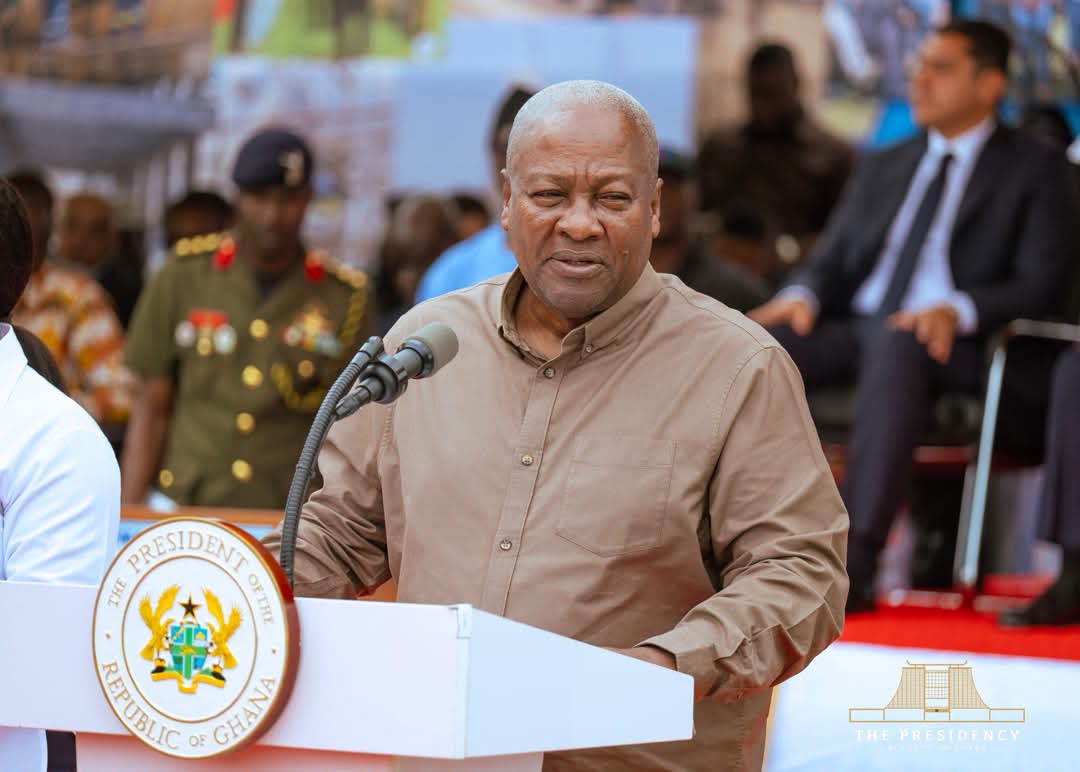
The Mahama administration is facing renewed criticism over its position on presidential retirement benefits after officially rejecting a proposal that would have subjected the President’s retirement gratuity and pension to taxation, a move critics say contradicts earlier promises by the National Democratic Congress (NDC) to abolish ex-gratia payments for public office holders.
The controversy follows the release of the government’s official response to recommendations made by the Constitution Review Committee (CRC) chaired by renowned constitutional lawyer Professor H. Kwasi Prempeh, which was established to gather nationwide views on constitutional reforms after the NDC returned to power.
NDC’s Campaign Promise
During the 2024 election campaign, the NDC repeatedly criticised the payment of ex-gratia to Article 71 office holders, describing the practice as an unnecessary burden on the public purse.
President John Dramani Mahama, then the NDC’s presidential candidate, publicly assured Ghanaians on several campaign platforms that his government would abolish ex-gratia payments, a promise that resonated strongly with many voters who had long demanded reforms to the remuneration of political office holders.
The commitment formed part of the party’s broader governance and constitutional reform agenda aimed at reducing the cost of governance and promoting greater accountability in public office.
Constitution Review Committee Recommendation
Following its assumption of office, the Mahama administration constituted the Constitution Review Committee under the leadership of Professor Kwasi Prempeh to receive public submissions and recommend constitutional amendments.
Among its recommendations was a proposal to amend Article 68(5) of the 1992 Constitution by removing the tax exemptions traditionally enjoyed by the President.
Specifically, the Committee proposed that the President should pay taxes on salary, allowances, retirement gratuity and pension, in addition to paying indirect taxes on goods and services, including import duties.
The recommendation was intended to reinforce the principle that holders of public office should not enjoy special tax privileges merely because of the offices they occupy.

Government Accepts Some Recommendations
In its official response to the Committee’s report, the government agreed in principle that the President should no longer enjoy tax exemptions by virtue of office.
According to the government’s position paper, it accepts that the President should pay taxes on salary and allowances as well as all applicable indirect taxes on goods and services.
The government stated that this position is consistent with the broader constitutional principle that public office holders should not receive preferential treatment in taxation.
Retirement Benefits Exempted
However, the government drew a distinction when it came to retirement benefits.
It rejected the Committee’s proposal that the President’s retirement gratuity and pension should also be taxed.
According to the government’s response, it does not accept the recommendation to impose taxes on the President’s retirement gratuity and pension.
Instead, it indicated that any future tax obligations relating to the President should be determined through the tax laws rather than detailed constitutional provisions.
The government further stated that it would propose modifications to ensure that any constitutional amendment remains workable and consistent with the country’s tax framework.
Fresh Debate Over Ex-Gratia
The government’s position has reignited public debate over the future of ex-gratia payments and Article 71 benefits.
Critics argue that while the NDC campaigned on a promise to abolish ex-gratia, the latest policy position appears to stop short of pursuing that objective.
Observers also note that although various individuals reportedly submitted proposals calling for the complete abolition of ex-gratia during the Constitution Review Committee’s nationwide consultations, the Committee’s final report instead recommended taxation of retirement benefits rather than their outright abolition.