By Issah Olegor
President John Dramani Mahama has returned to Ghana following a series of high-level engagements in the United Kingdom and Belarus that government officials say have yielded significant economic, trade, agricultural and investment opportunities for the country.
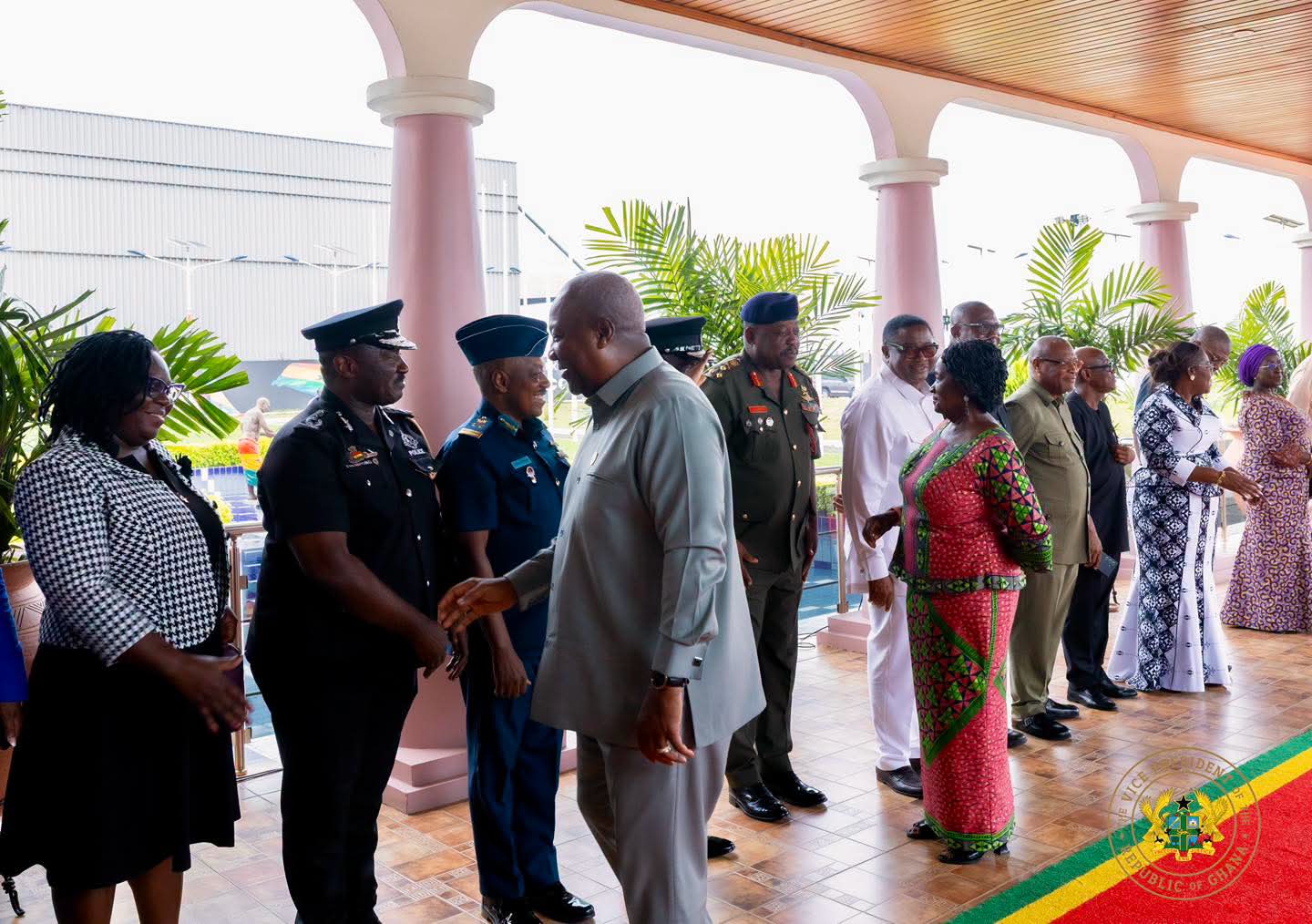
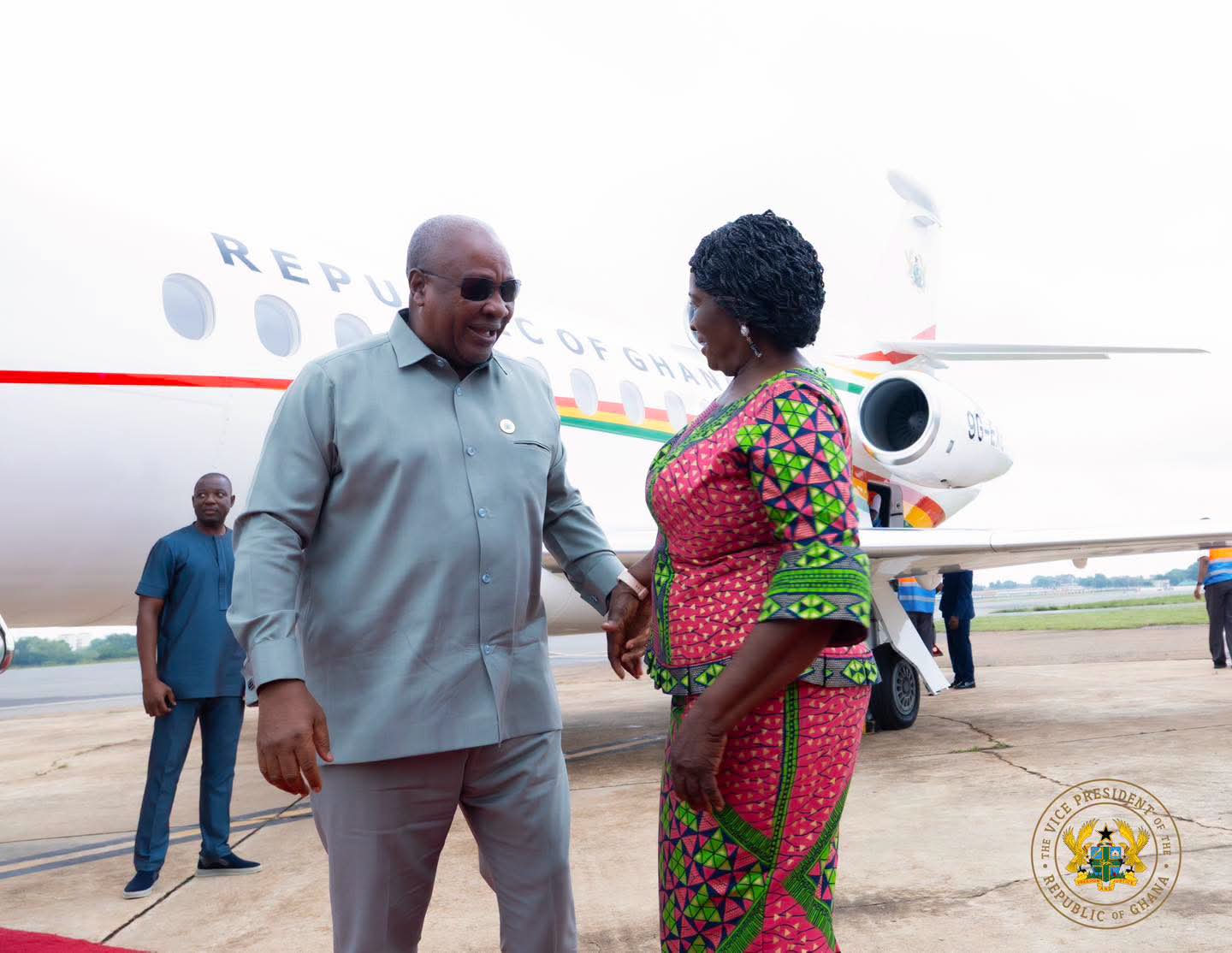
The President was received at the Accra International Airport by Vice President Professor Naana Jane Opoku-Agyemang, senior government officials and other dignitaries who welcomed him back after what has been described as a successful diplomatic and economic mission aimed at deepening international partnerships and attracting investment into key sectors of the Ghanaian economy.
The overseas trip formed part of the Mahama administration’s broader efforts to strengthen economic diplomacy, secure strategic partnerships and position Ghana as a preferred destination for foreign investment at a time when government is pursuing economic recovery and industrial transformation initiatives.
During his visit to the United Kingdom, President Mahama participated in the Ghana Investment Summit, where he engaged investors, business leaders and policymakers on the economic outlook, investment climate and ongoing reforms designed to stimulate growth and enhance investor confidence.
The summit provided an opportunity for the President to showcase Ghana’s recent economic gains and government’s efforts to create a more stable and attractive environment for both local and international investors.
One of the major outcomes of the UK visit was the conclusion of the Ghana–United Kingdom Growth Agreement, which is expected to strengthen economic cooperation and facilitate increased trade and investment between the two countries.
The visit also resulted in new areas of collaboration in artificial intelligence, digital trade and technological innovation, sectors that government views as critical to the long-term economic competitiveness.
In addition, discussions led to support for programmes aimed at training Ghanaian engineers in the maintenance of medical equipment, a move expected to improve the efficiency and sustainability of healthcare infrastructure across the country.
Another significant outcome was progress toward plans to establish Ghana’s first commercial-scale ship repair yard in Takoradi, a project expected to boost maritime services, create employment opportunities and strengthen the country’s position as a strategic hub for shipping and marine services in the sub-region.
Beyond the economic engagements, President Mahama also held a number of high-level diplomatic meetings during his stay in the United Kingdom.
These included an audience with King Charles III and bilateral discussions with the British Prime Minister on matters of mutual interest, including trade, investment, development cooperation and regional security.
The President also met members of the Ghanaian business community in the United Kingdom and used the opportunity to encourage greater diaspora participation in the economic transformation agenda.
Following his engagements in the United Kingdom, the President travelled to Belarus, where discussions focused on expanding cooperation in agriculture, trade, industrial development and technical assistance.
The President also held bilateral discussions with the President of Belarus, during which both countries explored opportunities for deeper economic cooperation and stronger diplomatic relations.
The engagements resulted in the establishment of mechanisms aimed at enhancing trade and investment collaboration between Ghana and Belarus, while visa-waiver arrangements were also concluded to facilitate easier movement between the two countries.
Upon his return to Ghana, President Mahama turned attention to pressing domestic issues, particularly the recent flooding incidents and building collapses that have affected several communities across the country.
The President expressed concern about the loss of property and the disruption caused by the disasters, emphasizing the need for greater discipline and stricter enforcement of development regulations.
He reiterated concerns about the growing problem of unauthorized construction on waterways, wetlands, flood-prone zones and environmentally sensitive areas, which experts have identified as major contributors to recurrent flooding in urban centres.
According to the President, addressing the challenge requires a combination of responsible planning, strict adherence to regulations and collective commitment to environmental protection.
To prevent future disasters, President Mahama directed the National Disaster Management Organisation (NADMO) and other relevant state institutions to identify affected waterways and implement measures aimed at restoring and protecting them.
He stressed that safeguarding lives and property must remain a national priority and called on citizens, local authorities and developers to comply with planning laws and environmental regulations.
The President further noted that sustainable development can only be achieved when communities respect land-use regulations and avoid activities that obstruct natural drainage systems and increase the risk of flooding.