
–BY Daniel Bampoe
In the heart of Asanteman lies the town of Mampong, one of the most revered traditional towns in Ghana.
Mampong is not only known for its rich cultural heritage but also for its storied chieftaincy line—second only to the Asantehene himself.
The lineage of the Mamponghene (paramount chief of Mampong) is marked by mysticism, tragedy, power struggles, and political maneuvering. But no story is more gripping than that of Nana Owusu Sekyere Panin, the chief who, according to legend, turned into a cat.
The Mystery of Nana Owusu Sekyere Panin (1777–1796)
Nana Owusu Sekyere Panin ruled from 1777 to 1799. His rulership is etched in oral tradition not just for his leadership, but for his strange and mystical end.
Folklore says he transformed into a cat, a powerful spiritual symbol in Asante belief.
While the tale has never been officially documented, it remains a striking metaphor for the spiritual might once associated with Asante royalty—particularly during the formation of the Asante Union when mysticism and ancestral power were often used to consolidate authority.
Bloodshed and Chaos: The Baabiru Succession
Then came rulership of Nana Amaniampong (1676-1690) who led the town to greatness. A line of Baabiru clan rulers came to power after him.
Nana Boahen Anantuo (1690–1699) succeeded him but was killed, setting a tragic precedent.
His successor, Nana Akuamoa Panin (1699–1735), enjoyed a relatively stable reign until Nana Atakora Panin (1735–1750) took over.
After him came Nana Asom Gyima Penemo (1750–1754), who ruled briefly before being killed as well.
The instability worsened with Nana Sarfo Kantanka (1755–1765) and Nana Peprah Asiase (1765–1770), both of whom were also killed. Nana Atakora Kwame (1770–1777) followed but met a similar fate.
A turning point came with Nana Owusu Sakyere Panin (1777–1796) of the Wiredu clan, whose nearly 20-year reign brought temporary calm before he allegedly turned into cat.
Yet, the pattern of power struggles resumed with Nana Sarfo Yaw (1796–1808), who was destooled, and Nana Atakora Kwaku (1808–1826), who was ultimately killed.
The Reign of Nana Oduro Frikyi and Brief Interlude
Nana Oduro Frikyi (1826–1830) initially assumed power but was removed. He was briefly succeeded by Nana Abunyewa Kwadwo (1830–1831) and then Nana Kwame Gyima in the same year.
Oduro Frikyi was recalled and ruled again from 1831 to 1860, but his reign ended with destoolment.
This period saw multiple rulers fall to misfortune. Nana Kwabena Dwomo (1860–1880) restored some dignity to the stool.
However, after him, Nana Atakora Kwaku II (1880–1883) was destooled, and Nana Osei Bonsu (1883) ruled for a brief time.
Short Reigns and Clan Conflicts (1883–1916)
This period was marked by rapid turnover. Nana Kwame Adwetwa (1883–1885), Nana Yaw Boakye (1886–1887), and Nana Owusu Sekyere II (1887–1888)—also known as Nana Kwasi Sekyere—each had short reigns.
The latter was recalled and served again from 1896 to 1916. His first rule had been marred by political uncertainty, a recurring theme in this era.
Nana Kwame Apeabosoky (1888–1896) and Nana Osei Bonsu I (1916–1930) followed, as the Baabiru and Botase clans jostled for influence.
From Colonialism to Independence
The early 20th century brought a mix of tradition and adaptation.
Nana Kwaku Dua (1930–1935) and Nana Owusu Sakyere Abunyewa II (1935–1951) led during the colonial era.
As Ghana edged toward independence, Nana Sarfo Kantanka II (1951–1958) and Nana Kwabena Dwomo II (1958–1966) managed Mampong’s role within a rapidly changing political environment.
Post-independence Ghana presented new challenges. Nana Atakora Amaniampong (1967–1987), Nana Akuamoa Boateng Ababio (1987–1995), and Daasebre Osei Bonsu II, who was enstooled in 1996, carried the Silver Stool into the modern era.
The Silver Stool and Clanship
The Mampong Stool—also known as the Silver Stool—is a sacred institution second only to the Golden Stool of the Asantehene.
Traditionally, the Mamponghene acts as regent whenever the Golden Stool is vacant and leads the kingdom in times of war.
The chiefs who have occupied this stool have emerged from four royal clans: Wiredu, Baabiru, Botase, and Kodiekrom. Each clan has taken turns, though the journey has rarely been peaceful.
The long list of killings, destoolments, abdications, mystical disappearances, and blindness among chiefs tells the story of a powerful but perilous seat.
Some rulers, like Nana Osie Bonsu I, were deported and later recalled, while others, like Nana Owusu Sakyere Abunyewa II, abdicated due to blindness.
A Living Legacy
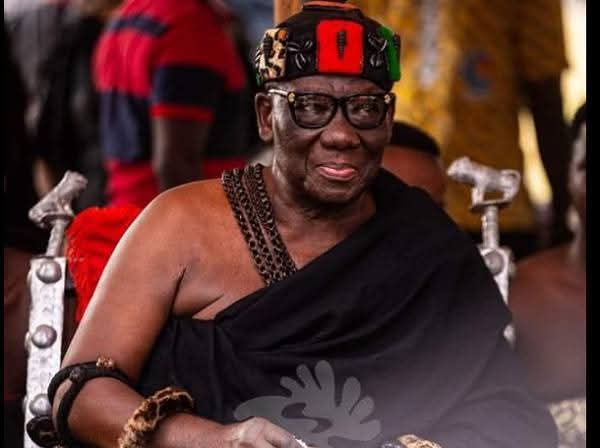
Today, the late Daasebre Osei Bonsu II held the Silver Stool and served not only as Mamponghene but also as a senior member of the Asante Traditional Council and the National House of Chiefs.
His reign has been marked by modernization, diplomacy, and the preservation of Mampong’s unique place in Asanteman history.
Yet, as modernity blends with tradition, the story of the Mamponghene who turned into a cat remains a vivid reminder: the power of the stool is not just political—it is spiritual, ancestral, and deeply symbolic.


