By Nadia Ntimoah
The Millennium Challenge Corporation (MCC) has reopened discussions with Ghana over the possibility of a renewed development partnership, with energy infrastructure, regional electricity integration and economic reforms emerging as potential areas for future cooperation.
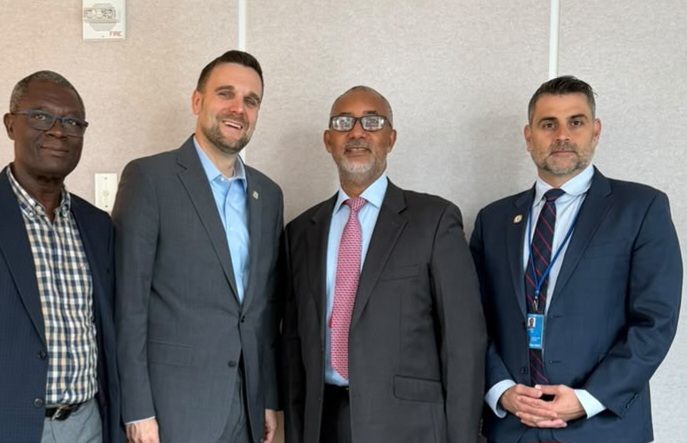
The development came after a high-level delegation from Ghana’s Millennium Development Authority (MiDA) met senior MCC officials in New York to discuss Ghana’s previous programmes, the reforms and investments that followed them, and opportunities for another phase of collaboration.
The discussions do not yet amount to an agreement for a new Compact. Instead, they provide Ghana with an opportunity to demonstrate what has changed since its previous MCC-supported programmes and for the U.S. agency to assess whether Ghana’s current development priorities fit its evolving partnership framework.
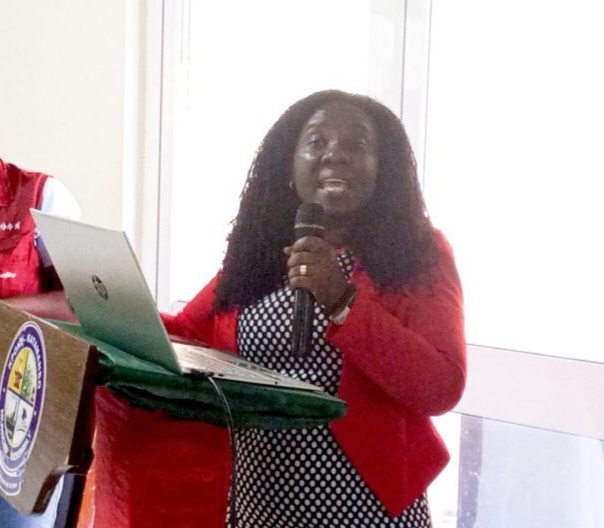
MiDA’s delegation was led by Chief Executive Officer Alexander Kofi-Mensah Mould and Board Chairman Charles Abugre, while the MCC delegation was led by Jason Small, Acting Vice President for Compact Operations, and Senior Policy Advisor Tariq Ahmed.
Energy emerges as a possible new area
Energy featured prominently in the discussions, with Mould identifying the electricity sector as a potential platform for renewed cooperation.
He pointed to opportunities to strengthen Ghana’s power grid, improve the performance of electricity distribution companies and deepen regional electricity integration across West Africa.
He also raised the possibility of developing natural-gas infrastructure linking Ghana and Nigeria to support power generation and improve electricity reliability across the region.
“We’re looking at the natural gas that we have, and also Nigeria, to see how we can work together — do the pipeline to ensure that we have gas flowing across the region to generate electricity and also to improve the grid,” Mould said.
Mould further highlighted reforms undertaken in Ghana’s power sector, including quarterly automatic tariff adjustments and a cash waterfall mechanism intended to improve the movement of revenues across the electricity value chain.
He said some initiatives that could not be completed under the previous Power Compact had subsequently been advanced through domestic efforts.
MCC wants to know what has changed
For MCC, Ghana’s previous experience will be an important part of any assessment of a possible new Compact.
Small explained that the corporation has strengthened its approach to evaluating potential partner countries. The assessment now includes the prospects for increased U.S. investment, opportunities for U.S. exports and supply chains involving critical materials and minerals.
For countries that have previously implemented MCC programmes, the agency also examines how earlier investments performed, whether they were fully implemented and whether reforms associated with those programmes were sustained.
That puts Ghana’s previous Compact experience at the centre of the new discussions.
The country must demonstrate not only the infrastructure delivered through the programmes but also the institutional and policy changes that have endured after MCC funding ended.
The Power Compact experience
Ghana’s second MCC programme was the $498.2 million Ghana Power Compact, signed in 2014 and entering into force in September 2016.
The programme was designed to address constraints within Ghana’s electricity sector and improve the reliability and financial sustainability of power supply.
However, the termination of the Electricity Company of Ghana’s concession arrangement with Power Distribution Services (PDS) in 2019 affected the Compact. MCC subsequently de-obligated the $190 million portion of the programme that was conditional on the concession.
The remaining programme continued under MiDA and was formally completed in June 2022.
The experience provides an important reference point for MCC as it considers Ghana’s record in implementing large-scale reforms and infrastructure programmes.
Regional power projects back on the radar
Small also recalled that MCC had previously examined regional electricity infrastructure involving Ghana and neighbouring countries.
Among the projects were proposed transmission interconnectors between Ghana and Côte d’Ivoire and between Ghana and Burkina Faso.
He said MCC would need to establish what had happened to those projects and determine whether they remained viable and relevant to Ghana’s economic-development needs.
“There’s still an opportunity,” Small said, while stressing that further analysis would be required before MCC could determine the sector and nature of any future intervention.
Energy could remain significant in that assessment because the reliability and volume of electricity available to businesses and households are closely linked to the ability to expand economic activity.