By Nadia Ntiamoah
In a bold move to fast-track Ghana’s transition to a greener and more energy-efficient future, the Minister for Energy and Green Transition, John Abdulai Jinapor, has announced plans to convert the ministerial vehicle fleet in Accra to electric vehicles (EVs).
The initiative is part of a broader government policy aimed at reducing the nation’s carbon footprint and cutting reliance on imported fossil fuels.
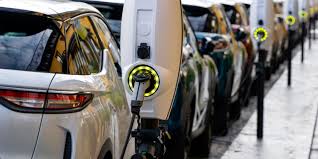
Speaking at the launch of the Energy Commission’s 60-kilowatt solar-powered EV charging station in Accra, Jinapor revealed that a formal proposal would soon be submitted to Cabinet for the procurement and deployment of EVs for all ministers.
The initiative, he said, would serve as a leadership example and motivate other sectors of the economy to adopt clean energy technologies.
“This isn’t just about climate responsibility. It’s an economic and strategic decision,” the minister stated.
“Electric vehicles have significantly lower operational costs compared to fossil fuel-powered cars. This means savings for the government, fewer emissions in our urban centers, and reduced exposure to volatile global fuel markets.”
Energy Commission’s Role
The announcement came during the unveiling of a cutting-edge solar-powered charging station, developed by the Energy Commission as part of its Drive Electric Initiative (DEI).
The station marks another milestone in the country’s e-mobility journey, which began in earnest in 2021 with Ghana’s first E-Mobility Conference and Exhibition.
The Commission, under the DEI banner, has made significant strides in laying the groundwork for EV adoption. Key milestones include:
The 2022 completion of a nationwide baseline study on EV readiness.
A Market Opportunity Study published in 2025 that evaluates the commercial viability of EV charging stations across the country.
The development of draft regulations for electric vehicle charging stations and battery swap systems, intended to align Ghana’s market with international standards and ensure consumer safety and infrastructure compatibility.
These efforts underscore the Commission’s vision to build a robust legal and regulatory framework for the EV market, a necessary condition for large-scale transition.
Eunice Biritwum, the Acting Executive Secretary of the Energy Commission, praised the Ministry’s leadership and announced a partnership with the Ministry of Transport to expand the use of electric vehicles nationwide.
“The electric vehicle charging station is more than infrastructure. It’s a symbol of innovation and our commitment to environmental sustainability,” Biritwum said.
“Our objectives are clear: to drive the Green Mobility Agenda, to showcase what is possible through innovation, and to inspire national and regional action.”
She called on private transport operators, logistics companies, investors, and other stakeholders to join in supporting the country’s green transportation mission.
Tackling Multiple Challenges
The government’s EV initiative is not just about climate action; it also addresses major challenges in Ghana’s urban transportation system.
High fuel prices, environmental pollution, and costly vehicle maintenance have made the transition to EVs not only desirable but essential.
By switching ministerial fleets to electric vehicles, the government hopes to demonstrate that electric mobility is not just feasible but economically beneficial—even for high-level operations.
It’s also an effort to build public confidence in EVs, which are still viewed with skepticism by some due to concerns about charging infrastructure and vehicle costs.
What’s Next?
As the Cabinet considers the proposal for mass EV procurement for ministers, attention will turn to implementation timelines, procurement processes, and the development of complementary infrastructure such as charging stations in key government and urban locations.
Already, the Energy Commission’s work has laid a technical foundation, but large-scale adoption will require cross-ministerial coordination, public-private partnerships, and sustained political will.
A Turning Point for Ghana?
If implemented successfully, the proposal could mark a turning point in Ghana’s green energy policy.