By Daniel Bampoe
The Minority in Parliament is demanding a parliamentary investigation into what it describes as a troubling pattern of major narcotics seizures linked to Ghana, arguing that repeated international interceptions have exposed serious questions about the country’s border controls, cargo-screening systems and enforcement mechanisms.
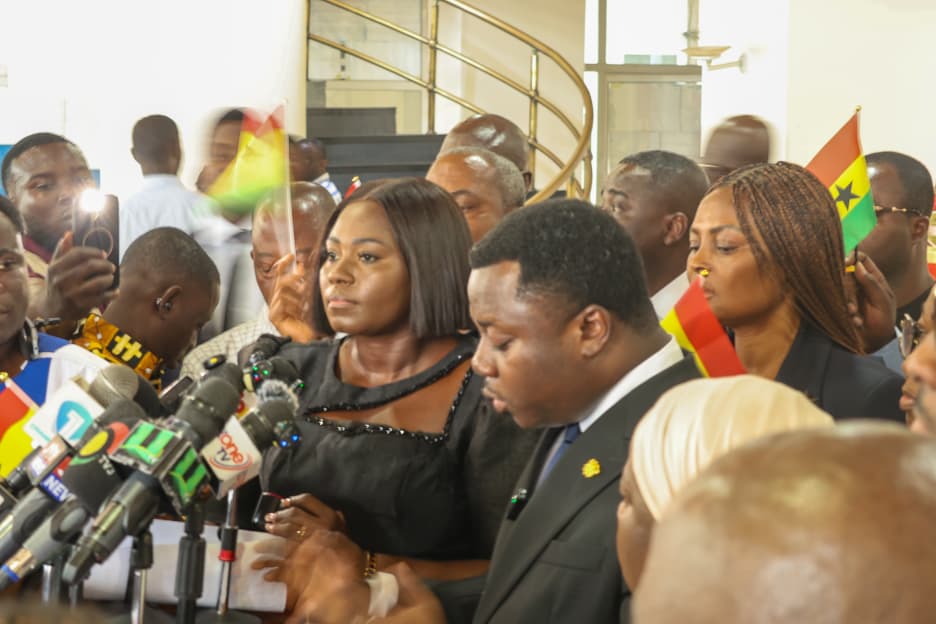
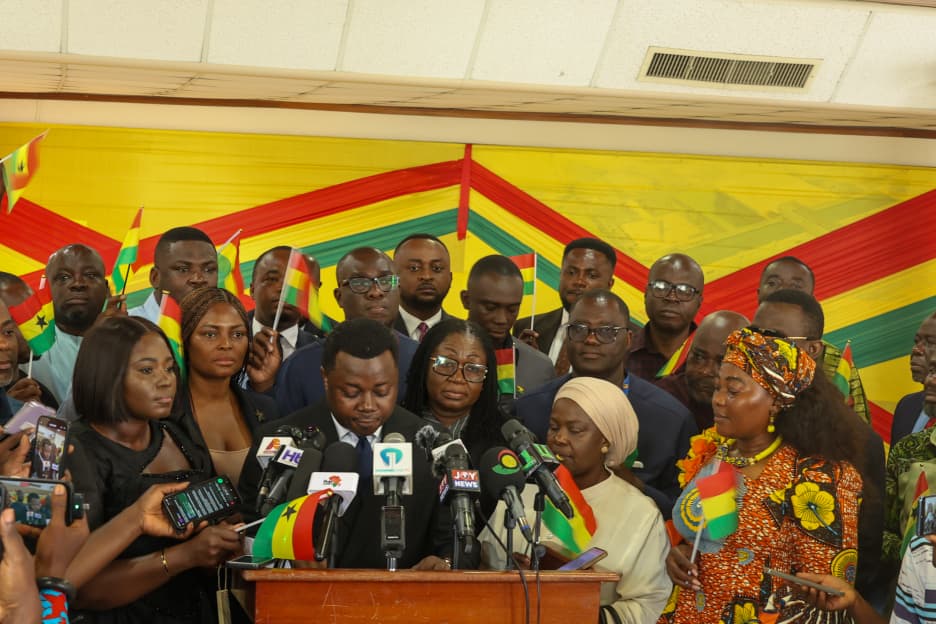
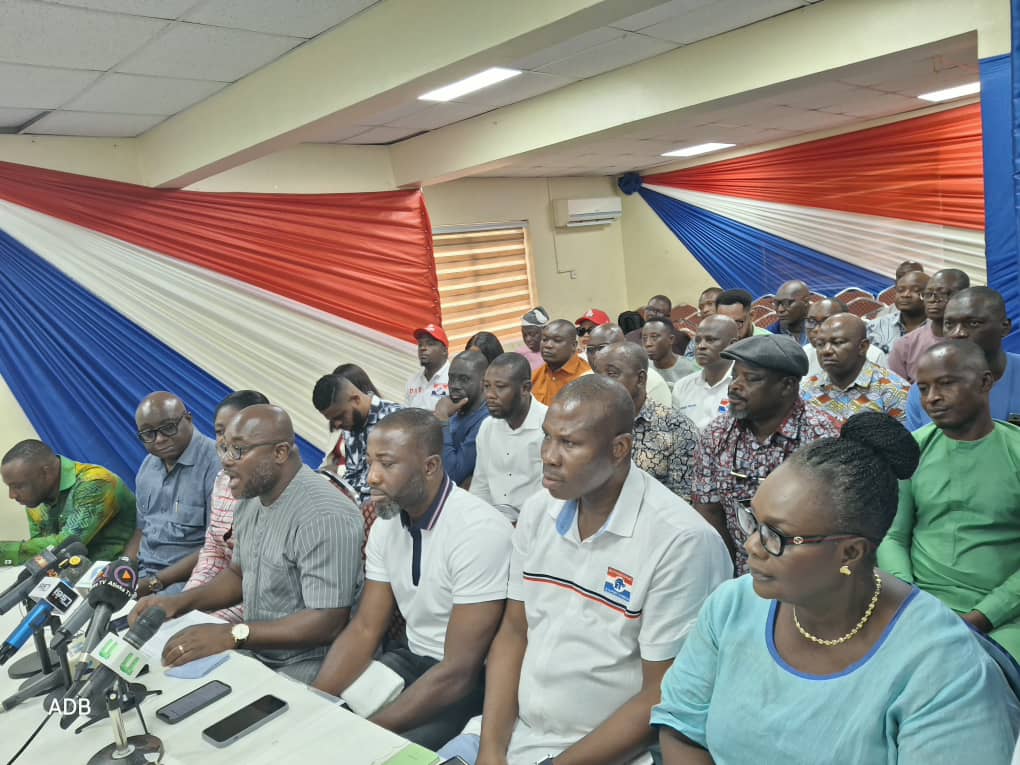
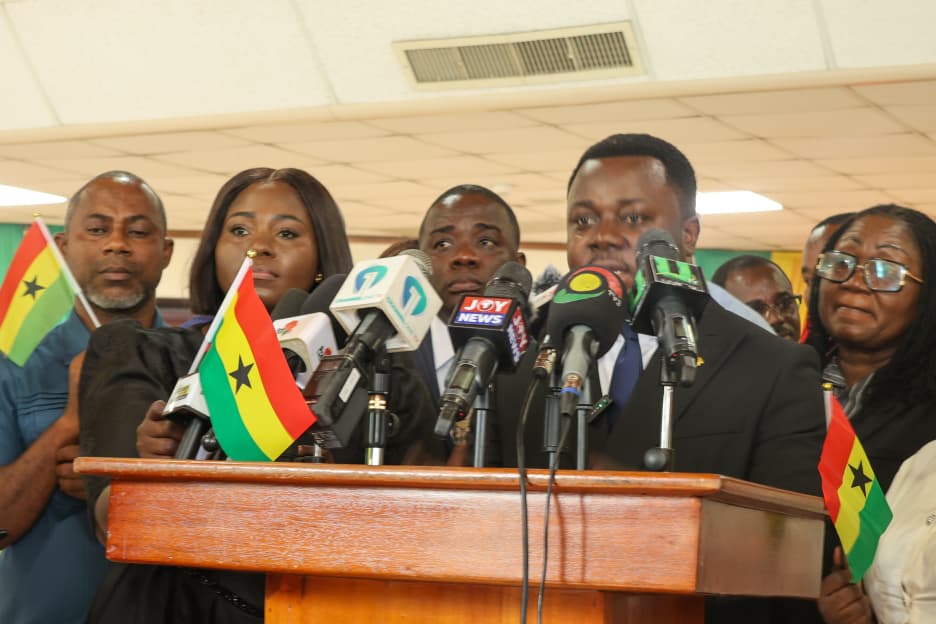
The demand was made by the Ranking Member on Parliament’s Committee on Defence and Interior and Member of Parliament for Assin South, Rev. John Ntim Fordjour, at a media briefing ahead of Parliament’s sitting on Tuesday, September 29, 2026.
The Minority had requested the sitting under Article 112(3) of the 1992 Constitution to bring the narcotics issue before the House and seek answers from the Executive.
Ntim Fordjour said the central question confronting Parliament was how Ghana had repeatedly become associated with major international drug seizures, particularly consignments originating from or passing through Ghanaian territory.
He cited three major cases as evidence of what the Minority considers an emerging pattern. The first was the March 2025 seizure at Pedu Junction near Cape Coast, where the Bureau National Intelligence, BNI, intercepted more than 3.3 tonnes of cocaine concealed beneath sand in a tipper truck travelling from Takoradi towards Accra.
Authorities subsequently confirmed the substance as cocaine, with the total weight put at 3,319.68 kilogrammes and an estimated street value exceeding US$350 million.
The operation followed intelligence received by the BNI. Initial searches uncovered 2,974 kilogrammes of suspected cocaine in the truck, while a subsequent operation at a suspect’s residence led to the recovery of another 345.07 kilogrammes.
The case subsequently went before the High Court, while the seized cocaine was destroyed under a court order in June 2025.
Rev. Ntim Fordjour argued that the Pedu Junction seizure should not be considered in isolation.
He pointed to the June 2026 interception in Australia of approximately 320 kilogrammes of methamphetamine concealed in bags declared as charcoal in two shipping containers originating from Ghana.
Australian authorities valued the drugs at about A$296 million. Ghana’s Narcotics Control Commission subsequently announced that it had opened investigations and was working with other security agencies and international partners to identify people connected to the shipment.
The Minority also cited the September 2026 seizure at the French port of Dunkirk, where French customs intercepted nearly 3.9 tonnes of cocaine concealed among recycled plastic in a container shipped from Ghana. The consignment was reported to have an estimated value of about €225 million.
Ghanaian authorities subsequently faced questions over how such a large quantity of narcotics could leave the country undetected.
According to Rev. Ntim Fordjour, the circumstances surrounding the three cases raise broader questions about the effectiveness of Ghana’s systems for scanning, profiling and inspecting cargo.
He particularly criticised the fact that two of the major cases were publicly announced following interceptions by foreign authorities.
The Minority argues that Ghana should not have to depend on foreign customs and border agencies to expose major narcotics consignments allegedly originating from the country.
Rev. Ntim Fordjour described the situation as a pattern rather than an isolated failure and argued that Parliament must establish where the weaknesses occurred and which institutions were responsible for preventing such consignments from leaving Ghana.
The Minority’s concerns extend beyond the individuals arrested in individual cases to the wider networks allegedly responsible for financing and organising large-scale trafficking operations.
Ntim Fordjour pointed to the Pedu Junction case and questioned whether the people arrested represented the full network behind a consignment of such magnitude.
He was careful to acknowledge that persons facing trial should not be prejudged, but argued that the investigation should go beyond couriers and transporters to identify the financiers, organisers and other beneficiaries behind major narcotics operations.
He also cited concerns raised by the Ghana Catholic Bishops’ Conference, which has described the narcotics trade as a serious moral and national problem and called for investigations into the wider networks behind drug trafficking.
For the Minority, the issue is not merely about the quantities of narcotics seized but the potential consequences of Ghana developing a reputation as a transit point for international trafficking networks.
Rev. Ntim Fordjour warned that international criminal organisations could be encouraged to use Ghana if they perceive weaknesses in the country’s cargo-screening and enforcement systems.
He further argued that the consequences could eventually extend beyond Ghana being used as a transit route because some of the drugs could remain within the country and enter local markets.
The Minority therefore warned of potential consequences for communities, young people and national security if trafficking networks become more established.
It is against this background that the Minority has asked Parliament to establish an Ad Hoc Committee to investigate the circumstances surrounding the major narcotics seizures and assess the broader effectiveness of the anti-drug enforcement framework.
The proposed committee, to be moved through Member of Parliament for Tolon, Habib Iddrisu, is expected to operate under Article 103 of the Constitution and Order 262 of Parliament’s Standing Orders.
According to Rev. Ntim Fordjour, the committee would examine how the various consignments were assembled, inspected and cleared and determine whether existing scanning and risk-profiling systems functioned effectively.
It would also examine the roles of relevant state agencies, shipping companies, freight forwarders and clearing agents involved in handling the cargoes.
Another important aspect would be tracing the financial networks behind the consignments and determining whether proceeds connected to narcotics trafficking are being pursued under Ghana’s relevant anti-money-laundering and narcotics legislation.
The Minority says the proposed committee would have powers associated with parliamentary investigations, including the ability to require witnesses and documents. Its proceedings would generally be public, although national security considerations could justify closed sessions.
Rev. Ntim Fordjour stressed that the proposed investigation would focus on institutional and systemic issues and would not seek to interfere with cases currently before the courts.
He maintained that Parliament has a constitutional responsibility to exercise oversight over the Executive and state institutions and should therefore demand answers concerning the country’s border-security arrangements.
The Minority is also calling for the government to publish comprehensive and verifiable information on narcotics seizures, arrests and prosecutions recorded since January 2025.
The demand, according to the Minority, is intended to ensure that Ghanaians receive timely information about the state of the country’s borders instead of relying primarily on announcements from foreign authorities when major consignments are intercepted abroad.
Rev. Ntim Fordjour said the proposed parliamentary inquiry should not be viewed as a partisan exercise, arguing that the narcotics trade affects Ghana regardless of political affiliation.
He therefore called on Members of Parliament from both sides of the House to support the motion and allow Parliament to establish the facts.
“If the Government is confident in its record, it has nothing to fear from the truth,” he said, insisting that Ghanaians deserve full answers about the repeated international drug seizures associated with Ghana.
The Minority’s demand comes as Ghanaian authorities have also announced measures to strengthen narcotics detection. In June 2026, NACOC said new drug-detection equipment, including mobile scanners, was expected to be deployed at Kotoka International Airport as part of efforts to improve border security.
The parliamentary sitting therefore places the narcotics-control regime under renewed scrutiny, with the Minority seeking to move the discussion from individual drug seizures to the broader question of whether existing systems are sufficiently equipped to detect and disrupt international trafficking networks before consignments leave the country.