By Daniel Bampoe
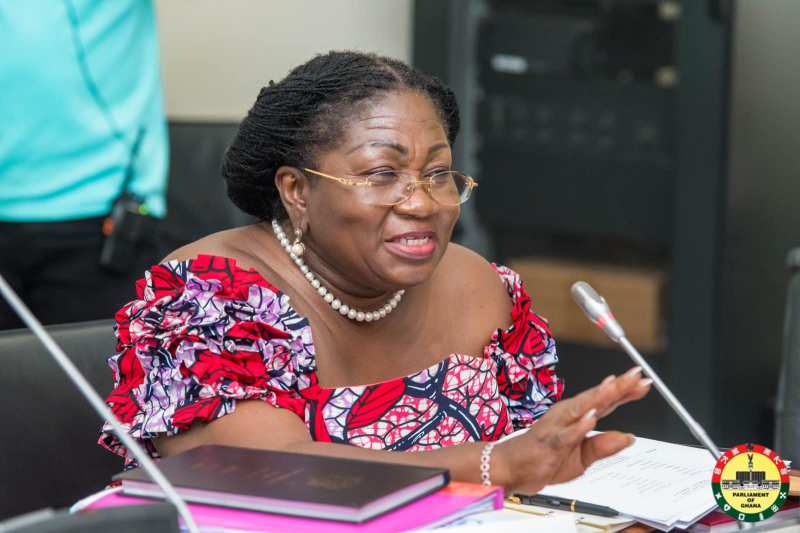
In a hard-hitting opening address to the second meeting of the first session of the Ninth Parliament, the Deputy Minority Leader, Patricia Appiagyei sounded an urgent call for constitutional vigilance and institutional accountability, accusing the Mahama-led government of undermining Ghana’s democracy through executive overreach, judicial interference, and diplomatic recklessness.
Parliament in Crisis
Setting the tone for the new legislative session, the Deputy Minority Leader described the nation as engulfed in “grave constitutional anxiety,” with a government “either asleep at the wheel or entirely indifferent” to the growing insecurity, economic hardships, and institutional decay affecting citizens.
At the heart of her concern was what she termed a calculated assault on judicial independence—a cornerstone of democratic governance.
Judicial Independence Under Siege
The Minority raised alarm over the Executive’s decision to suspend Chief Justice Gertrude Torkornoo, calling it a politically motivated act designed to erode the judiciary’s independence.
The President, according to the Deputy Minority Leader, made a “prima facie” determination to suspend the Chief Justice without clear transparency or broad consensus, a move that many legal minds have described as unprecedented.
The situation is further complicated by the fact that the legal practitioners leading the petition to remove the Chief Justice are publicly known to have represented both the President and the Speaker of Parliament in various legal matters.
This has led to a growing public perception of political manipulation and conflict of interest, casting a shadow over the integrity of the process.
Adding to the controversy is the President’s recent move to nominate seven new justices to the Supreme Court in one swoop, a step the Minority fears could lead to a politicized judiciary, weakened checks and balances, and long-term damage to the rule of law.
Diplomatic Controversy: Washington Embassy Closure
In another development that has drawn public and international concern, the government, through Foreign Minister Samuel Okudzeto Ablakwa and reportedly with President Mahama’s backing, abruptly shut down Ghana’s Embassy in Washington, D.C., citing an internal corruption investigation.
The Minority has condemned the move as “diplomatically amateurish,” stressing that the decision lacked proportionality and consultation.
“This is not a private district office. This is Ghana’s face to the world,” the Deputy Minority Leader said.
“You don’t shutter an entire diplomatic mission over one person’s alleged misconduct.”
The Minority has vowed to summon the Foreign Minister before Parliament to explain the legal and procedural basis for the closure, as well as the financial and reputational consequences for the country.
Executive Absenteeism and Abuse of Power
The Deputy Minority Leader also criticized the President for departing the country without transferring executive authority to the Speaker of Parliament as required by the Constitution. “A power vacuum was created—not by accident, but by design,” she charged.
She further accused the government of weaponizing national security apparatus to intimidate political opponents, citing recent raids on the homes of former officials and MPs.
“We are dangerously close to becoming a Republic where state power is used for persecution, not protection.”
Broken Promises
Ghana’s economic situation was another focal point, with the Minority citing stalled infrastructure projects, unpaid contractors, and the depletion of statutory funds such as the District Assemblies Common Fund.
The Minority insisted that businesses are hurting, and citizens are “stranded” amid broken promises and unfulfilled obligations.
Electricity supply has also emerged as a critical concern.
The Deputy Minority Leader unequivocally stated, “Dumsor is back,” noting that the current power crisis bears grim resemblance to the country’s darkest energy challenges.
Despite a marginal appreciation of the cedi, the cost of living remains high, particularly in transport and shipping, where service providers continue to use inflated dollar-based pricing despite Bank of Ghana benchmarks.
Governance Failures and Unanswered Questions
The Minority raised a red flag over the government’s management of sanitation, citing uncollected waste and flooding that has already claimed lives and displaced thousands.
“The garbage does not care for bureaucracy. It piles up,” she lamented.
The environmental devastation from coastal erosion—especially in Ketu South, Keta, and Anlo—was also labeled a humanitarian emergency.
The Minority demanded urgent completion and expansion of the sea defence project, warning that anything less would be a betrayal of affected communities.
Meanwhile, security in schools has deteriorated so badly that some teachers’ unions are considering arming themselves for protection. “If teachers must be armed to feel safe, then the government has failed,” she declared.
MahamaCares Initiative and Jet Scandal Scrutinized
The Minority called for transparency regarding the Mahama Cares Initiative, questioning how much money has been raised and how it is being used. Of particular concern was the President’s decision to accept salary donations from appointees who failed to comply with asset declaration laws, in lieu of referring them to CHRAJ as constitutionally mandated.
They also revisited the scandal surrounding the use of private aircraft by the President and Vice President, despite the availability of a functional state-owned jet.
“If these flights are paid for by the State, let the receipts be published. If paid for by Ibrahim Mahama, what is he getting in return?” the Minority demanded.
EC and the Ablekuma North Delay
Another issue raised was the Electoral Commission’s failure to declare the results of the Ablekuma North parliamentary race, five months after the 2024 elections.
The Minority insists this undermines Ghana’s democratic fabric and must be resolved without further delay.
The Call for Parliamentary Independence
Wrapping up her address, the Deputy Minority Leader urged Parliament to rise beyond its current limitations as a “conveyor belt for Executive business” and instead reassert itself as a true bastion of accountability.
She called for full parliamentary inquiries into statutory fund usage, presidential travel, public spending, and constitutional compliance.
“This Parliament must not be a footnote in the story of Ghana’s democratic decline,” she declared. “Let us rise, speak, act—and where necessary, resist.”