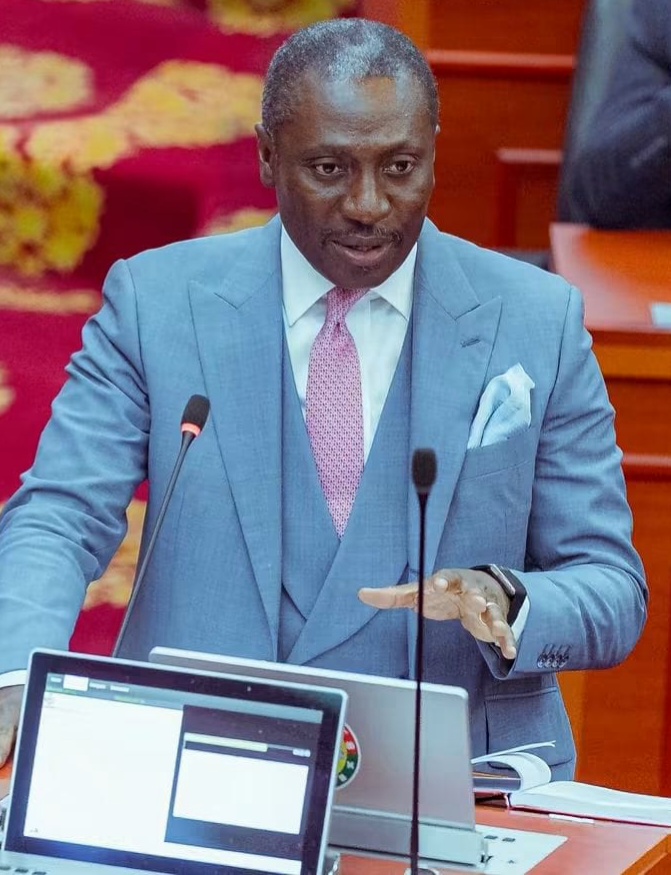
By Daniel Bampoe
The Minority Caucus in Parliament has mounted a strong challenge to the Mahama administration’s 2027 Budget Statement and Economic Policy, questioning the government’s economic priorities, its job creation strategy and the credibility of some of its major policy projections.
During the concluding debate on the budget, Minority Leader Alexander Afenyo-Markin criticised the government’s economic direction, arguing that the financial plan lacked a clearly defined private sector policy and sufficient incentives to stimulate employment and support the development of the New Economy.
His assessment formed part of the Minority’s broader postmortem of the budget presented by Finance Minister Cassiel Ato Forson on Thursday, November 12, 2026, as the opposition sought to highlight what it considers weaknesses in the government’s proposed economic programme tagging the budget ‘419’.
One of the major issues raised by Afenyo-Markin was the proposed investment of Social Security and National Insurance Trust (SSNIT) funds in hotels. He questioned the rationale behind the investment plans, raising concerns about whether the use of workers’ pension contributions in the hotel business was the appropriate priority.
The Minority Leader also scrutinised the government’s Women’s Bank initiative and skills development programmes, questioning the extent to which the proposed interventions would translate into meaningful economic opportunities and sustainable employment.
He further challenged the government’s decision to include economic projections extending to 2030, pointing out that the current administration’s constitutional term ends in 2028.
The argument raised questions about the basis for making long-term projections beyond the government’s tenure and the extent to which such targets could be tied to its immediate policy commitments.
Afenyo-Markin’s criticism centred on what he described as the absence of a convincing framework for private sector growth, insisting that the budget needed stronger measures to encourage businesses, attract investment and create jobs rather than relying on broad policy promises.
However, Majority Leader James Agalga mounted a defence of the government’s economic programme, describing the 2027 Budget as a production-driven agenda designed to strengthen the economy, create employment, reduce inflation and maintain fiscal discipline.
Agalga urged Members of Parliament to support the budget, highlighting what he said were gains and policy interventions in agriculture, digital payments, education infrastructure, debt management and the management of the country’s foreign reserves.
He argued that the government’s approach was focused on expanding productive activity and strengthening the foundations of the economy, while maintaining fiscal discipline and addressing the challenges facing the country.
The exchange between the two leaders reflected the contrasting positions of the Majority and Minority Caucuses over the government’s economic priorities, with the opposition demanding greater clarity on private sector development and employment creation, while the Majority defended the budget as a programme for production and economic recovery.
Concluding the debate, Finance Minister Cassiel Ato Forson turned attention to the government’s debt management record, outlining payments made towards domestic and external debt obligations inherited by the administration.
He said significant payments had been made to address outstanding debt commitments and highlighted the early redemption of the February 2027 Domestic Debt Exchange Programme (DDEP) bonds.
According to the Finance Minister, the redemption had been completed ahead of schedule, presenting it as part of the government’s efforts to meet its debt obligations and strengthen confidence in its debt management programme.