
BY Nadia Ntiamoah
Ghana has secured a major breakthrough in its campaign to recover cultural treasures taken during the colonial era, following a commitment by the governments of the Netherlands and Germany to return approximately 2,000 looted artefacts and culturally significant items to the country.
The announcement marks one of the largest restitution commitments made to Ghana in recent years and reflects growing international support for efforts aimed at correcting historical injustices linked to colonialism, cultural exploitation and the transatlantic slave trade.
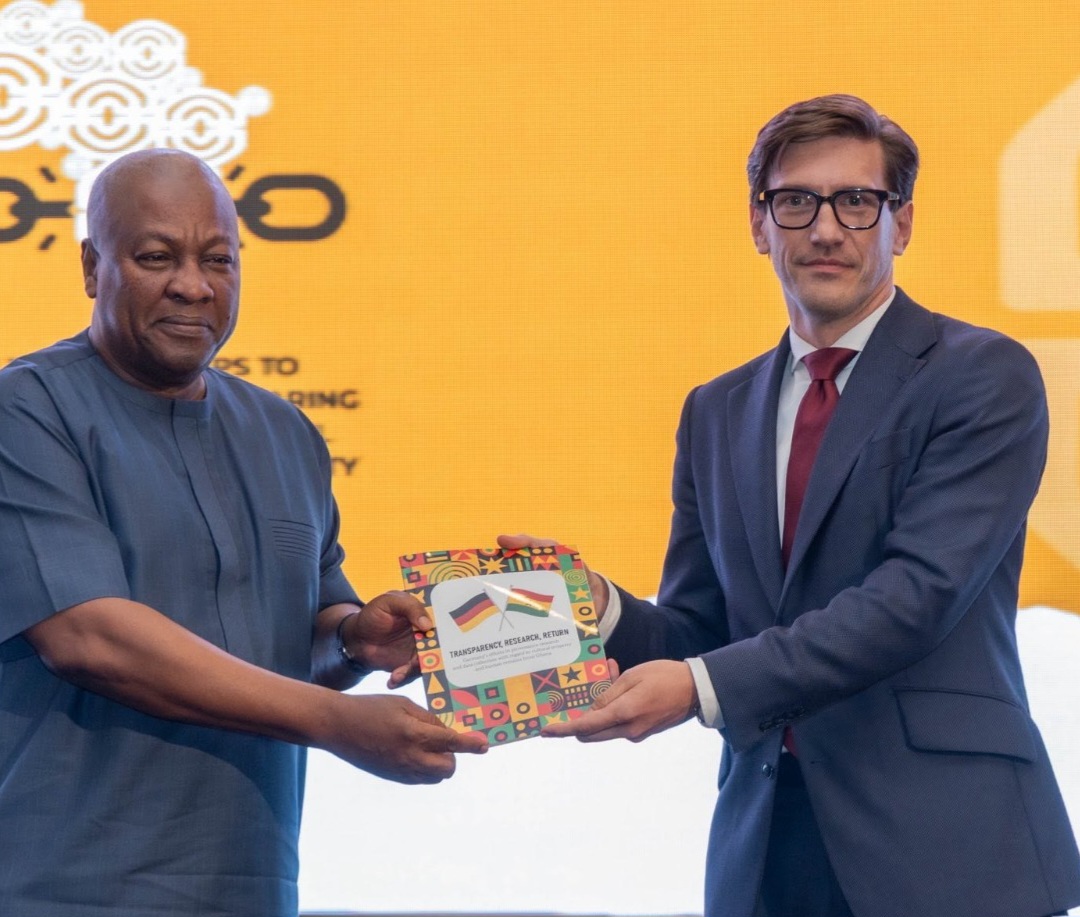
The commitment was formally announced during the Next Steps Conference, where representatives of both European countries presented catalogues containing details of the artefacts earmarked for repatriation to President John Dramani Mahama during a plenary session.
The presentation symbolized a significant milestone in Ghana’s longstanding efforts to reclaim important aspects of its cultural heritage that were removed from the country and dispersed across museums, galleries and private collections in Europe during the colonial period.
Among the dignitaries involved in the presentation were the Ambassador of the Netherlands to Ghana, Jeroen Verheul, and the Ambassador of Germany to Ghana, Frederik Landshöft, who formally handed over catalogues of the artefacts to President Mahama.
The development comes amid increasing global pressure on former colonial powers and institutions holding African artefacts to engage in restitution and repatriation processes.
For decades, African governments, traditional authorities, academics and cultural institutions have argued that many historical artefacts currently displayed in foreign museums were acquired through conquest, looting, coercion or unequal colonial relationships and should be returned to their countries of origin.
In recent years, the global debate over cultural restitution has intensified, prompting several European nations to reassess their historical responsibilities and engage in negotiations regarding the return of cultural property.
Ghana has been among the leading African countries advocating for the return of looted artefacts and the recognition of historical injustices associated with colonialism and the slave trade.
Foreign Affairs Minister Samuel Okudzeto Ablakwa confirmed the latest development in a public statement, describing the decision by Germany and the Netherlands as a significant victory for Ghana’s cultural diplomacy and international advocacy efforts.
According to him, the commitment demonstrates a growing willingness among international partners to confront difficult aspects of history and participate constructively in efforts to restore cultural heritage to its rightful owners.
Ablakwa noted that the latest breakthrough follows sustained diplomatic engagement by Ghana and builds on recent international policy discussions concerning cultural restitution and historical accountability.
The Foreign Affairs Minister further disclosed that the conference also produced another notable development involving Denmark.
According to him, Denmark’s Foreign Minister issued an apology for the country’s role in the transatlantic enslavement system and pledged support for the preservation of castles and historical sites associated with that era.
The castles, many of which remain significant historical landmarks along Ghana’s coast, played central roles during the transatlantic slave trade and continue to serve as powerful reminders of one of the darkest chapters in human history.
Ablakwa indicated that Denmark’s commitment forms part of broader international efforts to acknowledge historical wrongs, promote truth and reconciliation and ensure that such injustices are never repeated.
The conference itself focused on advancing discussions surrounding historical justice, reparative measures and cultural restitution, issues that have increasingly become central to diplomatic engagements between African nations and former colonial powers.
According to the Foreign Affairs Minister, Ghana views the latest commitments as evidence of growing international recognition of the need to address the consequences of colonial-era dispossession and cultural exploitation.
He emphasized that the progress achieved reflects the success of Ghana’s diplomatic initiatives on the global stage, particularly following the adoption of a landmark United Nations resolution championed by Ghana on issues relating to cultural restitution.
“We applaud the positive conduct of restitution we are beginning to witness from our international partners in Europe since the adoption of the historic Ghana-led UN Resolution,” Ablakwa stated.
The Ghana-led resolution has been widely regarded as a significant step toward strengthening international cooperation on the return of cultural property and encouraging member states to engage more actively in restitution processes.
Observers say the decision by Germany and the Netherlands could encourage other countries and institutions holding Ghanaian artefacts to enter similar discussions regarding repatriation.
The return of the artefacts is expected to have significant cultural, educational and historical value for Ghana.
Many of the items are believed to possess deep traditional, spiritual and historical significance and could contribute to preserving national identity while enriching museums, cultural centres and educational institutions.


