By Nadia Ntiamoah
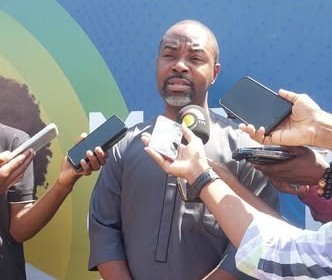
MobileMoney Fintech Limited (MTN MoMo Ghana) has announced plans to intensify public education on mobile money fraud, revealing that social engineering accounts for approximately 90 per cent of reported mobile money fraud cases in Ghana, according to Paapa Osei, the company’s Chief Legal, Regulatory Affairs and Reputation Management Officer.
Osei made the disclosure during a media engagement following the MMFL Cashless Conversations forum held on Friday, October 16, 2026, at the Accra Metropolitan Assembly (AMA) Head Office. The forum brought together traders, small-business owners, students, drivers and other stakeholders to discuss the growing role of digital financial services and the need to build greater public confidence in Ghana’s cashless economy.
Osei indicated that MTN MoMo would strengthen its consumer awareness initiatives by taking education directly to communities, markets, schools and churches. The strategy is intended to equip customers with practical knowledge to identify fraudulent approaches, protect their financial information and avoid falling victim to increasingly sophisticated scams.
The emphasis on public education comes amid persistent concerns about mobile money fraud and the methods criminals use to manipulate unsuspecting customers. Rather than relying exclusively on technological safeguards, the company is seeking to make customers more aware of the risks associated with sharing confidential information and responding to suspicious calls or messages.
Social Engineering at the Centre of MoMo Fraud Concerns
Osei identified social engineering as a major threat to mobile money security, explaining that fraudsters frequently exploit human trust, fear and confusion to persuade customers to disclose sensitive information or authorise transactions.
Social engineering involves manipulating individuals into revealing confidential details or taking actions that compromise their security. In mobile money transactions, criminals may impersonate customer service representatives, mobile money agents or other trusted individuals to convince customers to surrender their personal identification numbers (PINs), transaction codes or other security information.
Once they obtain the necessary information or persuade a victim to approve a transaction, fraudsters may be able to access funds or facilitate unauthorised transfers.
Osei therefore stressed the importance of keeping PINs and transaction codes confidential. Customers must not disclose these details to strangers or individuals claiming to represent a financial service provider, even when the caller sounds convincing or creates a sense of urgency.
The reported estimate that social engineering accounts for about 90 per cent of mobile money fraud highlights the importance of customer awareness in preventing financial losses. However, the figure was presented as part of the remarks at the forum, and its underlying data and measurement period were not specified in the information provided about the event.
MTN MoMo’s planned education campaign is expected to focus on helping customers recognise common scam tactics, verify suspicious requests and avoid being pressured into making transactions they do not fully understand.
Markets, Schools and Churches to Become Key Education Centres
As part of its renewed campaign, MTN MoMo intends to extend fraud-prevention education beyond conventional media communication and into places where people conduct business, study and participate in community activities.
Markets will be an important target because traders frequently receive payments, send money to suppliers and manage business transactions through mobile money services. Schools and churches will also provide opportunities to educate students, families and other community members about the importance of protecting their financial information.
By taking the message directly to these groups, the company hopes to improve awareness among customers who may have different levels of digital and financial literacy.
The initiative also recognises that mobile money has become an important part of everyday economic activity in Ghana. As more people rely on digital transactions to purchase goods, pay bills, support relatives and conduct business, the ability to identify and avoid fraudulent schemes becomes increasingly important.
The company’s approach suggests that fraud prevention requires cooperation between service providers and customers. While telecommunications and financial technology companies must maintain appropriate security systems, customers also need to exercise caution and understand the risks associated with digital transactions.
Traders Welcome Convenience but Remain Concerned About Fraud
The concerns of market traders featured prominently during the Cashless Conversations forum, where Madam Mercy Naa Afrowa NeeDjan, President of the Greater Accra Markets Association (GAMA), highlighted the benefits mobile money has brought to commercial activities.
She noted that MoMo has significantly reduced the risks associated with carrying large amounts of physical cash. For traders, digital payments can make it easier to receive money, transfer funds and conduct business without constantly handling cash or travelling with substantial amounts of money.
The convenience has also helped customers and businesses complete transactions without always needing to visit a bank or rely on cash-based payment arrangements.
Despite these benefits, Madam NeeDjan emphasised that evolving fraud methods remain a major source of anxiety for market traders. The possibility of losing business proceeds through fraudulent transactions can undermine confidence in digital payment systems, particularly among traders who depend on daily sales to support their households and sustain their businesses.
Her comments highlighted a central challenge facing Ghana’s cashless economy: the need to ensure that the convenience of digital payments is matched by effective consumer protection and accessible education.For many traders, confidence in mobile money depends not only on the speed and ease of transactions but also on their ability to identify suspicious activity and obtain assistance when problems arise.
Beyond Money Transfers: The Future of Digital Financial Inclusion
The MMFL Cashless Conversations forum also examined how digital financial services could move beyond basic money transfers to provide broader financial opportunities for individuals and businesses.
Participants discussed the potential for digital platforms to connect users with services such as loans, insurance and investments. Such services could help small-business owners access financing, enable individuals to manage financial risks and give more people opportunities to participate in the formal financial system.
For small and medium-sized enterprises, digital financial services can provide a convenient way to manage payments and build transaction records that may support future financial assessments. Access to suitable financial products could also help businesses manage unexpected expenses, expand operations and plan for growth.
However, the expansion of digital financial services must be accompanied by adequate consumer education, transparency and safeguards against fraud. Customers need to understand the terms of financial products, the obligations attached to borrowing and the risks associated with investment opportunities.
The forum’s discussions therefore linked the future of financial inclusion to the need for trust. A cashless economy can only expand sustainably if consumers feel confident that digital platforms are accessible, understandable and sufficiently secure.