BY GRACE ZIGAH
FIFA is preparing to increase its global football development funding by an additional $3.4 billion, a move that would more than double its planned financial support for the 2027–2030 cycle as the world football governing body faces growing scrutiny over its leadership and recent decisions.
The proposed funding increase would bring FIFA’s total spending on football development during the four-year period to approximately $6.35 billion, up from the $2.7 billion initially budgeted. The money is expected to benefit FIFA’s 211 member associations, the six continental confederations, regional football bodies and selected organisations not affiliated directly with FIFA.
According to the proposal, FIFA intends to release additional funds from its financial reserves, citing the commercial success of this summer’s World Cup as the reason it can afford to expand its development commitments.
The plan is expected to be presented at a meeting of the FIFA Council on Thursday, with a final decision on the distribution framework anticipated at the council’s December 2026 meeting. The proposal will subsequently require approval at the 77th FIFA Congress scheduled for March 2027.
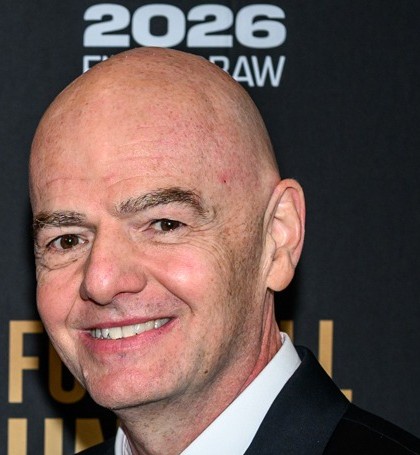
The funding initiative comes at a sensitive moment for FIFA President Gianni Infantino, who has faced criticism over his proposed FIFA Forward Enterprise (FFE) plan. The initiative sought to attract private investment by selling stakes in the World Cup and other FIFA competitions, but it encountered opposition from several influential football bodies.
UEFA, the Confederation of North, Central America and Caribbean Association Football (CONCACAF), and the Asian Football Confederation raised concerns about the proposal and Infantino’s approach. In September, UEFA and CONCACAF reportedly wrote to the FIFA president, urging the organisation to distribute at least $10 million from its reserves to each of its 211 member associations.
Infantino subsequently wrote to the six continental confederations, indicating that he would support what he described as the greatest level of additional funding that could responsibly be provided.
The latest proposal appears to respond to calls for FIFA to make greater use of its reserves to support football development across its membership. However, the plan’s ultimate impact will depend on how the money is distributed, the conditions attached to it and the oversight mechanisms put in place.
Under the proposed arrangement, each of FIFA’s 211 member associations would receive $25 million for the 2027–2030 cycle. Each of the six continental confederations would be allocated $99 million, while each of the 13 zonal and regional associations would receive $8.25 million.
An additional $1.1 million would be made available to 100 member associations to support travel and equipment through a solidarity funding arrangement.The proposed allocations are intended to strengthen football development at different levels, from national associations responsible for managing the game within their countries to continental and regional bodies overseeing competitions and development programmes.
FIFA has also outlined three principal areas for the use of the funding, with an emphasis on ensuring that the money supports long-term growth rather than being spent without a clear development objective.
One-third of the funding would be dedicated to women’s and youth football development. Another third would be allocated to infrastructure, with provisions requiring equal access for women’s and youth football. The remaining third would be reserved for projects.
The emphasis on women’s football and youth development reflects the importance of expanding participation, improving opportunities for young players and strengthening pathways for the next generation of footballers.
Infrastructure investment could also help member associations improve playing facilities and other essential resources, although the effectiveness of that support will depend on the quality of the projects approved and the monitoring of expenditure.
FIFA is expected to finalise the detailed requirements governing eligibility, applications, approvals, disbursements, controls and audits at its December 2026 council meeting. The procedures will be central to determining how associations access the money and how FIFA ensures that the funds are used for their intended purposes.
The proposed increase could provide a major financial boost to associations with limited resources, particularly those seeking to improve grassroots football, strengthen domestic competitions and expand opportunities for women and young players.
Nevertheless, the expanded budget also raises the importance of accountability, as the distribution of billions of dollars across hundreds of football organisations will require transparent procedures and effective financial supervision.