
By Issah Olegor
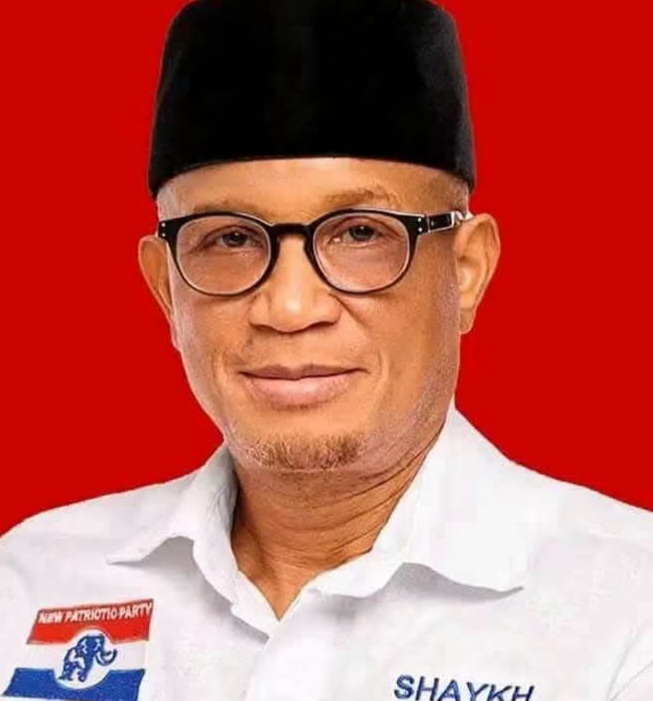
Former National Petroleum Authority (NPA) Chief Executive Dr Mustapha Abdul-Hamid narrowly missed out on a place in the New Patriotic Party (NPP) national vice-chairmanship position, finishing fourth in a tightly contested election at the party’s National Delegates Conference in Kumasi.
Dr Hamid polled 2,956 votes, just 31 votes behind Nana Akomea, who secured the third and final vice-chairmanship position with 2,987 votes.
The result represents a striking reversal from an opinion poll conducted ahead of the election, which had placed Dr Hamid at the top of the race and suggested that he was among the leading contenders for one of the three positions.
Kojo Bamba tops the race
The vice-chairmanship election was won by Kwadwo Fosu Boadu, popularly known as Kojo Bamba, who obtained 3,116 votes to become First Vice Chairman.
Henry Nana Boakye finished second with 3,061 votes and was elected Second Vice Chairman, while Nana Akomea, with 2,987 votes, secured the Third Vice Chairman position.
Dr Hamid’s 2,956 votes left him only 31 votes short of the final available slot, making his defeat one of the closest outcomes of the NPP’s national executive elections.
The election formed part of the party’s reorganisation following its defeat in the 2024 general election and was held at the Baba Yara Sports Stadium in Kumasi with thousands of delegates participating.
Early poll had placed Hamid first
The outcome contrasted sharply with findings from a Global InfoAnalytics poll released on September 1, 2026.
The poll placed Dr Hamid at the top of the vice-chairmanship contest with 18.3% voter preference. He was followed by Henry Nana Boakye and Nana Akomea, who each recorded 17.5%.
Kojo Bamba, who ultimately topped the actual election, was ranked fourth in the poll with only 5.6% support.
The survey involved 2,581 respondents across all 16 regions and reported a margin of error of ±1.9 percentage points.
The eventual election results therefore produced a significant shift from the preferences recorded in the pre-election survey, with Kojo Bamba moving from fourth in the poll to first in the actual delegate vote, while Dr Hamid moved from first in the poll to fourth in the final election.
A senior figure in government and the NPP
Dr Hamid entered the vice-chairmanship contest with considerable political and professional experience.
Under former President Nana Addo Dankwa Akufo-Addo, he served as Minister for Information from 2017 before subsequently becoming Minister for Inner City and Zongo Development.
In 2021, he was appointed Chief Executive Officer of the National Petroleum Authority, a position he held until the end of the Akufo-Addo administration in January 2025.
An academic by profession, Dr Hamid holds a PhD in Religious Studies from the University of Cape Coast and previously lectured at the university’s Department of Religion and Human Values.
His political career has therefore combined party activism, public administration, government service and academia.
Just 31 votes separate victory from defeat
The narrow margin between Dr Hamid and Nana Akomea means that the vice-chairmanship contest was among the closest races of the NPP’s national elections.
While the former NPA boss failed to secure a position on the national executive, his 2,956 votes demonstrated substantial support among the delegates.
His result was also only 160 votes behind Kojo Bamba, who led the race with 3,116 votes.
The figures underline how competitive the 13-candidate vice-chairmanship contest became, with the three successful candidates separated by relatively small margins.
New leadership takes over
Dr Hamid’s defeat comes as the NPP installs a new national executive team to guide the party through its next phase of political organisation.
Former General Secretary John Boadu has been elected National Chairman, while Justin Frimpong Kodua retained the General Secretary position.
Daniel Nii Kwartei Titus-Glover was elected National Organiser, while other national officers have also been selected to form the new leadership structure.
The new executives now face the task of rebuilding the party’s structures and restoring its electoral fortunes ahead of the 2028 general election.


